Quick Facts
- Market Reality: Soundbars dominate over 90% of new releases in 2026, while soundbases are largely considered legacy hardware.
- Connectivity Standard: HDMI eARC is non-negotiable for 2026 if you want to experience high-resolution, lossless spatial audio.
- Format Leadership: Modern units are heavily focused on Dolby Atmos and DTS:X support, formats that soundbases struggle to replicate without up-firing drivers.
- Design Philosophy: Soundbars cater to wall-mounted or low-profile setups; soundbases are designed for televisions using a traditional pedestal base.
- Statistics: Recent industry data suggests the global soundbar market will reach 10.31 billion USD by 2026.
- Consumer Priority: Approximately 59% of television owners prioritize audio quality over smart features or even display resolution.
Choosing the right tv sound system in 2026 depends entirely on your room layout and your appetite for modern audio formats. While soundbars offer the versatility of wall mounting and support for the latest multidimensional soundstage technologies, soundbases provide a sturdy, all-in-one platform for pedestal-mounted TVs with integrated bass performance.
Design & Placement: Pedestal vs. Wall-Mount
The physical evolution of the home theater has dictated the rise and fall of these two form factors. In the early 2010s, soundbases gained traction because televisions were heavy and sat on wide, central stands. A soundbase offered a significant chassis footprint that could support the weight of the TV while providing enough internal volume for decent-sized drivers.
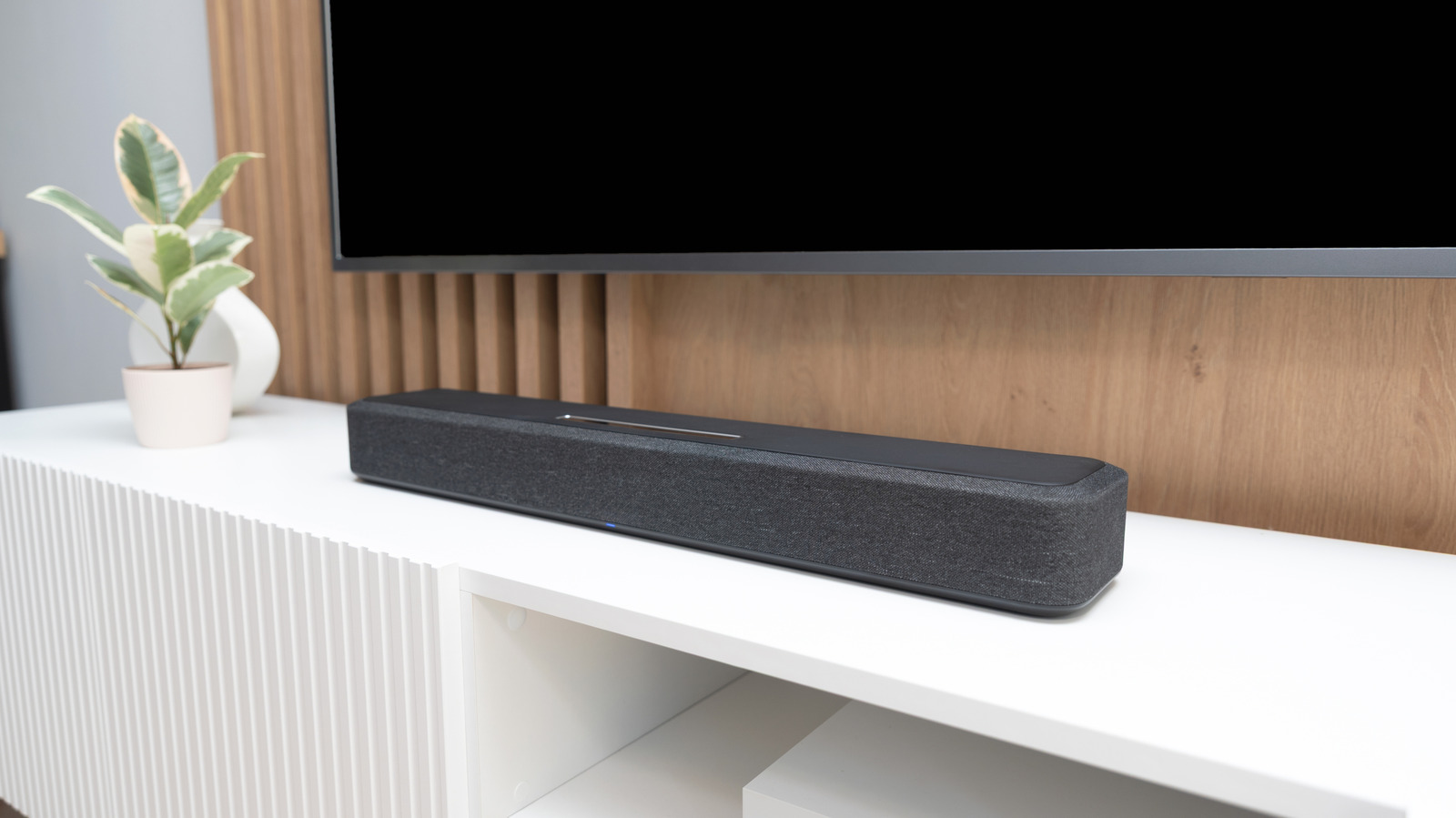
However, as we move through 2026, the best tv sound system is almost always defined by a low-profile design. Modern OLED and Mini-LED sets are paper-thin and frequently mounted to the wall like art pieces. This shift has made the soundbar vs soundbase for large tvs debate much simpler: if your TV is on the wall, a soundbase is practically impossible to use. A soundbar, with its slim and elongated frame, can be mounted directly beneath the screen or sit effortlessly on a narrow shelf without obstructing the infrared sensor.
For those with a pedestal base setup, the soundbase remains a compelling aesthetic choice. It eliminates the "clutter" of a long bar sitting in front of the screen. Yet, even in this category, we are seeing a decline. Manufacturers have shifted away from the platform design because modern TVs often use "duck feet" stands at the far edges of the screen, which are often wider than the soundbase itself. If you are looking for a tv sound system for wall mounted setup, the soundbar is the only logical path forward.
| Feature | Soundbar | Soundbase |
|---|---|---|
| Typical Placement | Wall-mounted or shelf | Under the TV stand |
| Profile | Slim, elongated | Deep, flat platform |
| 2026 Availability | High (Industry Standard) | Low (Legacy/Specialized) |
| Ideal TV Stand | Wall-mount or wide legs | Central pedestal base |
Audio Architecture: Integrated Woofers vs. Discrete Subs
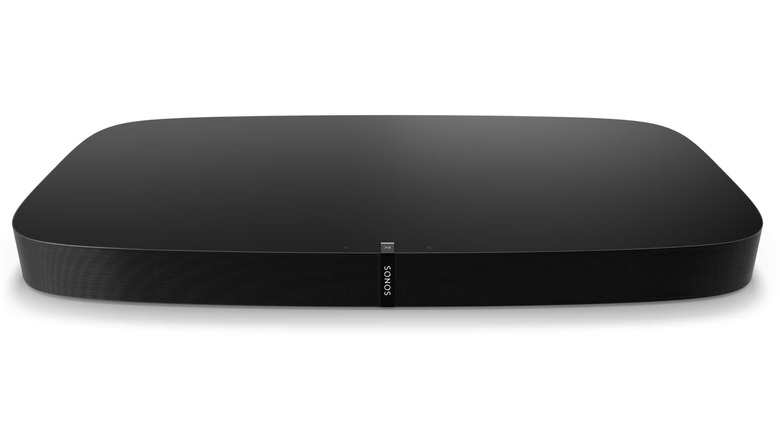
From an acoustic engineering perspective, the soundbase had a head start. Sound requires the movement of air, and low frequencies—the "thump" in an action movie—require volume. Because a soundbase has a much larger internal cabinet than a slim bar, engineers could fit an integrated woofer directly into the chassis. This created a genuine all-in-one solution that provided respectable low-end without the need for an external box.
In contrast, a standard tv sound system with subwoofer usually relies on a separate, dedicated cabinet to handle the heavy lifting of the low-frequency limit, often reaching down to 28Hz in high-end models. While this takes up more floor space, the results for cinematic immersion are undeniable.
In 2026, the hardware has shifted toward more sophisticated 5.1 sound system for tv configurations. Most high-end soundbars now include up-firing drivers. These drivers are angled to bounce sound off your ceiling, creating a multidimensional soundstage that places audio effects above and behind you. This is the heart of spatial audio. Soundbases, because they are positioned directly under the vibrating mass of a television, rarely feature these up-firing components, as the TV would physically block the sound path.
The result is a gap in performance: soundbars provide a wider, more immersive soundstage, whereas soundbases focus on mid-range clarity and built-in, punchy bass. If you want the feeling of rain falling from above or a helicopter circling your living room, the modern soundbar architecture is vastly superior.
The Connectivity Gap: HDMI eARC vs. Legacy Hardware
One of the biggest risks for consumers in 2026 is accidentally purchasing what I call an "AV relic." Many soundbases currently found on the refurbished market, such as the once-popular Sonos Playbase or legacy Bose models, lack modern connectivity.
Connectivity Warning: Legacy hardware often relies on Optical (Toslink) cables. While reliable, Optical lacks the bandwidth to carry lossless Dolby Atmos or DTS:X. To future-proof your home theater surround sound system, look for a device that features at least one HDMI eARC port.
By 2024, 36% of total soundbar market revenue was already driven by Dolby Atmos-enabled models. By 2026, this has become the baseline. HDMI eARC (Enhanced Audio Return Channel) allows your TV to send high-bitrate audio formats to your sound system with perfect lip-sync.
Furthermore, a soundbar with hdmi earc vs legacy soundbase offers better firmware support and smart home ecosystem integration. Most modern bars are software-dependent smart bars that receive updates to improve their room-filling capabilities or to add support for new streaming protocols. Legacy soundbases have largely been abandoned by manufacturer software teams, leaving them vulnerable to compatibility issues with newer smart TV operating systems.
2026 Buying Guide: Match Your Persona
How do you choose the best tv sound system for your specific living situation? Here is how the market segments in 2026:
The Minimalist Apartment Dweller If you live in a studio and want a clean look, look for the best tv sound system for small apartments. This is typically a compact, all-in-one soundbar with virtual spatial audio. These models use digital signal processing (DSP) to simulate a wider field without needing a separate subwoofer or rear speakers.
The Cinematic Enthusiast For those building a dedicated media room, a wireless surround sound system for tv is the gold standard. These systems consist of a primary soundbar, a wireless subwoofer, and two or more wireless rear satellites. This setup provides 360-degree audio without the need to run cables through your walls or under the rug.
The "Dialogue First" Viewer If you find yourself constantly turning the subtitles on because you can't hear what actors are saying, look for a system with a dedicated center channel. This specific driver is tuned for mid-range clarity, ensuring that voices aren't drowned out by background music or explosions. Both high-end bars and quality soundbases can excel here, but the bar typically offers more precise acoustic tuning.
Setup and Optimization: The 'Subwoofer Crawl' and AI Calibration
Once you've selected your hardware, the setup is more important than the price tag. In 2026, AI-driven room calibration has become a standard feature in mid-range and premium systems. These units use internal microphones to ping the room with sound, measuring how the audio bounces off your walls and furniture. The system then automatically adjusts its output to compensate for echo or "dead spots" in your room.
For those using a tv sound system with subwoofer, I still recommend the old-school "Subwoofer Crawl."
- Place the subwoofer in your primary seating position (literally on the couch).
- Play a bass-heavy track.
- Crawl around the room on your hands and knees.
- Where the bass sounds the cleanest and most even—not necessarily the loudest—is where you should place the subwoofer.
This manual optimization, combined with modern AI acoustic tuning, ensures you get the most out of your hardware. Additionally, improving tv dialogue clarity with soundbars often involves using the "Night Mode" or "Dialogue Enhancement" features found in the companion apps of most 2026 models. These modes compress the dynamic range so you can hear whispers without being startled by sudden transitions in volume.
FAQ
What's the best sound system for TV?
In 2026, a multi-channel soundbar system with a wireless subwoofer and HDMI eARC support is widely considered the best choice for most homes. It provides the best balance of modern features like Dolby Atmos, ease of setup, and aesthetic flexibility.
Are soundbars better than TV sound?
Yes, significantly. Even an entry-level soundbar generally provides better frequency response and clarity than built-in TV speakers. Most thin-screen televisions use downward-firing or rear-firing speakers that lack the physical space to produce quality audio, resulting in tinny sound and poor dialogue.
Can I add speakers to my TV?
Yes, you can add speakers via an AV receiver and traditional wired cabinets, or more commonly today, through a modular wireless surround sound system for tv. Many high-end soundbars allow you to start with just the bar and add a subwoofer or rear satellites later as your budget allows.
Is sound system for TVs worth it?
Given that 59% of television owners rank sound as their top priority, it is arguably the most impactful upgrade you can make to your home theater. A good audio setup transforms the viewing experience from "watching a screen" to an immersive event.
Do you really need a soundbar with a Smart TV?
While a Smart TV provides the content, its physical speakers are usually the weakest link in the chain. To enjoy the high-quality audio streams provided by services like Netflix, Disney+, and Max—especially those in spatial audio formats—an external sound system is essential.
Conclusion: The Verdict for 2026
The industry has spoken: the soundbar is the victor of the living room. While the soundbase was a clever solution for an era of pedestal-mounted TVs and integrated bass needs, it simply cannot keep up with the spatial audio revolution.
For the modern consumer, the flexibility of a soundbar, combined with the power of HDMI eARC and the immersion of up-firing drivers, makes it the definitive choice. If you are refurbishing an older setup or have a specific piece of furniture that demands a pedestal base, a soundbase might still serve you well, but for everyone else, the slim, high-tech world of the soundbar is where the future of audio resides. When you invest in your next home theater surround sound system, focus on connectivity, format support, and how the device fits into your physical space. Your ears will thank you.