Quick Facts
- Connectivity Reality: Over 85% of new flagship smartphones shipped in 2025 lack a built-in 3.5mm headphone jack.
- Market Dominance: Wireless models are projected to capture 72.3% share of the global earbuds market by 2026.
- The Longevity Trade-off: While wired gear can last a decade, wireless batteries typically degrade within two to three years of constant use.
- Audio Quality: Wired connections still lead in providing a pure analog audio signal and lossless audio without compression.
- Latency Advantage: Competitive players still prefer the best wired earbuds for gaming due to zero latency.
- Durability Paradox: Low initial cost is often offset by the recurring need to replace cables due to internal fraying and mechanical failure.
- Portability Friction: The modern listening experience is increasingly hindered by a reliance on the dongle adapter.
Wired earbuds face significant practical disadvantages in 2026, primarily the constant need for usb-c dongle adapters and the durability paradox where cable fraying leads to frequent replacements despite low initial costs. While they offer a battery-free analog audio signal, the loss of the 3.5mm headphone jack on most devices makes them a friction-heavy choice for the modern consumer.
1. The Dongle Dilemma: Connectivity Friction in 2026
As someone who has spent two decades testing everything from two-dollar airplane disposables to four-thousand-dollar In-Ear Monitors, I’ve watched the landscape shift from universal compatibility to a fragmented mess of adapters. In 2026, the primary reason to rethink buying wired earbuds isn't about the sound—it’s about the connection.
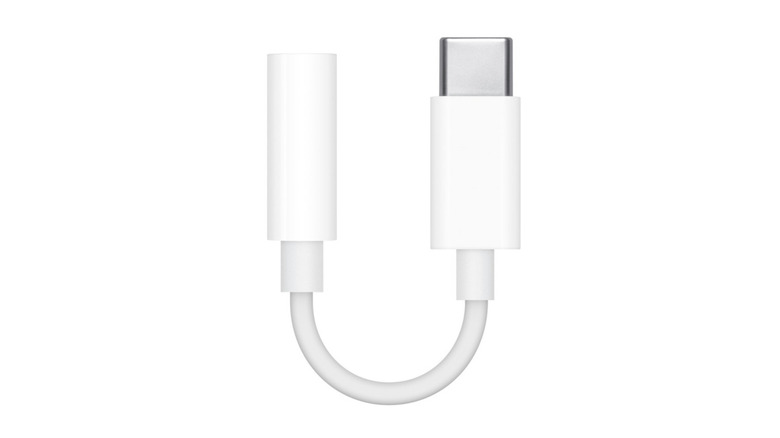
When Apple retired the jack years ago, it started a domino effect. Today, finding a premium smartphone with an integrated analog output is like trying to find a cassette player in a new Tesla. If you buy a standard pair of wired earbuds, you aren't just buying the buds; you are committing to the dongle life. Whether you call it a dongle adapter or a portable digital-to-analog converter, it is an extra piece of hardware that you must carry, manage, and inevitably lose.
For those using a modern handset, the shift toward usb-c wired earbuds was supposed to be the solution. However, even these come with issues. Taking up the only port on your phone means you cannot charge while you listen without an even more cumbersome "splitter" adapter. This connectivity friction turns a simple act—plugging in and hitting play—into a logistical puzzle. If you are looking for wired earbuds for samsung or other modern flagships, the "plug and play" simplicity of the past is effectively dead.
2. The Durability Paradox: Why Cheaper Isn't Always Better
There is a common misconception in the audio world that wired earbuds are more durable because they lack complex software and batteries. While it is true that wireless earbuds have a "death date" due to lithium-ion degradation, the mechanical reality of cables tells a different story. I call this the Durability Paradox: the cheaper the wire, the more expensive it is in the long run.
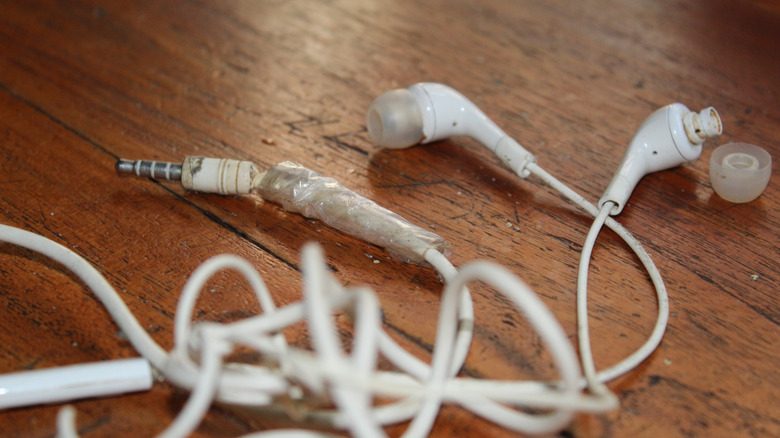
The most common failure point for any high-quality wired earbuds isn't the driver; it’s the connection point where the cable meets the jack. Over months of being stuffed into pockets or coiled around phones, the internal copper filaments undergo constant stress. Eventually, you experience that frustrating "one-ear-out" phenomenon, where you have to wiggle the wire just to get a signal.
Even if you invest in cables with massive strain relief or fancy braided cable designs, the physical nature of a tethered connection makes it vulnerable. In my experience, a casual listener might go through three pairs of mid-range wired earbuds with mic in the same time it takes for a single pair of True Wireless Stereo (TWS) buds to experience battery failure. When you add up the replacement costs, the "affordable" wired option starts to look like a recurring subscription fee for frustration.
3. Physical Limitations: Mobility and Safety Risks
Wireless technology is about more than just "no wires"; it is about the psychological freedom of not being tethered to a device. If you use wired earbuds, you are physically locked into a three-foot radius of your smartphone or laptop. This limitation manifests in dozens of small, daily irritations that we often overlook until they are gone.
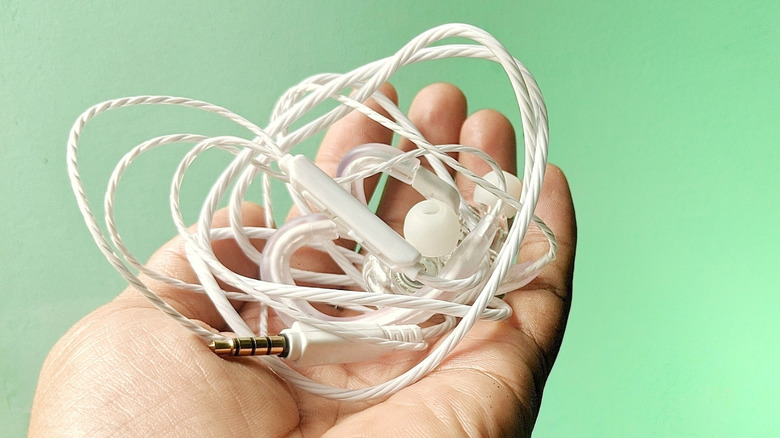
First, there is the "snag." Whether it’s a door handle catching your cable as you walk by or a gym weight hooking the wire mid-squat, the physical jerk of an earbud being ripped from your ear canal is a uniquely jarring experience. Beyond the discomfort, there is the tethered risk to your expensive equipment. I’ve seen more cracked laptop screens and shattered phones caused by someone standing up while still plugged in than I care to count. A single snag can lead to more than just lost audio, potentially damaging your connected devices beyond repair.
Furthermore, despite the retro aesthetic that some influencers are currently chasing, the ergonomic reality of a cable against your chest is distracting. Microphonics—the sound of the cable rubbing against your clothing—can ruin a delicate lossless audio track. While some noise cancelling wired earbuds attempt to mask this, the physical vibration travel cannot be completely engineered away like it can in a wireless system.
4. Latency vs. Logistics: Niche Utility for Gamers and Pros
In the interest of fairness, we have to talk about where wires still win. If you are a competitive gamer, the best wired earbuds for gaming are still the gold standard. Why? Because zero latency is king. In games where millisecond reactions matter, even the highest-end Bluetooth codecs introduce a lag that can be the difference between a win and a loss.
However, for 95% of users, the logistics of a wire outweigh these performance gains. Modern wireless earbuds have reached a point where latency for movies and casual gaming is virtually imperceptible. What wired users lose out on is multi-point switching—the ability to be connected to your phone and your laptop simultaneously.
Consider the "Work from Home" professional. With wireless gear, you can take a call on your phone while walking to the kitchen for coffee, then sit back down and have the audio seamlessly switch to a Zoom meeting on your laptop. With wired earbuds with mic, you are stuck fumbling with plugs and adapters every time you change tasks.
| Feature | Wired Earbuds | Wireless (TWS) Earbuds |
|---|---|---|
| Audio Signal | Analog, Lossless | Digital, Compressed (usually) |
| Latency | Zero / Near-Zero | 30ms to 200ms+ |
| Power Source | Device-powered | Integrated Battery |
| Connectivity | Modern Adapter needed | Bluetooth 5.3+ / LE Audio |
| Multi-point | No (Manual plug) | Yes (Automatic) |
| Longevity | High (Drivers) / Low (Cable) | 2-3 Years (Battery) |
5. The Obsolescence of Analog: Changing Consumer Habits
We have to look at the statistics to understand why the sun is setting on the consumer-grade wired market. The market shift is structural, not just a trend. With wireless earbuds projected to hold a 72.3% share by 2026, the investment from major manufacturers is shifting entirely away from standard analog designs.
For the audiophile community, In-Ear Monitors like the Sennheiser IE 200 remain a vital way to enjoy a high-fidelity analog audio signal through a dedicated digital-to-analog converter. But for the general public, the "return to wired" is often more about a fashion choice than a functional one. Gen Z might wear them for the 2000s-era "cool factor," but once the novelty of the tangled wire wears off, the inconvenience usually wins.
Passive noise isolation on a great pair of wired buds can be excellent, but it cannot compete with the active computational power found in modern wireless chips. When you choose wired today, you are choosing a simpler, interference-free past, but you are also opting out of the smart features—like transparency modes and spatial audio—that have redefined how we interact with sound in 2026.
FAQ
Why are Gen Z wearing wired headphones?
The resurgence of wired gear among younger generations is largely a reaction to "tech fatigue" and a desire for an analog, retro aesthetic. It serves as a visual signal that the wearer is "disconnected" or intentionally choosing a lo-fi lifestyle, despite the practical inconveniences of the hardware. Additionally, the lower entry price of basic wired earbuds makes them an accessible accessory for fashion-forward looks.
Does anyone still use wired earbuds?
Yes, wired earbuds remain standard in several professional and niche environments. Audio engineers, musicians, and competitive gamers rely on them for zero latency and uncompressed sound quality. Furthermore, travelers often keep a pair of usb-c wired earbuds as a backup in case their wireless battery dies during long-haul flights where charging isn't available.
Why is everyone going back to wired earbuds?
While there is a perceived trend of people "going back," the data shows it is a vocal minority. Those who do return to wired often do so to avoid "battery anxiety"—the constant need to charge yet another device. Others prefer the simplified microphone quality of something like the original Apple EarPods, which often outperform integrated wireless microphones in windy or noisy environments.
Are wired earphones still in 2026?
Wired earphones still exist as a niche category for audiophiles and specialists, but they are no longer the mainstream standard. With over 85% of flagship phones lacking the necessary port, they have moved from being a universal accessory to a specialty tool that requires specific dongles or high-end players to function, making them "out" for the average casual listener.