Our Top Picks
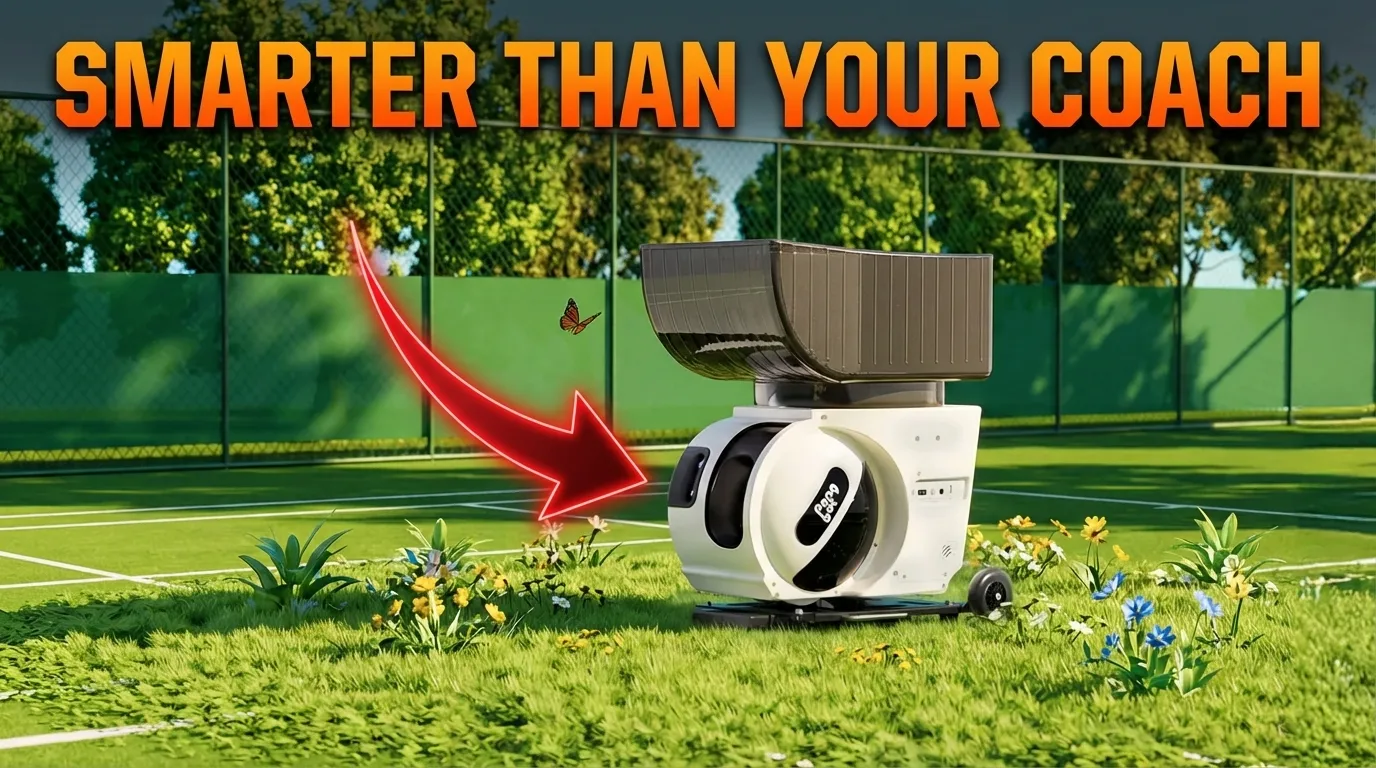
The Pongbot Pace S Pro is currently the most sophisticated option for competitive players who need more than just a ball launcher. It stands out as a high-performance hitting partner alternative because it effectively bridges the gap between repetitive drilling and actual match reality. By integrating reactive AI and precise tracking, it ensures your training sessions translate directly into tournament wins.
Upgrade your training with the Pongbot Pace S Pro, a smart tennis ball machine that uses AI and UWB tech to simulate real matches and improve your footwork. This system utilizes artificial intelligence and real-time tracking to adapt to a player's movement, creating a more realistic training experience. Unlike traditional launchers that fire at set intervals, these machines use Ultra-Wideband technology and wearable sensors to wait until a player returns to their recovery zone before launching the next ball.
Why Traditional Machines Fail: The Consistency Trap
If you have spent any significant time on a tennis court with a standard ball machine, you have likely fallen into the consistency trap. Most machines are essentially rhythm-based feeders. They fire a ball every four seconds, regardless of where you are on the court or how well you hit the previous shot. While this is great for grooving a specific stroke, it creates a dangerous lack of intensity. You begin to anticipate the ball rather than reacting to it, leading to lazy footwork that falls apart during a real match.
The Pongbot Pace S Pro solves this by introducing a feature called Recovery zone timing. Instead of a fixed timer, the machine uses its internal brain to monitor your position. It will not fire the next ball until it sees you have moved back toward the center of the baseline or your designated recovery spot. This forces you to engage in reactive training drills where every shot requires a full physical cycle: split-step, move, hit, and recover.
When comparing the Pongbot Pace S Pro vs traditional ball machines, the difference in cardiovascular and tactical engagement is night and day. By forcing you to earn the next feed through movement, the machine helps in improving tennis footwork with adaptive ball machines, ensuring that you never develop the standing-still habit that plagues so many solo practice sessions.
Technical Core: UWB Precision vs. Camera Systems
At the heart of this smart tennis ball machine is a sophisticated tracking array. While some high-end sports equipment relies on computer vision and cameras, those systems often struggle with lighting changes, shadows, or multiple people moving in the background. Pongbot opted for a more robust solution: Ultra-Wideband technology.
By using a P-Tag wearable sensor that clips onto your waistband, the machine establishes a dedicated digital link with the unit. This creates a tennis ball machine with player tracking that is far more reliable than optical alternatives. The system uses a triangulation method involving net-post anchors to sample your movement at a 100Hz sampling rate and sub-10cm accuracy. This level of precision allows the machine to adapt ball feeds to your real-time position on the court with virtually no lag.
| Feature | Pongbot UWB Tracking | Standard Camera Tracking |
|---|---|---|
| Sampling Frequency | 100Hz (100 times per second) | Typically 24-30Hz |
| Positional Accuracy | Sub-10cm | ~100cm (Variable) |
| Lighting Sensitivity | Works in any light / Night | Requires high contrast |
| Latency | Near-Zero | High (Image processing delay) |
Because the machine knows exactly where you are, it can engage in precision ball launching. If the AI detects you are cheating toward the backhand side, it can instantly fire a wide forehand to keep you honest. This creates a smart tennis ball machine with real time player tracking that acts less like a bucket of balls and more like a coach watching your every move.
Match Simulation: Training Like a Pro
The true value of the Pace S Pro lies in its ability to replicate the chaos of a real rally. Most players struggle to transition from practice to matches because practice is predictable, while matches are random. This machine uses a vast database of professional play to ensure your match instinct development is always progressing.
Equipped with the industry's fastest spin switching capability of 1.5 seconds, the machine can go from a heavy topspin moonball to a low-skidding slice almost instantly. This variety is critical for match simulation tennis drills. In a real game, you rarely get the same ball twice; with the Pace S Pro, you can program sequences that mirror professional tactical patterns.
Key performance features include:
- Extreme Velocity: Capable of delivering balls at speeds up to 80 mph.
- Pro-Level Spin: Generates spin rates of up to 60 rotations per second, simulating the heavy balls hit by top-tier competitors.
- Massive Drill Library: Access more than 560 preprogrammed drills through the mobile app.
- Skill Scaling: Players can input their specific NTRP skill ratings to ensure the shot variety and spin are appropriate for their current level.
Whether you are practicing a specific inside-out forehand pattern or defending against a wide variety of shots in a simulated tie-break, this tennis ball machine that simulates real match play provides the high-intensity reps required to reach the next level.
Practicalities: Portability, Battery, and Price
Performance is meaningless if the machine is too difficult to get to the court. Despite the advanced AI tennis training equipment inside, the Pace S Pro remains relatively portable. Weighing in at approximately 17kg, it is light enough for most adults to lift into a trunk. A pro tip for transport is to remove the ball hopper before lifting, which makes the unit much more manageable and easier to balance.
The battery life is equally impressive, offering up to 8 hours of continuous play on a single charge. This is more than enough for a full day of coaching or multiple personal practice sessions. After your session, the app provides a performance analytics report, showing you how many balls you hit, your movement coverage, and your consistency over time.
Is a smart tennis ball machine worth it for competitive players? When you consider the cost of a private coach—which can easily exceed $100 per hour—the $1,199 investment for the Pace S Pro pays for itself in less than a dozen sessions. You gain a partner that never gets tired, never misses the lines, and provides a level of data-driven feedback that a human hitting partner simply cannot match.
One note on maintenance: while the machine is built for durability, the high-precision rollers and UWB sensors perform best on dry courts. To maintain the accuracy of your precision ball launching, avoid using the machine on damp or wet surfaces, as moisture on the balls can affect both the spin rate and the exit velocity.
FAQ
What is the difference between a standard and a smart tennis ball machine?
A standard machine operates on a mechanical timer and simple oscillation patterns, firing balls at set intervals regardless of your position. A smart tennis ball machine uses artificial intelligence, wearable sensors, and Ultra-Wideband technology to track your movements. This allows it to wait for you to recover to the center of the court before firing the next ball, creating a reactive and realistic training environment rather than just a repetitive ball-feeding session.
Can a smart tennis ball machine simulate real match play?
Yes, high-end units like the Pongbot Pace S Pro are specifically designed to simulate real match play. They utilize databases containing hundreds of thousands of real professional rallies to determine shot variety and timing. Because they can switch between different spins and speeds in under 1.5 seconds, they can throw a heavy topspin ball followed immediately by a short slice, forcing you to adjust your feet and racquet face just as you would in a competitive match.
Are smart tennis ball machines worth the investment?
For competitive players, the investment is usually highly justified. A smart machine provides a high-quality hitting partner alternative that is available 24/7. It allows you to practice high-intensity, match-specific drills that traditional machines cannot replicate. Given the cost of professional coaching or the difficulty of finding reliable hitting partners at specific NTRP skill levels, the machine often pays for itself within the first few months of use.
How long do the batteries last on smart tennis ball machines?
Most modern smart machines, including the Pace S Pro, are equipped with high-capacity lithium-ion batteries. You can typically expect about 8 hours of battery life on a single charge, depending on the intensity of the drills and the speed of the balls being launched. This capacity is generally sufficient for several days of practice or an entire day of back-to-back coaching sessions.
How heavy are smart tennis ball machines for transport?
Despite their advanced internal components and AI-powered processors, these machines are designed for portability. The Pace S Pro weighs around 17kg (approx. 37 lbs). It features a compact design with wheels and a handle, making it easy to roll across the court. Most players find it easy to lift into a standard car trunk, especially if the ball hopper is detached to make the unit more compact.
Upgrade Your Game Today
Winning more matches isn't just about hitting harder; it is about moving better and reacting faster. By moving away from static drills and embracing the intelligence of the Pace S Pro, you are training your brain and body to handle the pressures of real competition.