Our Top Picks
- Best Overall: Shure SM7dB (The legendary broadcast standard now featuring a built-in preamp for modern workflows).
- Best Value Hybrid: Fifine AM8 (Incredible utility for under $60, offering both XLR and USB connections for growing creators).
- Best for Beginners: Logitech Blue Yeti (The perennial plug-and-play favorite for those who want quality without technical friction).
- Best Studio Precision: Røde NT1 5th Gen (A condenser powerhouse that introduces 32-bit float technology to prevent digital clipping).
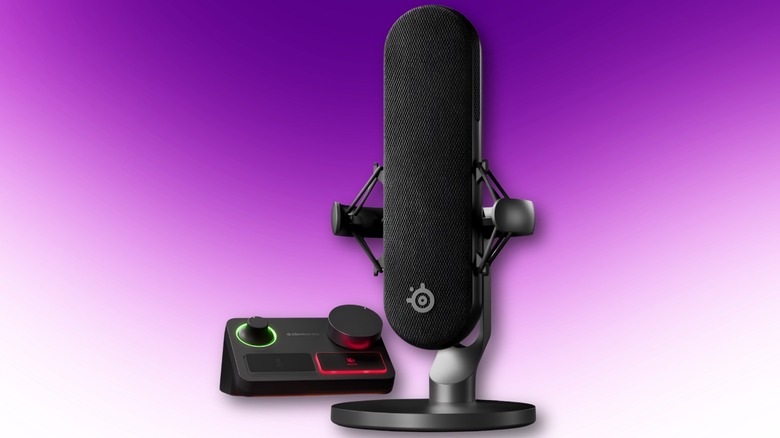
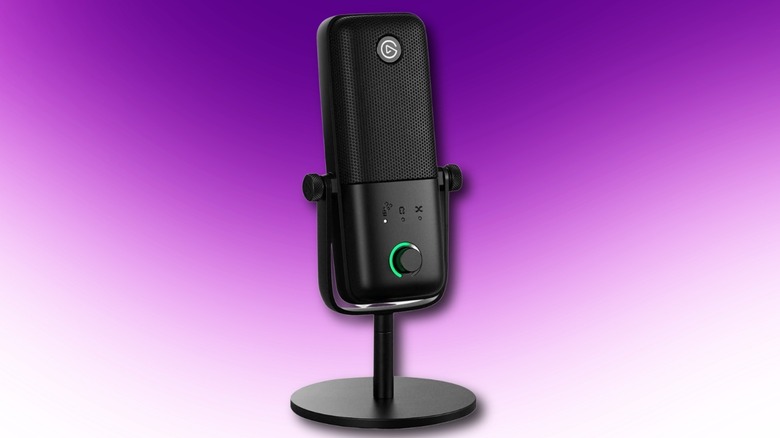
- Best Streamer Utility: Elgato Wave:3 MK.2 (Excellent software integration geared toward creators who need to balance multiple audio sources).
Identifying the best podcasting microphones depends heavily on your specific recording environment and budget. In 2026, the Shure SM7dB remains the broadcast standard for professionals due to its elite noise rejection, while hybrid options like the Fifine AM8 lead the budget category by offering a clear path from USB convenience to professional XLR setups.
The landscape of audio creation has shifted dramatically over the last two years. We have moved past the era where a podcast was just a hobby; today, it is a global industry. The global podcasting hardware market was valued at approximately $3.6 billion in 2024 and is projected to reach $28.07 billion by 2034, driven by a compound annual growth rate of 22.8 percent. As more people enter the space, the demand for hardware that balances professional fidelity with user-friendly features has skyrocketed.
Whether you are recording in a soundproofed studio or a echoes-filled spare bedroom, the microphone you choose acts as the foundation of your listener's experience. In 2025, USB microphones accounted for the largest share of the podcasting microphone market at 38.4 percent, proving that convenience is king. However, dynamic microphones, which represented approximately 21.4 percent of market revenues, remain the preferred choice for those dealing with untreated rooms.
| Microphone Model | Connection Type | Capsule Type | Best For |
|---|---|---|---|
| Shure SM7dB | XLR | Dynamic | Professional Studio |
| Fifine AM8 | USB & XLR | Dynamic | Budget-Conscious Starters |
| Logitech Blue Yeti | USB | Condenser | Simple Plug-and-Play |
| Røde NT1 5th Gen | USB & XLR | Condenser | Detailed Vocal Resonance |
| Elgato Wave:3 MK.2 | USB | Condenser | Streamers and Gamers |
Fifine AM8: The Ultimate Hybrid Starter
When we talk about the best podcasting microphones under 100 dollars, the conversation usually highlights a lot of compromises. The Fifine AM8 is the exception that proves the rule. Priced frequently around $50, this microphone offers a hybrid connection that includes both USB-C and XLR. This means you can start by plugging it directly into your laptop and eventually graduate to a dedicated audio interface without needing to buy a new mic.
The AM8 utilizes a cardioid polar pattern, which helps focus on your voice while minimizing picked-up noise from the sides and back. In our testing, the analog-to-digital conversion over USB was surprisingly clean for the price point. It even features touch-sensitive controls and controllable RGB lighting, which, while perhaps a bit "gamer-centric," adds a modern flair to a desktop setup.
The Catch: The build quality is noticeably plastic compared to higher-end rivals. While the audio holds up, the included desk stand is lightweight and prone to picking up vibrations if you bump the table. We strongly recommend pairing this with a third-party boom arm accessory to decouple it from your desk.
Logitech Blue Yeti: Still the King of USB Convenience
Despite the influx of new competitors, the Blue Yeti remains one of the best usb microphones for podcasting for beginners. According to the 2024 Podcaster Gear Survey, the Blue Yeti is identified as the most-used microphone among podcasters, and for good reason. Its tri-capsule array allows for four different polar patterns, making it remarkably versatile. You can switch from a solo cardioid mode to an omnidirectional mode if you are recording a group around a table.
However, because the Yeti is a condenser microphone, it is incredibly sensitive. While this captures great vocal resonance, it also captures your air conditioner, the clicking of your mechanical keyboard, and the dog barking two rooms away. It is a tool designed for a controlled home studio environment where background noise is kept to a minimum.
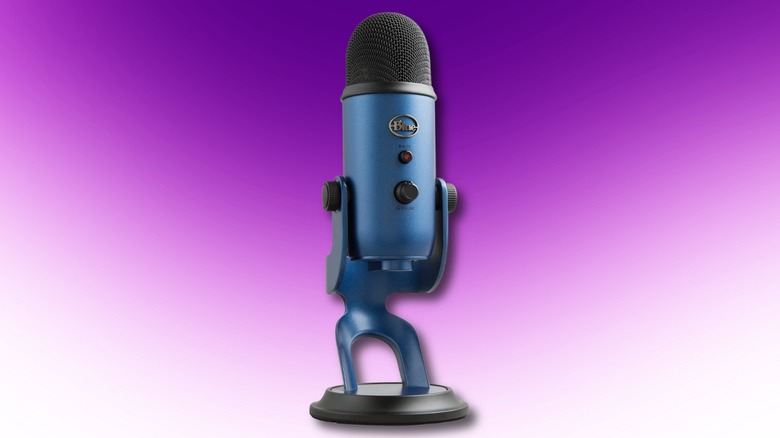
For creators who don't want to mess with drivers or external gain stages, the Yeti is the definition of simplicity. Its built-in headphone jack provides zero-latency monitoring, allowing you to hear exactly what you sound like in real-time, which is essential for maintaining consistent mic technique.
Shure SM7dB: The Professional Gold Standard
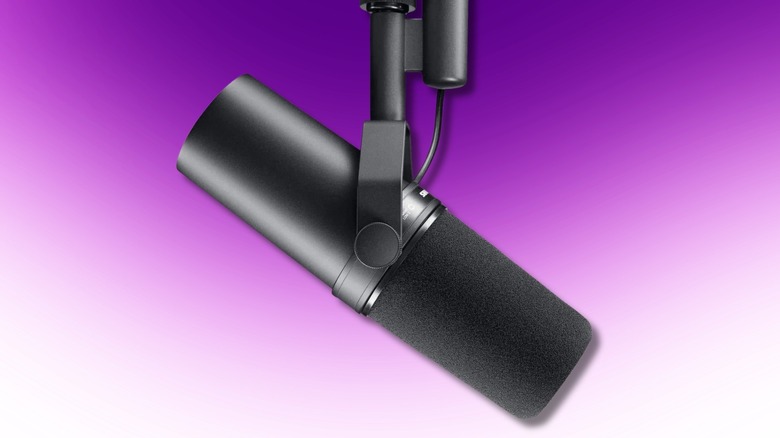
If you have watched a professional podcast in the last decade, you have seen the Shure SM7B. However, for 2026, the Shure SM7dB has taken the throne. The "dB" in the name signifies a built-in preamp, solving the entry-level problem of the original SM7B: the need for a massive amount of gain. Previously, you needed a Cloudlifter or a high-end audio interface to get a clean signal; now, you can plug the SM7dB into almost any interface and get that creamy, broadcast standard sound immediately.
The SM7dB is widely considered one of the best professional xlr microphones for podcasting because of its electromagnetic shielding and internal air suspension shock mount. It is also arguably one of the best dynamic microphones for recording in noisy rooms. Its ability to ignore the "room sound" and focus solely on the source is legendary. The frequency response profile is flat and wide, meaning it reproduces the human voice with startling accuracy without adding artificial "shimmer."
Pro Tip: Use the "3:1 rule" or the "6-inch rule" here. Keep the microphone about six inches from your mouth. The SM7dB has a built-in pop filter that is excellent, but if you have a particularly "plosive" voice (hard P and B sounds), don't be afraid to add an extra foam windscreen.
Røde NT1 5th Generation: Future-Proof Studio Quality
For those who want the detail of a studio condenser but the failsafes of modern tech, the Røde NT1 5th Generation is a marvel of engineering. This is a best podcasting microphones 2026 contender because it features "unclippable" 32-bit float digital output. If you scream into the mic or whisper, the digital signal processing ensures you can recover that audio in post-production without distortion.
The NT1 offers a Dual Connect design, featuring both XLR and USB-C outputs within the same housing. When using the XLR connection, it functions as a world-class studio microphone requiring phantom power. When using USB, it utilizes an internal high-gain Revolution Preamp that provides a signal-to-noise ratio usually reserved for gear costing three times as much.
The NT1 captures a level of high-frequency detail that dynamic microphones simply cannot match. If your podcast involves musical elements or you have a voice with a lot of subtle character, the NT1 will showcase those nuances beautifully.
Buying Guide: XLR vs. USB & Environmental Setup
Choosing the best podcasting microphones involves understanding the trade-off between connectivity and control. USB microphones are the ideal choice for solo creators and those who need a portable microphones for podcasting on the go. They handle the analog-to-digital conversion internally, meaning you don't need extra boxes on your desk.
Conversely, an xlr podcast microphone requires an external audio interface. While this adds to the "total cost of ownership," it offers professional-grade audio fidelity and prevents your setup from becoming obsolete. If you want to record two people in the same room, individual XLR mics plugged into a multi-channel interface (like a Focusrite Scarlett or RødeCaster) is the only way to get true multi-track control.
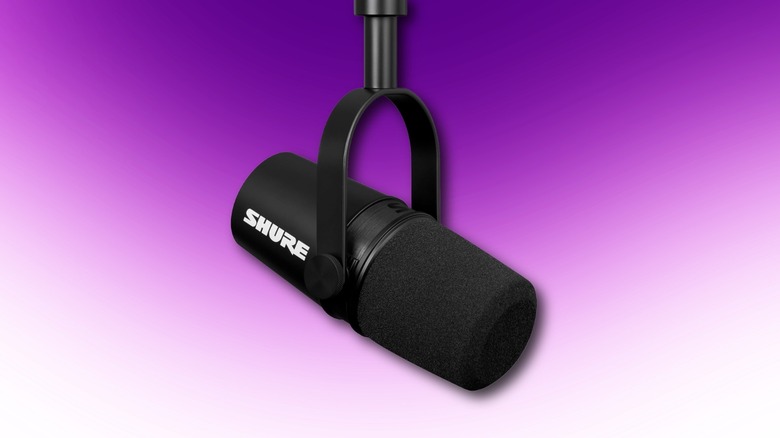
Consider your room before you buy. If you are recording in a kitchen or a room with hard-surface floors, a dynamic microphone like the Shure MV7X or SM7dB is your best friend. If you have rugs, curtains, and acoustic foam, a condenser like the Røde NT1 or Blue Yeti will reward you with incredible clarity.
For those on a tight budget, the Samson Q2U is frequently cited as the top value recommendation because, like the Fifine AM8, it provides both USB and XLR outputs, ensuring your investment lasts as long as your creative ambition.
FAQ
What mics do most podcasters use?
The majority of hobbyist and entry-level podcasters use the Logitech Blue Yeti because of its ease of use. However, among professional creators and high-production shows, the Shure SM7B (and its successor, the SM7dB) is the undisputed industry standard for its classic broadcast sound and durability.
Why is Shure SM7B so popular?
The Shure SM7B gained popularity because it is an "extraordinarily forgiving" microphone. It features excellent internal shielding against computer monitor hum and a unique capsule design that rejects off-axis noise, allowing creators to get professional results even in less-than-perfect home studios.
What is the 3:1 rule for mics?
The 3:1 rule is a technical guideline for multi-microphone setups. It states that the distance between any two microphones should be at least three times the distance from a microphone to its intended sound source. This prevents "phase cancellation," which can make your audio sound hollow or thin when two people are speaking at once.
Which microphone do most streamers use?
Streamers often gravitate toward the Elgato Wave series or the Logitech Blue Yeti because of their integrated software (like Wave Link), which allows them to mix game audio, music, and voice easily. For high-end "face-cam" setups, the Shure SM7B remains the aesthetic and functional choice for top-tier streamers.
Investing in your audio is the single most effective way to improve your podcast's retention rate. Listeners will forgive a lower-quality video, but they will quickly tune out if the audio is harsh or filled with background noise. Whether you choose a $50 hybrid or a $500 broadcast icon, ensure it matches your environment and your workflow. Ready to build your studio? Check out our guide to the best audio interfaces to pair with your new gear.