Quick Facts
- Target Fleet: Deploying 20,000 Lucid Gravity SUVs over a six-year period
- AI Platform: Nuro Driver (Level 4 autonomy)
- Computing Hardware: NVIDIA DRIVE AGX Thor
- Battery Range: 450 miles per charge for maximum fleet uptime
- Launch City: San Francisco Bay Area (initial commercial testing)
- Seating Capacity: Up to 6 passengers in an executive cabin configuration
The Uber robotaxi pilot represents a major shift in autonomous mobility, moving from basic transport pods to premium, long-range executive services. By integrating Nuro’s Level 4 AI technology with the luxurious Lucid Gravity SUV, Uber is preparing to deploy a fleet of 20,000 autonomous vehicles starting in San Francisco. This partnership combines cutting-edge NVIDIA computing with high-end electric vehicle architecture to redefine the ride-hailing experience.
The Brain: Nuro’s Level 4 AI Technology
At the core of this ambitious mobility project is the Nuro Driver, a sophisticated software-defined vehicle (SDV) stack that represents years of refinement in machine learning. Unlike earlier iterations of autonomous driving that relied heavily on hard-coded rules, Nuro utilizes an end-to-end AI architecture. This allows the vehicle to perceive its surroundings and make complex driving decisions in a way that mimics human intuition but with the precision of high-speed processing.
The heavy lifting for these calculations happens on the nvidia drive agx thor computing in nuro robotaxis. This high-performance SoC (System on a Chip) is designed specifically for functional safety and generative AI tasks, providing the massive computational power needed to process data from a multi-modal sensor fusion array. By utilizing solid-state LiDAR sensors, high-resolution cameras, and radar, the system creates a 360-degree redundant view of the world. This is particularly vital for navigating complex urban driving environments where unpredictable pedestrian behavior and intricate San Francisco intersections are the norm.
Safety remains the paramount concern for both the developers and the public. To address this, nuro level 4 ai safety protocols for uber include redundant control systems that can safely bring the vehicle to a stop if any primary system fails. Nuro brings a significant safety heritage to the table, with the company’s tech being validated through more than 1.7 million autonomous miles and five years of driverless deployments with zero at-fault incidents reported. This track record provides the regulatory confidence needed to transition from small-scale delivery bots to full-sized passenger SUVs.
The Body: Lucid Gravity Robotaxi Features & Luxury
While the AI provides the intelligence, the Lucid Gravity SUV provides the physical platform that elevates the Uber robotaxi pilot above its competitors. One of the primary reasons for selecting this specific vehicle is its advanced high-voltage EV architecture. The SUV offers a Lucid Gravity 450 mile range for uber operations, which is a critical metric for fleet managers. A longer range means fewer trips to the charging station and more time on the road serving passengers, directly impacting the bottom line of the uber 20000 lucid gravity fleet rollout schedule.
Step inside, and the difference between a standard ride-share and this pilot becomes clear. The lucid gravity robotaxi luxury interior features are designed for the executive-class passenger. The cabin offers spacious seating for up to six people, allowing for small group travel without the cramped feeling of a traditional sedan. Passengers can enjoy:
- Interactive Cabin Controls: Large touchscreens that allow riders to adjust climate, audio, and lighting.
- Executive Seating: Premium materials and ergonomic designs suitable for business professionals.
- Occupant Monitoring: Subtle internal sensors that ensure passenger safety and comfort throughout the trip.
- Acoustic Engineering: A whisper-quiet ride facilitated by the electric drivetrain and advanced sound dampening.
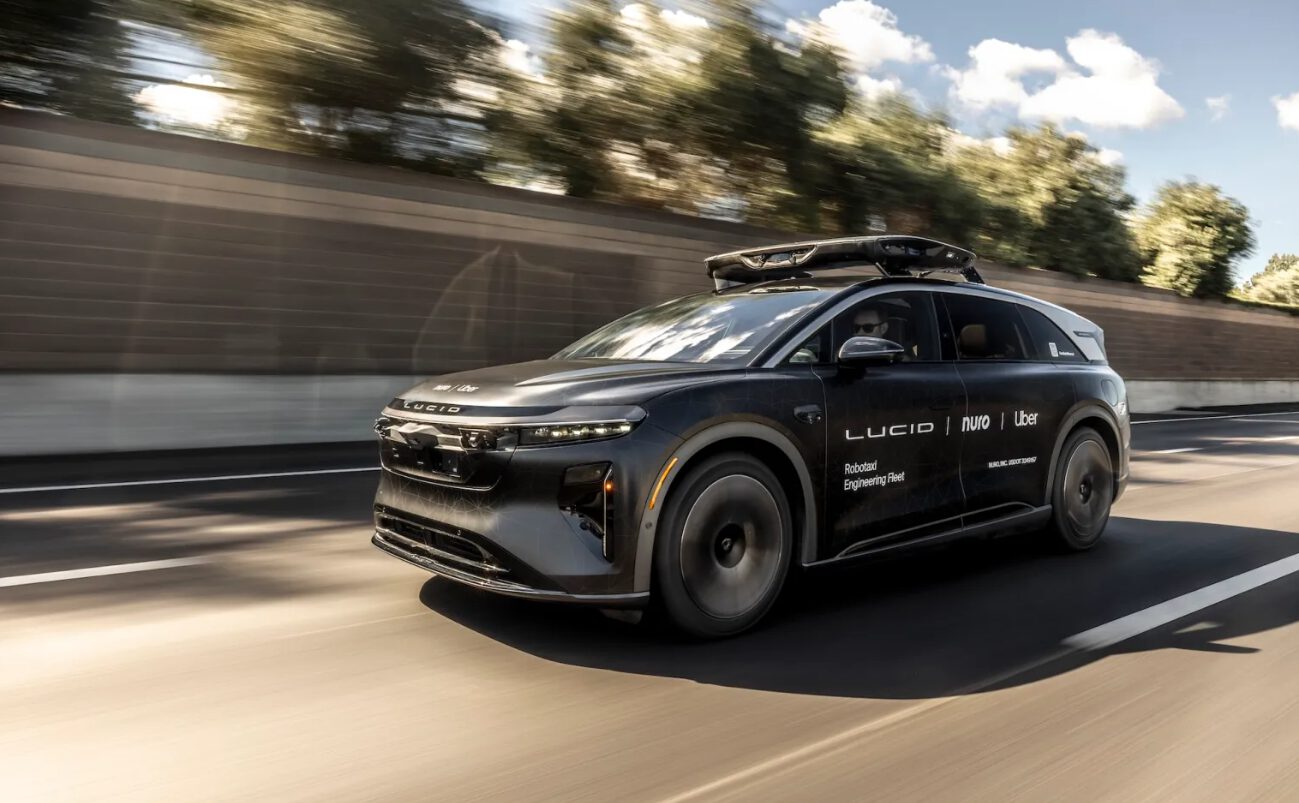
Externally, the vehicle is equipped with a halo roof-mounted display. This isn't just for aesthetics; it serves as a communication tool for passenger identification, letting the rider know exactly which vehicle is theirs as it pulls up to the curb. Below is a look at how this new premium service compares to what riders might expect from a standard autonomous or human-driven Uber.
| Feature | Standard Uber/Robotaxi Pod | Lucid Gravity Uber Robotaxi |
|---|---|---|
| Interior Space | Compact/Standard Sedan | Luxury SUV (6-Passenger) |
| Range per Charge | 250 - 300 miles | 450 miles |
| Experience Level | Utility / Transport | Executive / Premium |
| AI Integration | Level 2/3 (or basic L4) | Nuro Level 4 AI Technology |
| Target Market | General Public | Premium/Business Segment |
The Network: Uber Premium Autonomous Ride Experience
Uber is no longer just an app that connects you to a driver; it is evolving into a comprehensive Mobility-as-a-Service (MaaS) platform. The introduction of the Uber premium autonomous ride experience marks a strategic pivot. While other competitors focus on utility-focused pods that look like moving toasters, Uber is betting on the high-end market. The uber premium robotaxi vs waymo service comparison highlights this shift: where Waymo focuses on a consistent, utilitarian ride, the Nuro-powered Lucid Gravity offers a more sophisticated alternative for those who value space and luxury.
The partnership is a tripartite masterclass in industry collaboration. Uber provides the massive demand network and user interface, Nuro provides the autonomous intelligence, and Lucid provides the world-class hardware. Together, they have committed to deploying at least 35,000 Lucid electric vehicles over the next six years across dozens of global markets. This aggressive strategy for operational fleet scaling is intended to make autonomous luxury accessible in major metropolitan hubs, starting with the tech-heavy corridors of Northern California.
By focusing on a software-defined vehicle approach, the fleet can receive over-the-air updates that improve driving behavior and add new cabin features overnight. This ensures the Uber robotaxi pilot remains at the cutting edge of technology without requiring frequent hardware replacements.
Rollout: How to Join Uber Robotaxi Pilot San Francisco
For those wondering how to join uber robotaxi pilot san francisco, the process is currently in a phased transition. Initially, testing was limited to employees and closed groups to validate the redundant control systems in real-world conditions. However, the pilot is rapidly expanding. As the program enters its next stage, eligible users in specific San Francisco zones will see the option to select an autonomous ride directly within their app.
Learning how to book autonomous lucid gravity on uber app is straightforward. When you input a destination within the service area (such as the Financial District or SoMa), the app may present the Lucid Gravity as a premium vehicle option. Unlike a standard Uber Black, these vehicles are clearly marked as autonomous. During the current validation phase, a safety operator may still be present in the driver's seat to comply with California autonomous driving regulations, though the goal is to move toward fully driverless operations by late 2026.
The commercial rollout is a multi-year journey. Following the initial Bay Area testing, Uber plans to scale the service to other major cities. This phased approach allows the Nuro Driver AI to learn the unique nuances of different urban layouts—from the fog of San Francisco to the heat of Phoenix—ensuring that the Level 4 autonomy is robust enough for any environment.
FAQ
Where is the Uber robotaxi pilot currently available?
The pilot is primarily focused on the San Francisco Bay Area. Uber and Nuro are utilizing this region as the primary testing ground due to its complex urban environment and supportive regulatory framework for autonomous vehicle testing.
How do I request a robotaxi ride through the Uber app?
If you are in a supported service area, the option for an autonomous ride will appear alongside traditional options like UberX or Uber Black. You simply select the autonomous Lucid Gravity option, and the app will guide you to a designated pickup point where the vehicle will identify itself via its roof-mounted display.
Are Uber robotaxis safe for passengers?
Yes, safety is the foundation of the Uber robotaxi pilot. The vehicles use Nuro’s Level 4 AI technology, which includes multi-modal sensor fusion and redundant systems. The platform has been tested over millions of miles with a focus on zero-fault performance in urban settings.
What is the difference between a standard Uber and a robotaxi?
A standard Uber is operated by a human driver in a private vehicle. The robotaxi is a purpose-built or highly modified autonomous vehicle, like the Lucid Gravity, which operates without human intervention. The robotaxi version focuses on a consistent, premium cabin experience and utilizes a 450 mile range to stay active longer than most human-driven EVs.
When will Uber robotaxis be available to the general public?
While limited testing is underway now, the goal is for a full commercial launch in late 2026. This timeline allows for the completion of the uber 20000 lucid gravity fleet rollout schedule and ensures all regulatory milestones in California and beyond are met.