Quick Facts
- Release Date: April 14, 2026
- Accuracy Leap: Analog instrument reading improved from 23% to 98%
- Core Model: Gemini Robotics-ER 1.6
- Hardware Platform: Boston Dynamics Spot
- Control Bridge: AIVI-Learning platform
- Deployment Scale: Several thousand units currently in commercial use
- Primary Function: Autonomous robot reasoning and multi-step industrial task planning
Google DeepMind Gemini ER 1.6 is a high-level reasoning model that transitions robots from scripted automation to autonomous decision-making. By using agentic vision and multi-view reasoning, it allows systems like Boston Dynamics’ Spot to interpret context, plan multi-step tasks, and navigate complex environments without constant human intervention.
From Scripts to Reasoning: The Gemini ER 1.6 Breakthrough
For years, the robotics industry operated on what we might call a GPS-like logic. Robots were programmed to follow specific, rigid paths. If a chair was moved or a new obstacle appeared, the script broke. The introduction of Gemini ER 1.6 changes the fundamental architecture of how robots interact with the world, moving from scripted automation toward true autonomous robot reasoning.
This shift is made possible by a partnership between Google DeepMind, Boston Dynamics, and Hyundai. Instead of just focusing on the motor layer—how the robot moves its legs—this collaboration focuses on the decision layer. The decision layer acts like a co-pilot that sits above the physical controls, providing a sense of human-level comprehension that was previously impossible.
When we talk about how DeepMind Gemini ER 1.6 improves autonomous robot reasoning, we are talking about robot perception. The robot no longer just sees pixels; it understands contextual understanding. It knows that a yellow puddle on a factory floor is a hazard to be reported, not just a change in floor color. This cognitive upgrade allows the machine to handle the "why" and "how" of a task, rather than just the "where."
Industrial Utility: Mastering Gauges and Handwritten Notes
The real-world value of this technology is most apparent in facility management and high-risk industrial environments. In many older factories, critical data is still locked behind legacy analog equipment. Historically, robots struggled to read these instruments because of glare, perspective shifts, or low lighting.
With the integration of Gemini ER 1.6, the performance leap is staggering. The model increased the accuracy of reading analog instruments, such as analog pressure gauges and thermometers, from a mere 23% to a remarkable 98%. This capability allows companies to deploy autonomous hazard detection robots to monitor sight glasses and pressure levels in zones that might be dangerous for human crews.
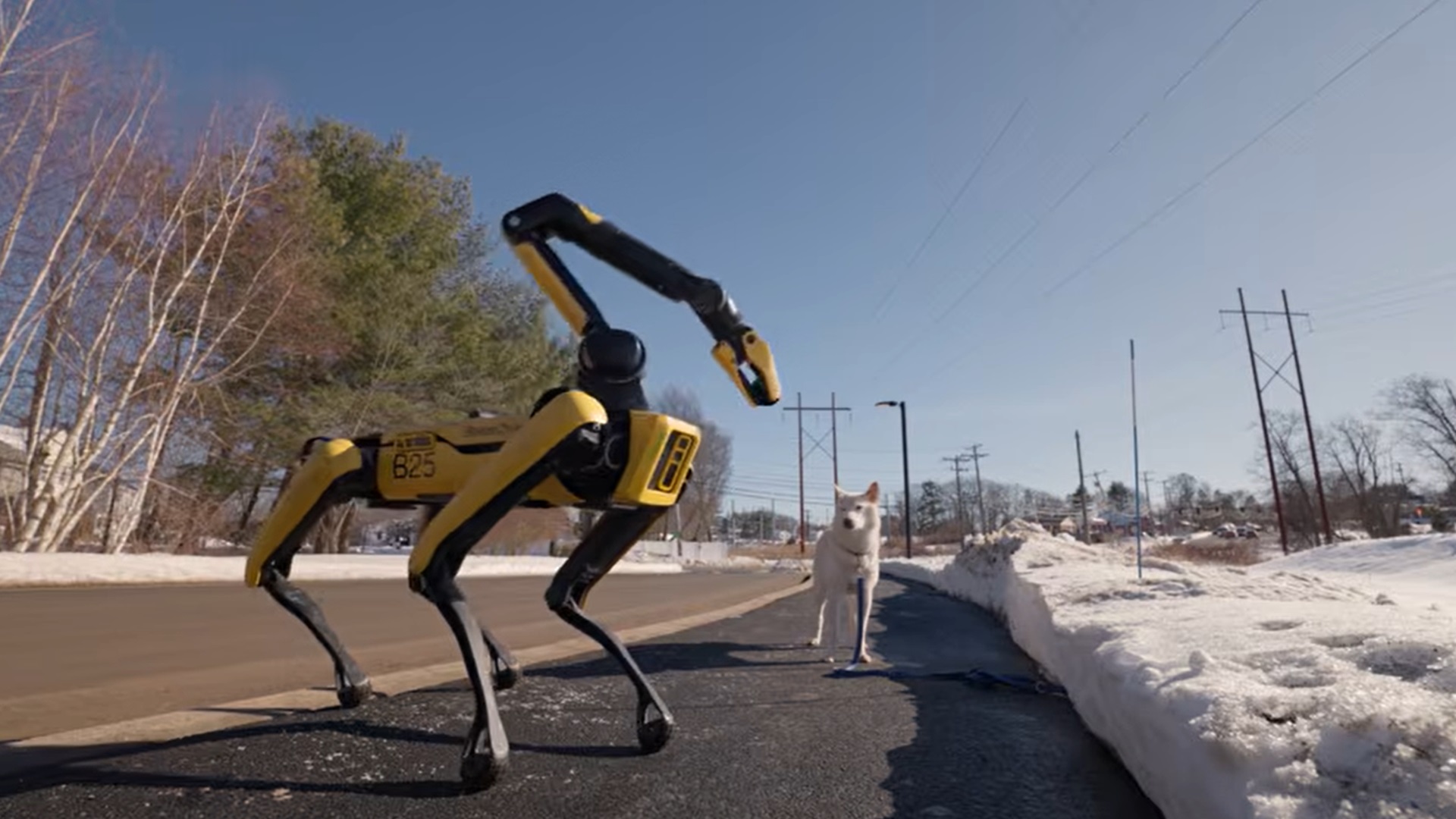
Beyond reading dials, the system can interpret handwritten notes for robotic task automation. Imagine a maintenance worker leaving a sticky note that says, "Check the leak near pump B." A reasoning-capable Spot can read that note, locate pump B using its internal map, and perform a visual inspection without any new code being written. Currently, there are several thousand Boston Dynamics Spot robots deployed commercially, and this new reasoning capability makes using Boston Dynamics Spot for industrial facility monitoring far more cost-effective for large-scale operations.
The Technical Core: Agentic Vision and Spatial Understanding
At the heart of this advancement is a concept known as agentic vision. This is not just traditional computer vision that labels objects; it is a system that uses a visual scratchpad to think through a problem. When a robot is tasked with a multi-step mission, it uses its multi-view camera streams to build a comprehensive spatial understanding of three-dimensional spaces.
This spatial reasoning is critical for navigating complex spaces. Robotic spatial reasoning applications require the robot to understand its own physical dimensions relative to the environment. If a robot needs to move a heavy object or navigate through a narrow corridor, it uses Gemini ER 1.6 spatial reasoning for navigating complex spaces to ensure it doesn't get stuck or cause damage.
Furthermore, the model excels at multi-step task planning with agentic vision robotics. The robot doesn't just execute Step A and wait. It constantly monitors for success detection. If it tries to open a door and the handle doesn't turn, it doesn't just keep pushing; it reasons that the door might be locked or requires a different approach. This level of autonomy is what separates a machine that mimics movement from a machine that understands its mission.

The Reliability Trust Floor and the Data Bottleneck
While the progress is impressive, the robotics industry faces a reliability trust floor. For a robot to be trusted in a high-stakes commercial environment, it generally needs to hit an 80% reliability threshold for complex task execution. Gemini ER 1.6 is pushing the boundaries of this threshold, specifically in areas concerning workplace safety and autonomous hazard detection.
To ensure these systems behave predictably, researchers use benchmarks like ASIMOV for safety alignment. This ensures that as the robot exercises autonomous robot reasoning, it remains within the bounds of safe human interaction and operational protocols. This is especially vital when performing autonomous hazard detection in high-risk environments with robots, where a single mistake could lead to significant industrial downtime.
One remaining challenge is the data bottleneck. While the internet provides a nearly infinite supply of visual and text data to train models, there is a lack of high-quality tactile or touch data at an internet scale. While the robot can see and reason about the world, the physical "feel" of objects is still an area where human-level comprehension is being refined. However, by leveraging the large-scale visual reasoning of the Gemini model, the system compensates for this by making smarter decisions based on what it observes.
Future of Embodied AI
The future of Gemini ER 1.6 industrial robotics lies in scaling these reasoning capabilities across different form factors. As the AIVI-Learning platform matures, we can expect to see even more sophisticated contextual understanding from embodied AI agents. The goal is a world where a robot is not just a tool you program, but a partner you instruct.
The transition from rigid automation to autonomous robot reasoning is well underway. As models like Gemini ER 1.6 continue to improve, the gap between human intuition and robotic execution will continue to shrink, making our industrial facilities safer and more efficient than ever before.
FAQ
What is autonomous reasoning in robotics?
Autonomous reasoning in robotics refers to the ability of a machine to process environmental data, interpret context, and make decisions or plan multi-step tasks without needing a pre-defined script for every possible scenario. It allows robots to handle unpredictable changes in their surroundings by understanding the goals of their mission rather than just following a set of coordinates.
How do robots make decisions without human input?
Robots make decisions by using large language models and vision-language models like Gemini ER 1.6. These models act as a decision layer that processes visual information from cameras and compares it against a vast database of learned concepts. The robot then uses logic to determine the best sequence of actions to complete a task, such as navigating around an obstacle or deciding which tool is needed for a repair.
What are the challenges of autonomous robot reasoning?
The primary challenges include the data bottleneck, where there is a lack of tactile data compared to visual data, and the reliability trust floor. Ensuring a robot consistently makes the correct decision in a complex environment is difficult, and maintaining safety alignment so the robot does not take actions that could harm humans or equipment is a top priority for developers.
How do robots handle unpredictable environments using reasoning?
Using spatial understanding and agentic vision, robots create a mental map of their environment. When something unpredictable happens—like a hallway being blocked—the robot uses its reasoning model to evaluate alternative routes or actions. It can detect if a step in its plan has failed and will attempt to find a different solution based on its contextual understanding of the physical world.
Is autonomous robot reasoning safe for human interaction?
Safety is built into these systems through rigorous benchmarks and safety alignment protocols. Models are trained to recognize humans and prioritize their safety above task completion. While autonomous robot reasoning allows for more independence, these robots operate within strict safety boundaries designed to prevent collisions and ensure they respond appropriately to human presence in the workplace.