Quick Facts
- Primary Goal: Improve passenger wayfinding and accessibility through high-tech interaction.
- Key Location: SJC Airport, Terminal B, near Gate 24.
- Key Language Capability: More than 50 languages supported for global inclusivity.
- Technology Provider: Silicon Valley startup IntBot.
- Battery Life: 700Wh capacity allowing for extended autonomous navigation.
- Pilot Duration: A four-month testing phase beginning in early 2026.
José is a humanoid airport AI robot stationed at San José Mineta International Airport (SJC) specifically in Terminal B near Gate 24. Developed by IntBot, it provides multilingual navigation help and real-time terminal information to assist travelers, particularly in preparation for the 2026 FIFA World Cup.
The SJC Pilot Program: Why Now?
The aviation industry is currently facing a transformative period where traditional infrastructure meets the high demands of modern global travel. In response, San Jose Mineta International Airport launched a four-month pilot program in March 2026 for an AI-powered humanoid robot named José. This initiative is not just about a single piece of hardware; it is a strategic response to the shifting landscape of international tourism and local logistics.
The timing of this SJC airport pilot program tech is deliberate. With the 2026 FIFA World Cup on the horizon, the San Francisco Bay Area is preparing for an unprecedented surge of international visitors. Airport officials recognize that the sudden influx of diverse travelers will place a massive strain on existing customer service staff. By testing Physical AI now, the airport can iron out the kinks in human-robot interaction before the world descends on Northern California.
Mayor Matt Mahan has championed this project as part of his broader "Gateway to Silicon Valley" initiative. The goal is to ensure that the first thing travelers see when they land in the heart of the tech world is innovation that actually solves problems. San Jose Mineta International Airport Terminal B AI pilot program details highlight a focus on scalable hospitality. In a high-traffic environment where TSA staffing shortages and language barriers are constant challenges, a tech-driven hospitality approach provides a necessary safety net.
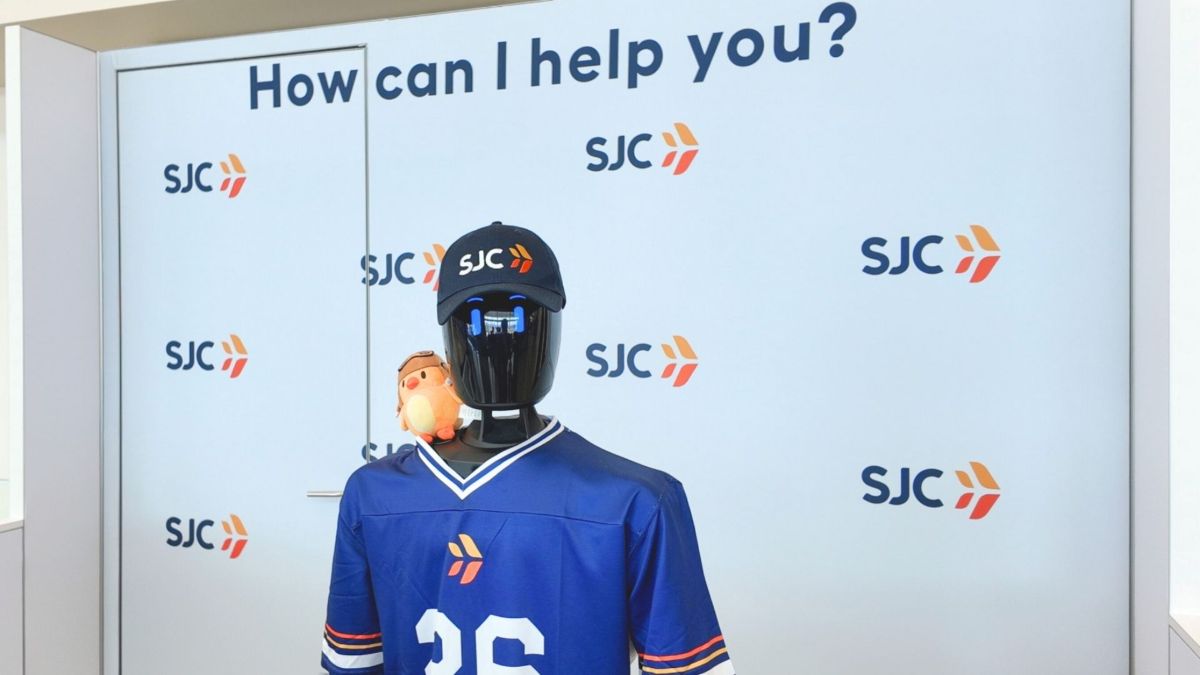
Humanoid Translation: How José Communicates
What makes José stand out from the typical touch-screen kiosks found in most terminals is its integration of social intelligence. Unlike a static display, this airport AI robot combines vision, audio, and advanced Natural language processing to interpret human intent. Developed by Silicon Valley startup IntBot, the José robot is equipped with over 40 joints, allowing it to move with a degree of fluid human-like motion that helps put passengers at ease.
The humanoid translation for travelers is perhaps the robot's most impressive feature. It uses sophisticated Machine translation and Computer vision to recognize faces and engage in conversation. Because it can process over 50 languages, it serves as a universal translator for the global traveler. Whether a passenger needs help in Spanish, Mandarin, or French, José can provide real-time terminal information from San Jose airport AI assistant databases in the traveler's native tongue.
Technical Specifications: The IntBot José Model
- Hardware Architecture: Over 40 points of articulation for natural gestures.
- Power System: A 700Wh battery designed for a full day of Terminal B operations.
- Processing: On-board AI for contextual reasoning and environmental awareness.
- Multimodal Sensors: Integrating Lidar, 3D cameras, and directional microphones.
The distinction between this Physical AI and a standard digital concierge is the ability to handle contextual reasoning. José doesn't just look up a gate number; it can understand human behavior in real-world settings. If a traveler looks confused or lost, the robot’s social intelligence allows it to proactively offer assistance. This creates a much more personalized forms of passenger assistance than a mobile app could ever provide.
Interacting with José: A Traveler’s Guide
If you find yourself in Terminal B near Gate 24, you will likely encounter José patrolling the area. For many, interacting with a humanoid can feel a bit like science fiction, but the process is designed to be intuitive. Knowing how to use Jose robot at San Jose airport for directions starts with simply approaching the unit. The robot’s sensors will detect your presence, and its "eyes" will focus on you to signal that it is ready to listen.
To get the most out of your interaction, follow these best practices for interacting with humanoid airport robots:
- Speak Naturally: The robot uses advanced Natural language processing, so you don't need to speak like a computer. State your question clearly.
- Maintain Eye Contact: José uses Computer vision to maintain a connection with the person it is helping, which improves the accuracy of the audio pickup.
- Ask for Specifics: You can ask for SJC airport AI robot location and gate information, or even inquire about the nearest restroom or a specific restaurant.
The accessibility assistance provided by SJC airport humanoid robots is a game-changer for those with mobility issues or language barriers. Instead of wandering the terminal looking for a help desk, passengers can get multilingual airport navigation help right where they are. This real-time terminal information from San Jose airport AI assistant ensures that no traveler feels left behind, regardless of their familiarity with the airport layout.
Beyond José: The Rise of Specialized Robot Fleets
While José is the star of the current pilot, it is part of a larger trend toward specialized robot fleets in aviation. The industry is moving away from "jack-of-all-trades" machines and toward purpose-built units. At other airports, we are seeing models like Ketty, which focuses strictly on guidance and delivery, and the PUDUT300, which is optimized for heavier tasks.
At SJC, the introduction of an airport AI robot is also a strategic move to address staffing shortages. Robots don't replace human workers; instead, they augment the team by taking over repetitive tasks like wayfinding assistance and basic FAQ handling. This allows human staff to focus on more complex Customer experience (CX) issues that require emotional intelligence and high-level problem-solving.
The economic impact of these service robotics is already being seen in other sectors of airport operations. For example, autonomous cleaning robots like the ARI model can cover up to 20,000 square meters a day, ensuring a level of cleanliness that would require a massive human team to maintain around the clock. By choosing between airport kiosks and AI robots for navigation help, SJC is testing which tech-driven hospitality model provides the best return on investment and passenger satisfaction.
FAQ
What do airport AI robots do?
Airport robots perform a variety of tasks aimed at improving the passenger journey. Their primary roles include wayfinding assistance, providing real-time flight updates, and offering multilingual support to international travelers. Some specialized models also handle floor cleaning, security patrolling, or light luggage transport to alleviate the workload on human staff.
How do AI robots help passengers at airports?
They provide an interactive and accessible way to get information without waiting in line at a traditional help desk. By using Natural language processing and Computer vision, these robots can offer personalized directions, find local amenities like restaurants or lounges, and assist those who may have language barriers by communicating in dozens of different dialects.
Can airport AI robots help with baggage handling?
While models like José are designed for social interaction and navigation, other specific service robotics are being developed for luggage. Some pilot programs use autonomous carts that can follow a passenger or transport bags to a specific gate, though this technology is still in the early adoption phase compared to wayfinding assistants.
Can airport robots communicate in different languages?
Yes, one of the greatest strengths of modern Physical AI in airports is its ability to provide multilingual support. The José robot at SJC, for instance, can communicate in more than 50 languages, making it an invaluable tool for international travelers who might struggle with English-only signage or staff.
Will robots replace human workers in airports?
The current trend suggests that robots are intended to supplement, not replace, the human workforce. By handling repetitive queries and simple navigation tasks, robots allow human employees to focus on high-priority security issues and complex passenger needs that require human empathy and nuanced decision-making.
Future Outlook: Is AI the Answer to Travel Stress?
As the four-month pilot program progresses, the data collected will determine the future of autonomous navigation in San Jose. The goal is to see if an airport AI robot can significantly reduce the "stress points" of the terminal experience—namely, the confusion of finding a gate or the frustration of a language barrier.
The FIFA World Cup 2026 visitor guide to San Jose airport tech will likely feature José or its successors as a primary point of contact for the thousands of fans flying into Silicon Valley. If successful, this pilot could set the standard for how smart transportation hubs operate globally. We are moving toward a future where "Physical AI" is a standard part of urban mobility and aviation innovation.
In the end, the success of José isn't just measured by its 700Wh battery or its 40 joints, but by how much more comfortable it makes the average traveler feel. As we look toward 2026 and beyond, the marriage of Silicon Valley tech and airport hospitality seems not just inevitable, but essential for the next generation of global travel.