Quick Facts
- V2H Backup Power: 11.5 kW continuous output for residential backup.
- V2L Bed Power: 9.6 kW total combined output across AWD and Cyberbeast variants.
- Home Setup: Requires professional installation of the Universal Wall Connector and Powershare Gateway.
- The Loop Myth: Impossible due to stationary infrastructure dependencies and significant conversion efficiency loss.
- Safety Protocol: The system automatically disables internal vehicle outlets when external power export is active.
- Discharge Control: Users can set a minimum battery reserve to prevent the vehicle from becoming stranded.
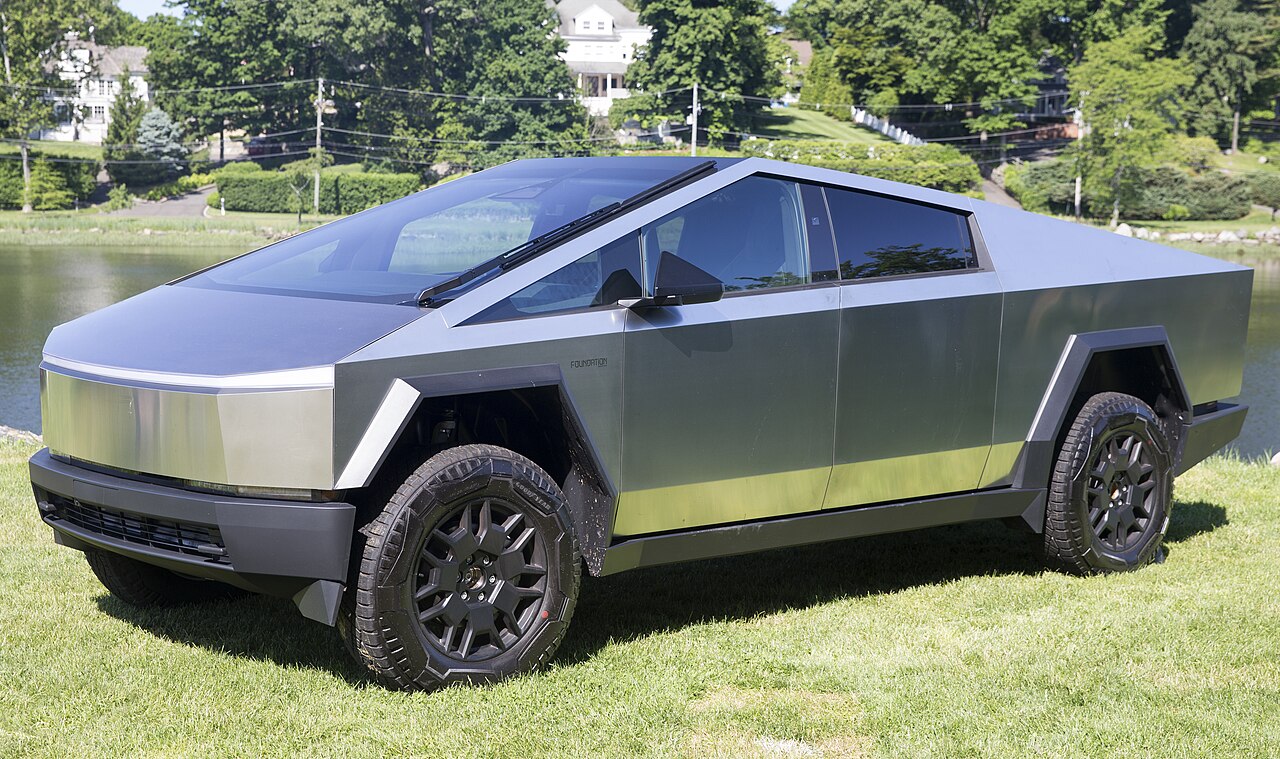
Addressing the viral myth of Cybertruck Powershare infinite charging and the technical reality of Tesla V2H hardware requirements for home backup reveals a sophisticated but strictly controlled energy ecosystem. The Cybertruck Powershare infinite charging myth is impractical because the system requires permanent stationary infrastructure, specifically a Powershare Gateway and a Universal Wall Connector at a fixed residential location, to redistribute energy back into a power system.
The Infinite Loop Myth: Why Physics Says No
Social media has been flooded with theories about perpetual energy loops—the idea that you could plug a Cybertruck into itself to stay charged indefinitely or "steal" energy from a Supercharger to power your home via a mobile loop. From an engineering and smart home integration perspective, this theory falls apart for two main reasons: software safeguards and the laws of thermodynamics.
Tesla has engineered the vehicle to be smart enough to recognize when it is exporting power. Tesla's Powershare system prevents self-charging loops by automatically disabling the Cybertruck's onboard AC outlets in the cabin and cargo bed whenever the vehicle is actively providing power to a home or another vehicle. You cannot draw power from the bed while the truck is trying to ingest power through the charge port.
Even if you could bypass the software, you would encounter the reality of conversion efficiency loss. Every time energy changes from DC (battery) to AC (for the outlet) and back to DC (for the charger), energy is lost as heat. Attempting a self-charging loop would result in a net-negative energy trade, draining your battery faster than if the truck were simply sitting idle. Furthermore, using a vehicle for energy arbitrage—taking free or cheap Supercharger energy to power a residential grid—is often a violation of the Supercharger Fair Use Policy, which protects the network for travel needs rather than residential energy storage.
Essential Tesla V2H Hardware Requirements
For many homeowners, the Cybertruck represents the ultimate backup battery, but you cannot simply plug the truck into a standard wall socket and expect your lights to stay on during a blackout. To achieve full vehicle-to-home (V2H) functionality, you must invest in what I call the Hardware Iron Triangle:
- Universal Wall Connector: Acts as the physical bridge between the vehicle and your home.
- Powershare Gateway: This is the "brain" of the operation. it manages the connection to the utility grid and ensures your home safely disconnects from the grid during an outage.
- Bidirectional Inverter: While the truck has an internal inverter, the system requires the Gateway to manage the flow and protect your home electrical panel.
These Tesla V2H hardware requirements ensure that the system follows the ISO 15118-20 protocol, a sophisticated digital handshake that ensures the car and the house are speaking the same language before any high-voltage energy moves.
Many older homes will require a home electrical panel upgrade to handle the 11.5 kW flow. When calculating the cost of Tesla Powershare Gateway and Wall Connector 2026, homeowners should budget for both the hardware and the specialized labor required for automatic grid disconnection. While the upfront cost is significant, it is often more affordable than installing two or three dedicated stationary batteries.
Home Backup vs. Job Site Utility: V2H and V2L Explained
Understanding the difference between V2H (Home) and V2L (Load) is crucial for getting the most out of your Cybertruck home backup power setup. The truck's bidirectional charging hardware supports a maximum continuous output of 11.5 kW for home backup, which is enough to run most large homes including air conditioning and well pumps.
For professionals on a job site, the 9.6kW V2L bed outlet use cases for professionals are extensive. The truck features a NEMA 14-50 240V outlet and four 120V NEMA 5-20 outlets. This total combined 9.6 kW of power through its five integrated outlets can run heavy-duty welders, power saws, and compressors simultaneously.
One of the most impressive features is the Tesla Powershare automatic home backup outage detection time. The system can detect a grid failure and transition the home to vehicle power in less than a second, often so fast that your clocks won't even blink. The 800V architecture of the Cybertruck helps maintain high efficiency during these high-draw scenarios, providing a more robust off-grid capability than the 400V systems found in older EVs.
V2V Limitations: Why You Can't 'Jump' Every EV
While the Cybertruck is a mobile power station, there are Cybertruck V2V charging limitations to consider. In a vehicle-to-vehicle (V2V) scenario, the truck provides about 7.7kW (32A) of power. This is essentially an emergency "jump start" for a stranded EV rather than a high-speed charging solution.
The NACS standard allows for great physical connectivity, but the ISO 15118-20 protocol required for energy export is not yet universal. If you are trying to charge a non-Tesla EV, some NACS-to-CCS adapters may fail to initiate the charge because they aren't designed for the thermal demands of continuous bidirectional flow. For safety, Tesla uses potted electrical components to manage heat, and if the adapter doesn't meet these thermal standards, the truck will throttle or cut the power. This makes Cybertruck V2V charging limitations and emergency use an important consideration for rescue or fleet operations.
AWD vs. RWD: The Power Gap
Not every Cybertruck is created equal when it comes to power export. There is a significant performance gap between the high-end trims and the base model.
| Feature | AWD / Cyberbeast | Rear-Wheel Drive (RWD) |
|---|---|---|
| Max V2L Output | 9.6 kW | 2.4 kW |
| Home Backup (V2H) | 11.5 kW | Not Supported |
| Bed Outlets | 5 (Includes 240V) | Limited 120V Outlets |
| Architecture | 800V | 800V |
The RWD version is primarily designed for transport efficiency rather than residential energy management. If you plan on using your truck as a resilient power source for your smart home, the AWD or Cyberbeast models are the only viable options.
To ensure you are never left without a way to get to a charger, the Powershare system includes a user-adjustable discharge limit that stops energy export once the battery reaches a specific state of charge. This prevents vehicle stranding after a long power outage.
FAQ
What is Cybertruck Powershare and how does it work?
Powershare is Tesla's suite of bidirectional charging features that allow the Cybertruck to use its massive battery to power external loads. It works by using an onboard bidirectional inverter to convert the battery's DC power into AC power, which can then be sent to the truck's outlets, another vehicle, or a properly equipped home.
Can the Cybertruck power my home during an outage?
Yes, the AWD and Cyberbeast variants can provide up to 11.5 kW of continuous power to your home. Depending on your energy usage, a fully charged Cybertruck can provide enough electricity to sustain a typical household for three or more days.
What equipment is required to use Powershare with a Cybertruck?
To power a home, you need the Cybertruck itself, a Tesla Universal Wall Connector, and a Powershare Gateway. These components must be professionally installed to allow the home to safely disconnect from the utility grid during an outage.
Is a Tesla Powerwall necessary for Cybertruck Powershare?
No, a Powerwall is not strictly required. The Cybertruck acts as a massive mobile Powerwall. However, the system is compatible with existing Powerwall installations, allowing the truck to work in tandem with stationary batteries for even longer off-grid endurance.
Can the Cybertruck charge other electric vehicles using Powershare?
Yes, the Cybertruck can charge any EV with a standard J1772 or NACS port using a mobile connector plugged into the 240V bed outlet. It provides approximately 7.7 kW of power in this mode, which is roughly equivalent to a standard Level 2 home charger.
Future-Proofing Your Energy Needs
The Cybertruck represents a pivot point in how we think about our vehicles and our homes. It is no longer just a mode of transportation; it is a critical component of a residential energy management strategy. By moving away from myths like infinite charging loops and focusing on the actual Tesla V2H hardware requirements, owners can build a more resilient, off-grid capable lifestyle. Whether you are using the 9.6kW V2L bed outlet use cases for professionals or relying on the truck for home backup during a storm, the Cybertruck Powershare system offers a glimpse into a future where our cars and homes work as one seamless ecosystem.