Our Top Picks
- Overall Best: Airalo for coverage across 200+ countries.
- Best for Heavy Data: Holafly for specialized unlimited data packages.
- Best for Security: Saily for built-in VPN features and privacy.
- Best Travel Perks: Jetpac for airport lounge access and essential app persistence.
- Best for Multi-Country Trips: Ubigi for flexible top-ups on a single profile.
The best travel eSIMs for 2026 are Airalo, Holafly, Saily, Ubigi, and Jetpac. These digital SIM technology solutions offer global coverage and affordable international eSIM plans starting under $5, allowing travelers to avoid roaming charges and stay connected abroad with high-speed cellular data connectivity.
| Provider | Best For | Key Feature | Starting Price |
|---|---|---|---|
| Airalo | Global Coverage | 200+ countries supported | ~$4.50 |
| Holafly | Unlimited Data | No data caps in most regions | ~$19.00 |
| Saily | Security | NordVPN integration | ~$3.99 |
| Jetpac | Travel Perks | Airport lounge access | ~$4.00 |
| Ubigi | Multi-Country | Reusable global profile | ~$3.00 |
The Evolution of Connectivity: Why eSIMs Rule in 2026
If you had told me five years ago that we would be boarding international flights without a paperclip in our wallets, I might have been skeptical. But as we move through 2026, the physical SIM card is becoming a relic of the past, much like the bulky paper maps we used to carry. We have entered an era of digital SIM technology that prioritizes convenience and instant access over plastic waste and physical swaps.
The shift is backed by staggering numbers. The global travel eSIM market is projected to reach an estimated value of 1.75 billion USD in 2026, representing a massive pivot toward digital-first international connectivity. For those of us who live on our phones, this isn't just about convenience; it is about the infrastructure of modern travel. The number of active eSIM-enabled devices worldwide is forecast to grow by 30% in 2026, reaching approximately 1.5 billion connections.
What this means for the average traveler is a world where cellular data connectivity is as accessible as the air we breathe. We no longer need to find a kiosk at Heathrow or Narita; we simply tap a screen and activate a plan before the wheels even touch the tarmac. This transition is largely fueled by eSIM providers with global coverage who have spent the last few years perfecting their local network partners and user interfaces. With Dual SIM compatibility, you can keep your original phone number active for those essential 2FA texts while using a local data plan for everything else.
1. Airalo: The Gold Standard for Global Coverage
Airalo continues to be a favorite in my rotation because of its sheer reliability. When you are looking for the best travel eSIMs, the conversation almost always starts here. They have built an ecosystem that covers nearly 200 countries, making them the most expansive provider on the market. In 2026, their Discover Global plan remains a standout choice for those on long-term journeys, offering options like 20GB of data valid for 365 days for around $57.
The beauty of Airalo lies in its consistency. They partner with top-tier local network partners in each country, meaning you are rarely stuck on a congested 3G network when everyone else is enjoying 5G speeds. Their app is a masterclass in simplicity—you can see your validity duration and remaining data at a glance. When comparing Airalo vs Holafly for long term travel, Airalo often wins on price for users who are mindful of their data consumption and don't need unlimited buckets.

2. Holafly: True Freedom for High-Usage Travelers
For the traveler who lives on Instagram, TikTok, or relies heavily on Google Maps to navigate the winding streets of Tokyo, data caps are the enemy. This is where Holafly shines. They have carved out a niche by offering an unlimited data eSIM for travel in over 160 destinations. It is a liberating experience to walk through a foreign city without once checking your data usage tracking meter.
However, a quick reality check is necessary for high-usage travelers. While the plans are marketed as unlimited, almost every provider in 2026 operates under a Fair Usage Policy. This means if you decide to tether your laptop and download 50GB of 4K video in a single afternoon, you might experience speed throttling. Despite this, for the vast majority of tourists, Holafly provides the best unlimited data eSIM for international travel because it removes the anxiety of running out of data in the middle of a trip.
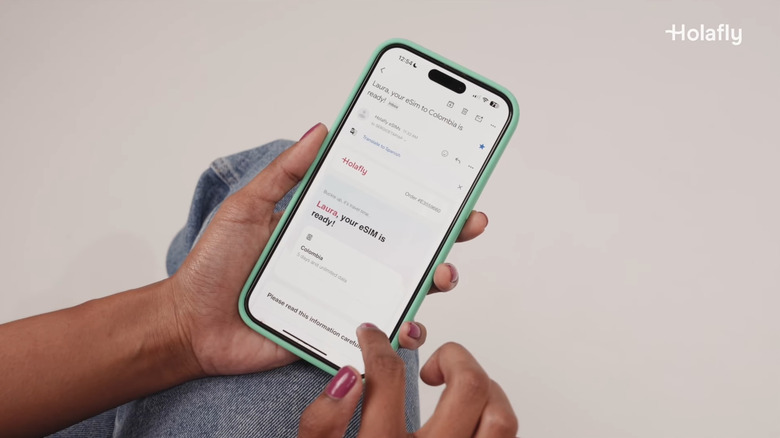
3. Saily: Security-First Connectivity for Digital Nomads
One of the most exciting developments in the mobile space over the last couple of years is the entry of Saily. Developed by the team behind NordVPN, Saily is specifically designed for digital nomads and security-conscious travelers. While other providers focus solely on data, Saily integrates security features that give you peace of mind when connecting to local networks.
They offer some of the most affordable international eSIM plans I have seen, with weekly 1GB plans often starting as low as $3 or $4. This makes Saily a great choice for short city breaks or as a backup connection. The interface is clean, and the activation process is streamlined to avoid the technical hurdles that often frustrate first-time users. For someone looking for a travel eSIM with built in VPN and security features, this is the current top-tier recommendation.
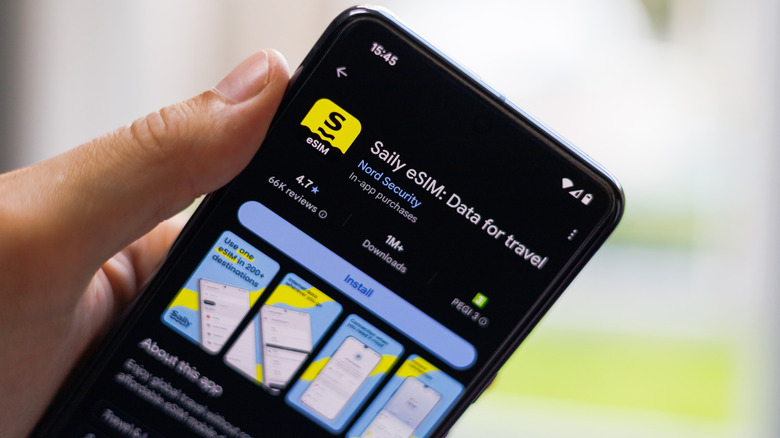
4. Jetpac: Travel Perks and Reliability
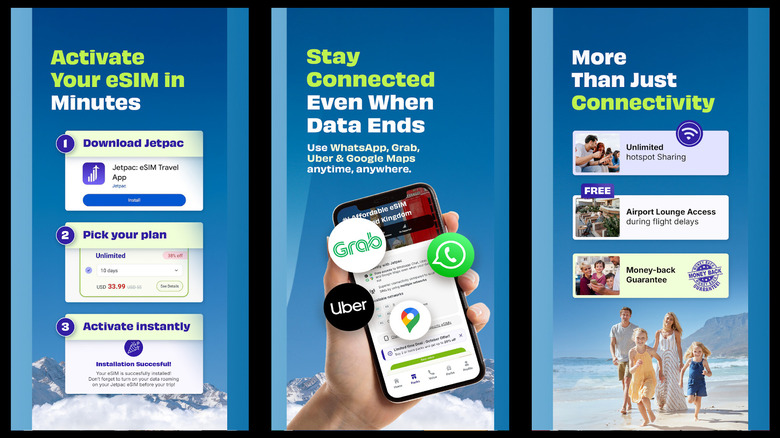
Jetpac has taken a different approach to winning over travelers in 2026. Instead of competing solely on price per gigabyte, they have layered in value-added services that actually matter when things go wrong. Their standout feature is Smart Delay, which provides complimentary airport lounge access if your flight is delayed by more than 60 minutes. As someone who has spent many hours on a hard plastic chair in a crowded terminal, this is a game-changer.
Furthermore, Jetpac is a reliable eSIM for staying connected in remote travel destinations because of its smart data management. Even after you have exhausted your primary data allowance, Jetpac allows continued access to essential apps like WhatsApp and Google Maps. This safety net ensures you can always message your hotel or find your way back to your Airbnb, regardless of your data balance. Their affordable international eSIM plans are competitive, but it is the peace of mind that really sells it.
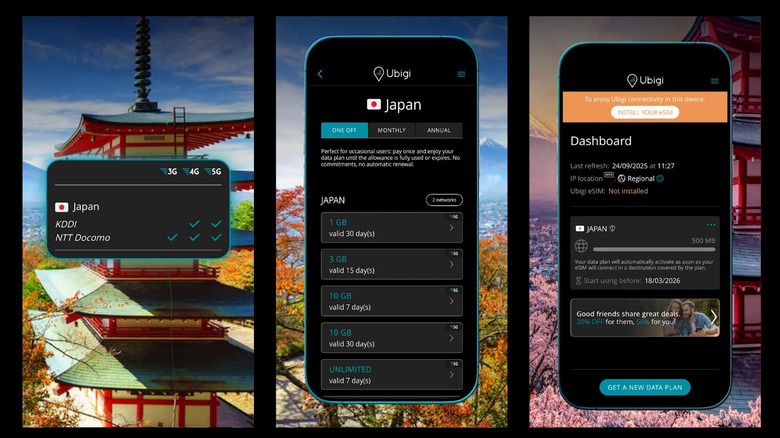
5. Ubigi: Flexible Top-Ups for Multi-Country Trips
If you are planning a Grand Tour of Europe or a cross-continental trek through Asia, Ubigi is the provider you want in your settings. Unlike some services that require a new QR code activation for every country, Ubigi allows you to maintain a single profile that works globally. You simply top up your balance or buy a new regional plan within the app as you move across borders.
This makes Ubigi the source for the cheapest eSIM plans for multi country Europe trips. You can buy a 10GB Europe-wide plan and use it seamlessly as you take the train from Paris to Berlin. They are also highly regarded by digital-only device users, particularly those with LTE-enabled laptops and tablets, as their network latency is consistently low. For travelers who need eSIM providers with global coverage for multiple countries, Ubigi’s dashboard is the most user-friendly solution available today.
Quick Guide: How to Install Your eSIM
Installing an eSIM has become significantly easier since the technology first hit the mainstream. In 2026, the process is almost entirely automated. Here is a quick breakdown of how to install travel eSIM on iPhone without physical SIM.
- Select Your Plan: Purchase your plan through the provider's app or website.
- QR Code Activation: You will receive a QR code via email or within the app. Go to Settings > Cellular > Add eSIM on your iPhone.
- Scan and Label: Scan the code and label the new line as "Travel" to keep it separate from your primary line.
- Data Switching: Ensure your "Cellular Data" is set to the new travel eSIM once you arrive at your destination.
- Data Roaming: Crucially, make sure "Data Roaming" is turned ON for the travel eSIM but remains OFF for your primary home SIM to avoid unwanted charges.
Most modern Android devices follow a nearly identical flow under the "Network & Internet" settings. The entire process takes less than two minutes and requires no physical tools.
Data Usage Reality Check: How Much Do You Really Need?
One of the biggest mistakes travelers make is overpaying for data they never use. On the flip side, running out of data while trying to call a ride-share in a foreign language is a nightmare. To help you choose between the best travel eSIMs, here is a breakdown of typical data consumption in 2026.
| Activity | Data Consumption | Tips |
|---|---|---|
| Google Maps Navigation | 5–10 MB per hour | Download offline maps to save data. |
| Social Media Scrolling | 150–300 MB per hour | High-res video on TikTok/Reels eats data fast. |
| WhatsApp Messaging | Negligible | Voice calls use about 0.5 MB per minute. |
| HD Video Streaming | 1–3 GB per hour | Wait for hotel Wi-Fi for Netflix binges. |
| Music Streaming (Spotify) | 50–150 MB per hour | Lower the quality in settings to save data. |
If you are a casual traveler who mostly uses maps and messaging, a 3GB to 5GB plan for a week is usually plenty. However, if you are working remotely or posting constant video updates, an unlimited data eSIM for travel from a provider like Holafly is the safer bet.
FAQ
How do travel eSIMs work?
Travel eSIMs work by using a small chip embedded in your smartphone to connect to local networks without needing a physical card. When you purchase a plan, your provider sends a digital profile to your phone, typically via a QR code, which tells your device how to communicate with local cell towers in your destination country.
Is an eSIM better than a physical SIM for international travel?
For most travelers, yes. An eSIM allows you to keep your home SIM card in your phone, ensuring you don't lose it and can still receive important texts. It also eliminates the need to find a local store upon arrival, as you can set everything up before you leave home.
How do I install and activate a travel eSIM?
Installation usually involves scanning a QR code provided by the eSIM company or using their dedicated app to "push" the settings to your device. Activation typically happens automatically the moment your phone connects to a supported network in your destination country.
Can I keep my original phone number while using an eSIM?
Absolutely. Modern smartphones support Dual SIM technology, which means your original physical SIM or primary eSIM stays active for calls and texts while the travel eSIM handles all the data. This is perfect for staying reachable while avoiding high roaming fees for internet use.
Do travel eSIMs include unlimited data?
Some providers, like Holafly, specialize in unlimited data eSIM for travel. However, many others offer fixed-amount plans (e.g., 1GB, 5GB, or 10GB). It is important to check the specific plan details and the Fair Usage Policy to understand if your speeds might be reduced after a certain amount of usage.