Quick Facts
- Legal Verdict: Operating a semi-autonomous vehicle while impaired is a criminal offense in all jurisdictions.
- Control Standard: The law focuses on the ability to take control rather than whether the car is currently steering itself.
- Tech Limitation: No consumer vehicle currently available in the United States is classified as fully autonomous.
- Misconception Gap: Statistics show a massive disconnect between marketing names like Autopilot and actual vehicle capabilities.
- Future Mandate: Federal law requires all new vehicles to include passive drunk driving prevention technology by 2026.
- Liability: The human occupant remains the responsible party for all traffic violations and safety hazards.
You can be charged with a self-driving car DUI because most current technology, including Tesla Autopilot, is classified as Level 2 or 3 automation. These systems require a human driver to remain alert and ready to intervene at any moment. Legally, an impaired person behind the wheel is still considered the operator, as the vehicle is not yet fully autonomous and requires constant human oversight.
The Legal Myth of Autonomy: SAE Levels Explained
To understand why a self-driving car DUI is a reality, one must first look at the technical hierarchy established by the Society of Automotive Engineers (SAE). Most drivers assume that if a car can navigate a highway or change lanes, it is driving itself. However, from a legal and regulatory standpoint, there is a massive chasm between Advanced Driver Assistance Systems and true Automated Driving Systems.
Currently, the consumer market is saturated with Level 2 systems. These provide steering and braking assistance but mandate that the human driver remains the primary operator. Even the most advanced consumer-facing systems are limited by SAE levels of autonomy that do not allow the driver to disengage from the task of driving. In states like North Carolina, under North Carolina § 20-138.1, the law is clear: if you are in the driver’s seat and the vehicle is in motion—regardless of who is steering—you are the operator.
The legal landscape becomes even more rigid when looking at Texas § 545.453. This code specifies that for a vehicle to be considered truly autonomous, it must be capable of performing the entire dynamic driving task without human intervention. Since current Level 2 and Level 3 systems cannot guarantee safety in all conditions, the motor vehicle codes across the country still place the burden of safety squarely on the human occupant.
| SAE Level | Name | Description | Human Role | Legal Responsibility |
|---|---|---|---|---|
| Level 0 | No Automation | Human performs all tasks | Fully Engaged | 100% Human |
| Level 1 | Driver Assistance | Cruise control or lane centering | Hands on/Eyes on | 100% Human |
| Level 2 | Partial Automation | Combined steering and braking | Hands off (briefly)/Eyes on | 100% Human |
| Level 3 | Conditional Automation | Car handles most tasks | Must be ready to intervene | 100% Human |
| Level 4 | High Automation | No driver needed in specific areas | Passive Passenger | Manufacturer/Fleet |
| Level 5 | Full Automation | Car drives anywhere, any time | Passive Passenger | Manufacturer |
Actual Physical Control (APC): Why the Wheel Doesn't Matter
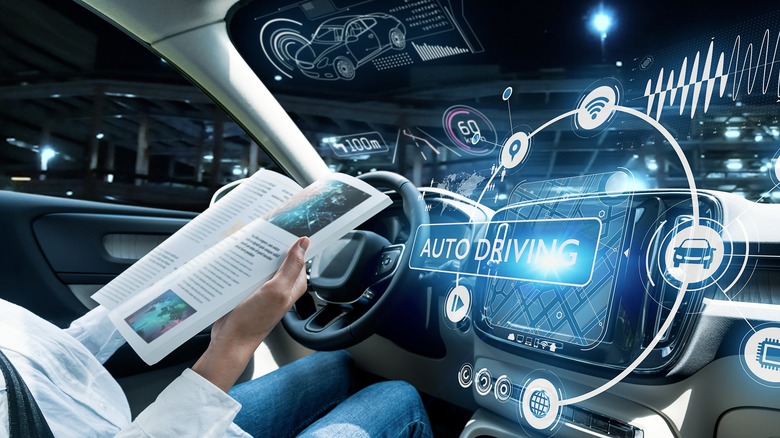
The most common defense used by individuals facing a self-driving car DUI is that they were not actually driving. They might argue that their hands were off the wheel or that they were even in the passenger seat while the car was in motion. This defense typically fails due to the doctrine of actual physical control DUI laws.
In many states, including Arizona and Florida, you do not need to be actively steering or accelerating to be arrested for a DUI. Actual physical control means that you have the immediate capability to operate the vehicle's features. If you are sitting in the driver's seat with the engine running—or with the system engaged—you have the power to influence the vehicle's path. Authorities argue that an impaired person lacks the cognitive function to manage human oversight, making them a threat even if the car is performing the mechanical tasks of driving.
A landmark example of this legal reality occurred in 2018 when a Tesla driver was found asleep behind the wheel while the vehicle was traveling at 70 mph on a California highway. Despite the car’s ability to stay within the lane and maintain speed, the driver was arrested and charged. The court ruled that his presence in the driver's seat and the fact that he had initiated the drive meant he was in actual physical control of the vehicle.
Furthermore, implied consent laws mean that by simply operating a vehicle on public roads, you have already agreed to sobriety testing if there is probable cause. Claiming that the car was driving itself does not exempt you from these intoxication standards. Whether you are sleeping in a self-driving car while drunk legal consequences or simply checking your phone, if your Blood Alcohol Concentration is over the limit, the law views you as an impaired pilot of a multi-ton machine.
The 2026 Turning Point: Mandatory DUI Prevention Tech
The legal and technical conversation surrounding drunk driving risks in semi-autonomous cars is about to change significantly due to the Infrastructure Investment and Jobs Act (2021). This federal legislation includes a mandate that will force the automotive industry to integrate advanced safety systems specifically designed to stop impaired driving before it starts.
Beginning with 2026 and 2027 models, vehicles will be required to feature technology that can "passively monitor" the performance of a driver to accurately identify whether that driver may be impaired. This will likely involve a combination of Driver monitoring sensors that track eye movement and behavior, as well as systems capable of detecting Blood Alcohol Concentration through the air in the cabin or through touch-based sensors on the steering wheel or ignition button.
The Timeline of Prevention
- 2021: The Infrastructure Investment and Jobs Act is signed into law, tasking the NHTSA with creating a safety standard for impaired driver prevention.
- 2024: Federal regulators begin finalizing the technical requirements for passive monitoring systems.
- 2026: Manufacturers must begin equipping new production vehicles with technology that can prevent vehicle operation if impairment is detected.
The impact of 2026 mandatory dui prevention tech on car owners will be profound. For the first time, the vehicle itself will act as a legal gatekeeper. If the system detects that a driver is over the limit, it may refuse to engage the drive system or safely pull the car over. While this is a win for public safety hazards reduction, it also solidifies the legal expectation that a human must be sober to even sit in the operator's seat of a modern car.
Tesla Autopilot and Legal Risks for Owners
Tesla is often at the center of the self-driving car DUI debate, largely because of how the company markets its software. With names like Autopilot and Full Self-Driving (FSD), many consumers believe they are purchasing a vehicle that can act as a personal chauffeur. This belief is a dangerous legal fallacy.
A 2018 survey by AAA found that 40% of Americans expect driver assistance systems with names like Autopilot or ProPILOT to have the ability to drive the car by itself. This indicates a significant gap in consumer understanding regarding the technology's limitations. In reality, Tesla's manuals and on-screen prompts explicitly state that the driver must keep their hands on the wheel and remain attentive.
For a Tesla owner, the tesla autopilot drunk driving legal risks are high because the vehicle's logs record every interaction. If an accident occurs while the driver is impaired, the data will show exactly when the driver failed to provide human oversight. Prosecutors can use this data to prove that the driver was not fulfilling their legal obligation to monitor the system. Furthermore, vicarious liability ensures that the owner of the vehicle is responsible for how that vehicle is used, even if they claim the software was at fault.
Using these systems as a "hack" to get home after a night of drinking is a recipe for a life-altering arrest. Until we reach Level 5 autonomy—where a car has no steering wheel or pedals—there is no scenario where the law permits an intoxicated person to be the primary occupant of the driver's seat.
FAQ
Can you get a DUI in a self-driving car?
Yes, you can certainly be arrested and convicted for a DUI in a self-driving car. Because current consumer vehicles are not fully autonomous, the law considers the human in the driver's seat to be the operator. If that person is impaired, they are in violation of the law, regardless of whether the car's assistance systems are engaged.
Is it legal to be drunk in an autonomous vehicle?
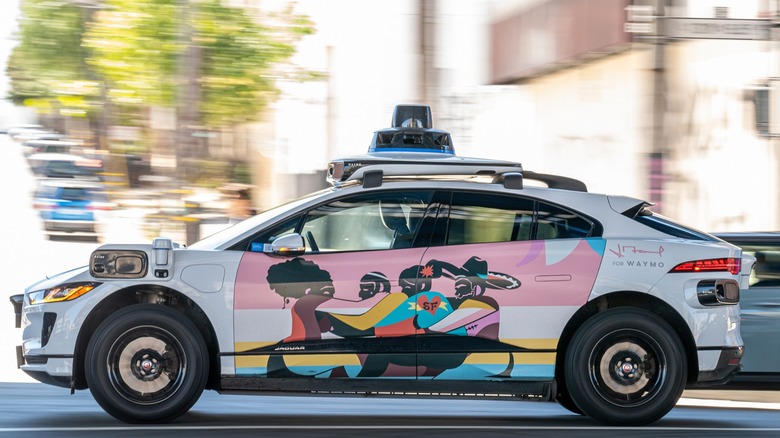
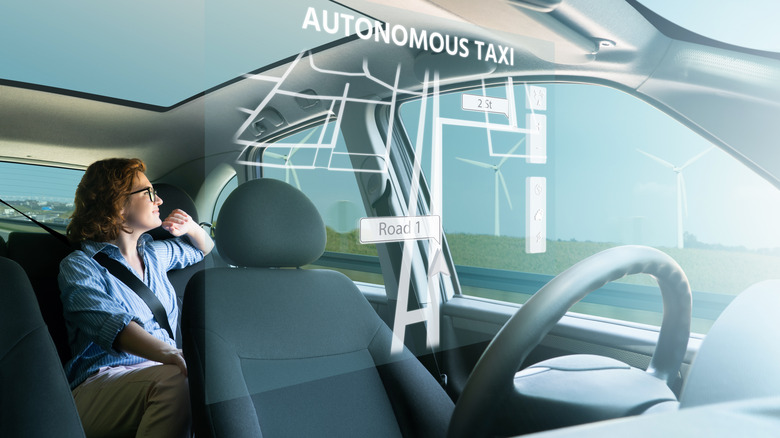
It depends on the level of autonomy and your position in the car. In a fully autonomous Level 4 or 5 robotaxi (like those operated by Waymo), you are a passenger and can legally be intoxicated. However, in any car where you are sitting in the driver's seat and have the ability to take control, being intoxicated is illegal.
Can you use a Tesla on Autopilot while drunk?
No. Using Tesla Autopilot while drunk is treated exactly the same as driving a traditional car while drunk. Tesla’s software is a Level 2 system that requires constant human intervention. Operating this system while over the legal limit will lead to a DUI arrest and potentially more severe charges if an accident occurs.
Can you sleep in a self-driving car while intoxicated?
Sleeping in the driver's seat of a car with the engine or self-driving systems active is extremely risky. Most states use the actual physical control doctrine, meaning if you are in the driver’s seat with the keys or the system engaged, you are legally "driving." Many people have been arrested for DUI while sleeping in a self-driving car.
Will self-driving cars eventually prevent DUI arrests?
In the future, true Level 5 autonomous vehicles could theoretically eliminate DUI arrests because there would be no "driver" to charge. Additionally, new federal mandates for 2026 will introduce technology designed to prevent impaired people from starting their cars, which may lower the number of arrests by preventing the crime before it happens.
The convenience of modern technology does not provide a loophole for safety. The legal and financial costs of a DUI conviction—ranging from thousands of dollars in fines to jail time and the loss of licensure—far exceed the cost of a ride-sharing service. When you are under the influence, the only safe and legal way to get home is to let a sober human or a professional taxi service take the lead.