Quick Facts
- Core Function: Agentic AI assistant providing personalized medical guidance and task automation within the Amazon ecosystem.
- Cost and Availability: Free for all U.S. residents through the mobile app and website, with premium features for Prime members.
- Telehealth Integration: Directly connects to One Medical for virtual consultations for more than 30 common conditions.
- Technical Foundation: Powered by Amazon Bedrock with secure access to Electronic Health Records and Health Information Exchanges.
- Prime Exclusive: Members receive five free messaging-based consultations and a discounted rate of $9 per month or $99 per year for full membership.
- Safety Protocols: HIPAA-compliant architecture with clinical guardrails to ensure AI responses are verified by medical logic.
Amazon Health AI is an agentic artificial intelligence assistant that provides personalized health guidance by analyzing medical records, lab results, and current medications. Available via the Amazon app and website, it helps users manage prescriptions, book appointments, and understand complex health data through secure Health Information Exchanges.
Understanding the Amazon Health AI Assistant
As someone who spends most of my time testing the latest hardware and software, I have seen a lot of chatbots that claim to be life-changing. However, Amazon Health AI is fundamentally different from the standard conversational bots we have grown used to over the last few years. To understand why, you have to look at the concept of an Agentic AI. While a standard chatbot might give you a generic answer about a headache, an agentic system is designed to actually do things on your behalf—like checking your insurance coverage, summarizing your specific medical history, or setting up a follow-up visit.
Amazon One Medical's Health AI assistant, launched in early 2026, represents a significant leap forward in personalized medicine. Unlike general-purpose tools, the Amazon Health AI vs ChatGPT for personalized medical guidance debate is settled by the data sources used. While ChatGPT draws from a massive but generalized pool of internet data, Amazon Health AI connects directly to verified Electronic Health Records and Health Information Exchanges. This means the assistant knows your actual medical history, your specific allergies, and the exact medications you are currently taking.
The heavy lifting is performed by Amazon Bedrock, a platform that allows the system to utilize high-performing foundation models while maintaining strict security. By leveraging Amazon Bedrock, the tool can process your data in a silo that is never used to train open-source models or target you with retail advertisements. It is a specialized, private environment designed to give you medical-grade insights without compromising your digital privacy.
Personalized Medicine: Lab Results and Prescriptions
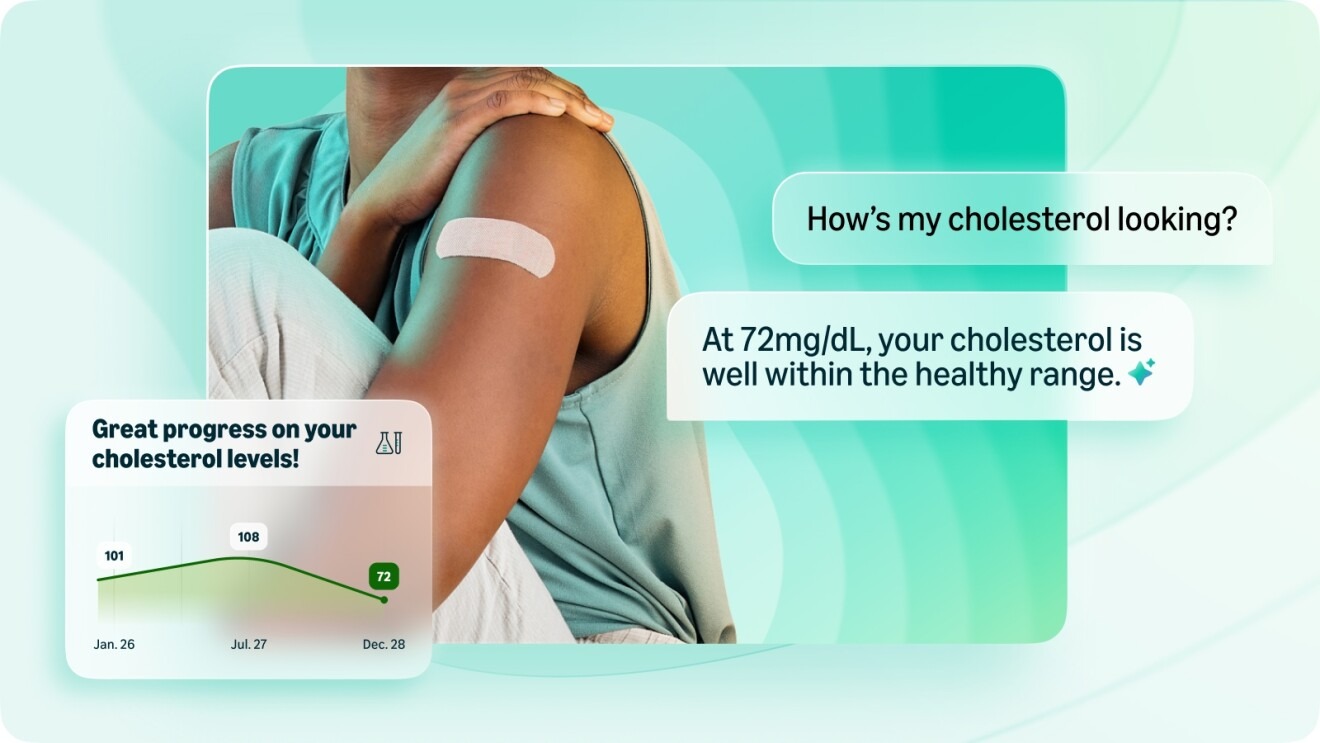
If you have ever opened a lab report and felt like you were reading a different language, you are not alone. Interpreting blood work or metabolic panels usually requires a frantic Google search that often leads to unnecessary anxiety. One of the most practical features I have found is using Amazon Health AI to interpret lab results. You can ask the assistant to explain what a high cortisol level or a specific cholesterol number means in the context of your previous tests. It provides a longitudinal view, showing you how your numbers have trended over time rather than just looking at a single snapshot.
This level of AI lab result analysis goes beyond simple definitions. The assistant can identify patterns that might suggest a need for a medication adjustment. This leads directly into the utility of managing medical prescriptions with Amazon Health AI. Because the tool is integrated with Amazon Pharmacy, you can check your remaining refills, see the cost of a generic versus a brand-name drug, and even request a renewal directly through the interface.
For users dealing with chronic conditions, these personalized medicine features serve as a digital health concierge. The assistant can send you alerts for dosage tracking or notify you when a specific medication might interact poorly with a new supplement you are considering. It bridges the gap between the doctor's office and your daily life, ensuring that your health data is actually working for you 24/7.
Maximizing Amazon Prime Health Benefits
If you are already paying for a Prime subscription, the value proposition for these telehealth services is hard to ignore. Amazon has effectively bundled high-end primary care into its membership structure. While the basic health assistant is free to all U.S. residents, the Amazon Prime benefits for virtual health AI assistant users include significant cost savings and faster access to human clinicians.
Standard One Medical memberships typically cost $199 per year, but Prime members can join for just $9 a month. This membership provides 24/7 access to on-demand virtual primary care. Furthermore, Prime members get five free direct-message consultations per year for more than 30 common conditions. This is a game-changer for those minor but annoying health issues like seasonal allergies, skin rashes, or the common cold.
| Feature | Standard User | Amazon Prime Member |
|---|---|---|
| Health AI Assistant | Included | Included |
| One Medical Annual Fee | $199 | $99 (or $9/month) |
| Message-Based Visits | Pay-per-visit | 5 Free per year |
| Telehealth Visit Fee | Starts at $29 | Included in membership |
| Pediatric Care | Available | Available |
The pay-per-visit telehealth service was expanded in October 2025 to include pediatric care for children aged 2 to 11, making it a viable option for busy parents. For non-Prime members, a virtual visit starts at a flat $29 fee, which is often significantly cheaper than an urgent care co-pay. By leveraging the One Medical AI integration, you can quickly determine if your symptoms require an in-person visit or if they can be managed at home with a prescription sent directly to your door.
Privacy and Safety: The Clinical Guardrails
The biggest hurdle for any medical technology is trust. When I talk to readers about using an AI for their health, the first question is always about where that data goes. This is why the Amazon Health AI privacy and HIPAA compliance guide is so critical to the platform’s rollout. Amazon has built a "firewall" between its retail side and its health side. Your health data, including the questions you ask the assistant and the lab results it analyzes, is never used to show you ads for protein powder or vitamins on the Amazon shopping site.
The system is fully HIPAA-compliant, meaning it meets the federal standards for protecting sensitive patient data security. Beyond just encryption, Amazon has implemented what they call clinical guardrails. These are a set of rules and logic gates that the AI must follow. If you describe symptoms that suggest a high-risk situation—like chest pain or signs of a stroke—the AI is programmed to stop the conversation and immediately provide instructions for emergency care or connect you to a live doctor.
This "human-in-the-loop" philosophy is essential. The assistant is designed for symptom guidance and administrative tasks, not for making final diagnoses of complex diseases. It acts as a bridge to One Medical clinicians, ensuring that when the AI reaches the limit of its medical expert-verified knowledge, a licensed professional is ready to take over.
How to Access Amazon Health AI on Your Device
Getting started is surprisingly simple because the tool lives right inside the app you likely already have on your phone. To learn how to use Amazon Health AI on the Amazon app, you just need to follow a few quick steps:
- Open the Amazon Retail App on your iOS or Android device.
- Tap the "Health" or "Pharmacy" icon in the bottom navigation menu (or search "Health Assistant" in the top bar).
- Follow the prompts to verify your identity and link your existing health insurance or One Medical account if you have one.
- Once the sync is complete, you can start asking questions like "When is my next prescription refill?" or "Can you explain my recent metabolic panel results?"
The dashboard is designed to be a central hub for virtual primary care. You will see a summary of your upcoming appointments, a list of your current medications, and a direct link to start a chat with the assistant. Because it is available 24/7, it is an excellent resource for triage in the middle of the night when you aren't sure if a fever warrants a trip to the emergency room.
FAQ
What is Amazon Health AI and how does it work?
It is a personalized health assistant that uses generative artificial intelligence to help you manage your medical life. It works by securely connecting to your medical records and lab results, allowing it to provide specific answers about your health rather than general information. It can help you schedule appointments, track medications, and understand clinical data.
How does Amazon protect patient privacy with AI tools?
Amazon uses HIPAA-compliant encryption and ensures that your health information is kept separate from your retail shopping data. The AI models are run in a secure environment through Amazon Bedrock, and your personal medical data is never used to train public AI models or for advertising purposes.
Does Amazon use AI to analyze medical records?
Yes, with your explicit permission, the system can analyze your Electronic Health Records and data from Health Information Exchanges. This allows the AI to provide context-aware guidance, such as checking for drug interactions or summarizing your health trends over several years.
How much does Amazon healthcare AI cost?
The AI assistant itself is free for all U.S. users through the Amazon app and website. However, specific medical services like virtual doctor visits are either pay-per-visit (starting at $29) or included as part of a One Medical membership, which costs $9 per month for Prime members.
Is Amazon health AI HIPAA compliant?
Yes, the entire infrastructure for the health assistant is designed to meet HIPAA standards. This includes the storage of data, the way information is transmitted, and the administrative controls over who can access the information.