Quick Facts
- Standard Lifespan: Most true wireless earbuds last between 18 and 36 months before the battery becomes a significant hindrance to daily use.
- Cycle Limitations: Small lithium-ion cells typically endure 300 to 500 full charge cycles before their capacity drops to 80% of the original state.
- The 20-80 Rule: Maintaining your charge level between 20% and 80% can effectively double the usable life of the internal battery.
- Feature Drain: Active Noise Cancellation (ANC) and high-resolution codecs like LDAC can increase battery drain by up to 30%, leading to more frequent charging.
- Capacity Loss: Due to their tiny size, these batteries face a natural capacity loss of about 20% per year under standard daily usage patterns.
- Environmental Impact: Exposure to temperatures above 35°C (95°F) or below 0°C (32°F) causes permanent chemical damage to the internal power cells.
Most users find their wireless earbud lifespan typically ranges from 18 to 36 months, as the tiny lithium-ion batteries inside are prone to rapid chemical degradation due to frequent charge cycles. While manufacturers often quote longer durations, the average lifespan of wireless earbuds with heavy use rarely exceeds two years without a noticeable drop in performance.
Why They Die: The Science of Battery Degradation
As an editor who has tested everything from boutique open-back headphones to the latest flagship buds, I have seen a recurring tragedy: a $300 pair of earbuds becoming a paperweight after just two years. To understand why this happens, we have to look at the miniaturization penalty. Unlike a laptop or even a smartphone, wireless earbuds utilize incredibly small lithium-ion batteries, often with a battery capacity (mAh) of less than 100mAh per bud.
Because these cells are so small, they reach a full charge cycle much faster than larger devices. Every time you drain the battery and recharge it, the chemical degradation process advances. When you use your buds for four hours a day and pop them back in the case, you are likely completing a full cycle every one to two days.
Another silent killer is voltage stress. When a battery is held at 100% charge, the internal components are under higher electrical pressure. Most wireless earbud cases are designed to keep the buds at a constant 100%, which accelerates the breakdown of the electrolyte. This, combined with poor thermal management in such a cramped chassis, means the lithium-ion cells are fighting a losing battle against heat and chemistry from day one.
Year-by-Year Capacity Projection
| Time Period | Remaining Capacity | Real-World Experience |
|---|---|---|
| Brand New | 100% | Full advertised playback (e.g., 6 hours) |
| 12 Months | 80% - 85% | Noticeable drop; ANC might cut runtime significantly |
| 24 Months | 60% - 70% | Frequent low-battery warnings; buds may die during long calls |
| 36 Months | 40% - 50% | One bud often dies faster than the other; connection drops |
Identifying the early signs of lithium-ion battery failure in earbuds is crucial. If you notice that your buds are getting warmer than usual during a charging session, or if the case itself struggles to hold a charge, you are likely witnessing the beginning of the end for those internal cells.
High-Drain Features: How Usage Habits Impact Longevity
We often focus on how long we use our earbuds, but how we use them is just as important for wireless earbud battery degradation. Modern features are power-hungry. Active Noise Cancellation, for instance, requires the microphones and processor to work constantly to generate anti-noise waves. This constant processing draws significant current, which generates heat—the primary enemy of battery longevity.
Real-world testing by independent labs has shown that the actual battery life for wireless earbuds can be 11% to 38% lower than manufacturers' advertised figures. These claims are often based on tests conducted at only 50% volume in quiet laboratory settings with all features turned off. When we add spatial audio and high-bitrate codecs into the mix, the power efficiency drops even further.
Use-Case Drain Matrix (Estimated Playback)
| Feature Set | Battery Impact | Average Continuous Playback Time |
|---|---|---|
| Standard Stereo (50% Vol) | Baseline | 6.0 Hours |
| ANC Enabled | +25% Drain | 4.5 Hours |
| High Volume (80%+) | +15% Drain | 5.0 Hours |
| Spatial Audio + ANC | +40% Drain | 3.5 Hours |
| Bluetooth LE Audio | -10% Drain | 6.5 Hours |
It is a simple equation: how ANC and high volume affect earbud battery longevity is directly tied to the number of recharges you perform. If you listen at maximum volume with all features active, you will find yourself charging the case twice as often, hitting that 300-cycle failure point in half the time it takes a more conservative listener.
The Golden Rule: Maintenance Tips for 2026
If you want to prolong earbud battery life, you must change how you interact with the charging case. The most effective strategy we recommend is using the 20-80 rule for earbud battery health. Lithium-ion batteries are happiest in the middle of their capacity range. While it is inconvenient to manually monitor your buds to stop them from hitting 100%, many modern flagships now include optimized charging firmware. This software learns your routine and keeps the charge at 80% until right before it thinks you’ll need them.
The 20-80 Rule Call-out: To significantly extend your hardware's life, try to avoid letting your earbuds drop below 20% power. Conversely, if your app allows you to limit the maximum charge to 80%, enable it. This reduces chemical wear by preventing the extreme ends of the voltage spectrum where most damage occurs.
Beyond charging habits, protecting wireless earbuds from heat and moisture damage is vital. Never leave your earbuds in a hot car, and always dry them thoroughly after a workout. Even "water-resistant" buds can suffer from long-term corrosion if moisture reaches the charging contacts. This corrosion creates resistance, making the charging process less efficient and generating more heat.
Other essential earbud maintenance tips include:
- Regularly clean the gold-plated charging pins with a dry cotton swab to ensure efficient power transfer.
- Avoid deep discharge; if you aren't going to use your buds for a few weeks, leave them at about 50% charge rather than empty or full.
- Update your firmware regularly, as manufacturers often release patches to improve power efficiency and thermal management.
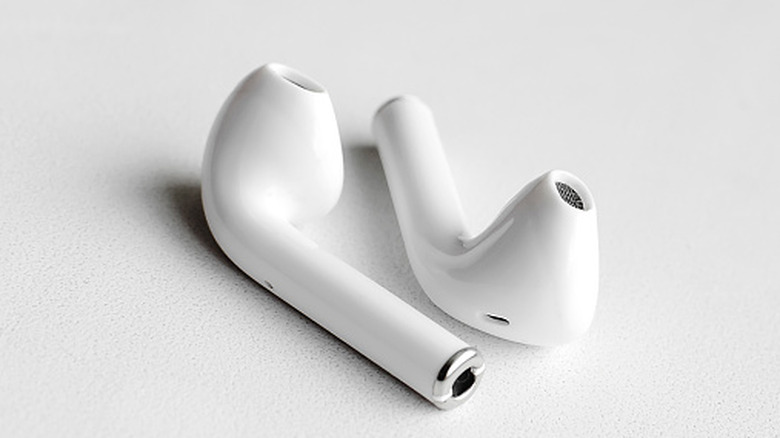
Is it Dead? Diagnostic Checklist and Repair vs. Replace
We often get asked: can wireless earbuds last 5 years with proper care? While it is technically possible for the shell and drivers to last that long, the battery is almost certain to fail or become unusable by then. In the audio world, we call this "planned obsolescence by chemistry." If you are reaching the three-year mark, you may start seeing the following symptoms.
Signs of Failure Checklist
- Uneven Drain: The left bud dies 30 minutes before the right bud.
- Rapid Percentage Drop: The battery drops from 100% to 80% within five minutes of use.
- Failure to Charge: The buds need to be wiggled in the case to start the charging process.
- Case Drain: The charging case loses its own power even when the earbuds are not being used.
- Physical Swelling: The plastic casing of the earbud appears slightly warped or separated.
If you are experiencing these issues, your wireless earbud lifespan has likely reached its end. Unlike high-end over-ear headphones, most wireless earbuds are held together by strong adhesives, making battery replacement nearly impossible for the average user. Some brands offer a "battery service" for a fee, but often the cost of shipping and labor is 50% of the price of a brand-new pair.
Before you toss them, check if a simple factory reset or cleaning the contacts fixes the issue. If the battery is truly gone, please use a dedicated e-waste recycling center. These tiny batteries contain cobalt and lithium that can be recovered and reused in future tech.
FAQ
How long do wireless earbuds typically last?
Most wireless earbuds have a functional life of two to three years. While the speakers themselves might last a decade, the tiny lithium-ion batteries inside degrade with every charge cycle, eventually leading to a runtime that is too short for practical use.
Can the battery in wireless earbuds be replaced?
For the vast majority of consumer earbuds, the battery is not user-replaceable. The devices are usually sealed with permanent adhesive to maintain water resistance and a compact size. Some manufacturers offer replacement programs, but it usually involves swapping the entire earbud rather than just the battery cell.
How do I make my wireless earbuds last longer?
You can prolong the life of your buds by following the 20-80 charging rule, avoiding extreme temperatures, and keeping the charging contacts clean. Using lower volumes and turning off power-heavy features like ANC when they aren't needed also reduces the number of charge cycles you consume.
Do wireless earbuds lose battery capacity over time?
Yes, all lithium-ion batteries lose capacity through chemical degradation. In earbuds, this happens at a rate of approximately 20% per year under normal use. This is why a pair that lasted six hours when new might only last four hours after eighteen months.
Why do wireless earbuds stop working after a few years?
The primary cause of failure is the battery reaching its cycle limit. Once the battery can no longer hold sufficient voltage, the earbuds may suffer from connection drops, uneven volume, or an inability to turn on at all. Environmental damage from sweat and earwax can also contribute to hardware failure over time.