Our Top Picks
- Best Overall for Night Safety: The Vantrue Pilot 2 is the most advanced thermal dash cam available for consumers, offering military-grade heat detection that standard optical sensors cannot match.
- Best for Rural Commuters: If you drive in areas prone to wildlife crossings, the long-range pedestrian detection and animal heat signatures provided by this system are literally life-saving features.
The Vantrue Pilot 2 is a high-end thermal dash cam that uses a 256x192 resolution infrared sensor to detect heat signatures up to 200 feet away, providing critical reaction time in darkness. This system creates a proactive safety net by utilizing long-range pedestrian detection and wildlife collision avoidance that standard lenses simply can't match.
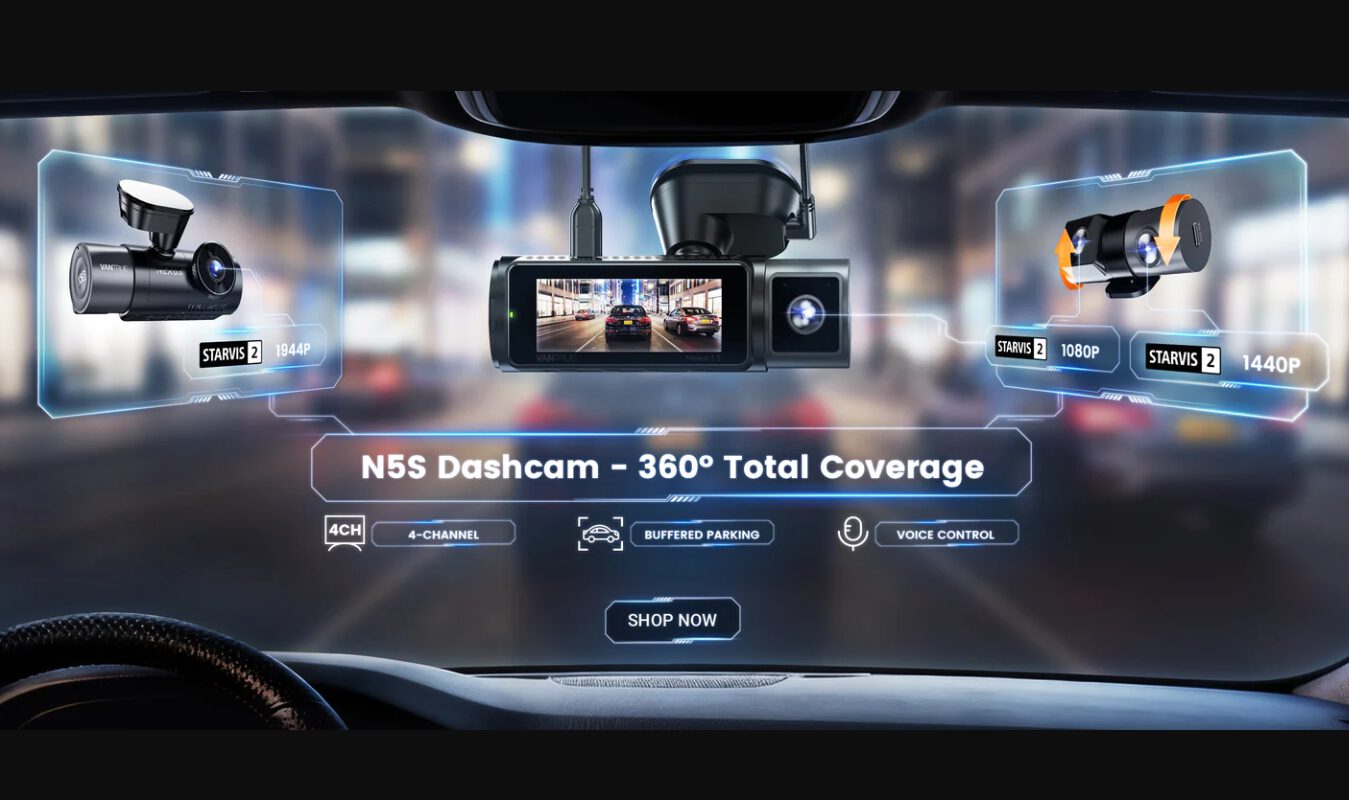
As someone who spends most of my time evaluating the latest CMOS sensors and high-speed glass, I have seen dash cams evolve from grainier-than-CCTV evidence collectors to high-definition 4K powerhouses. However, even the best Sony Starvis 2 sensors are still slaves to photons. If there is no light, or if that light is scattered by heavy fog, the sensor struggles. The Vantrue Pilot 2 changes the game by stepping outside the visible spectrum. It is not just a night vision dash cam; it is a car thermal imaging camera system that changes how we drive after dark by focusing on heat rather than light.
Technical Deep Dive: The 12-Micron Advantage
To understand why this device is different, we have to look at the sensor technology. While your standard dash cam uses an optical sensor to capture reflected light, the Pilot 2 includes a vanadium oxide uncooled infrared detector. This sensor operates in the long-wave infrared spectrum, meaning it "sees" the heat emitted by objects. Whether it is a jogger on a pitch-black suburban street or a deer lurking at the edge of a forest, if it has a temperature different from its surroundings, this camera will find it.
The thermal sensor features a 12-micron pixel pitch and a 25Hz refresh rate. In the world of thermal optics, a higher refresh rate is critical. Many entry-level thermal cameras used in industrial inspections run at 9Hz, which looks "choppy" when you are moving at 60mph. At 25Hz, the motion is smooth enough for real-time navigation. When comparing a thermal dash cam vs infrared night vision dash cam, the difference is clear: traditional infrared night vision usually requires IR emitters that only reach about 30 feet. This long-wave infrared sensor, however, requires no external light and works across massive distances.
| Feature | Vantrue Pilot 2 Thermal Sensor | Standard Sony Starvis 2 (Optical) |
|---|---|---|
| Detection Method | Heat signatures (Long-wave IR) | Visible light / Near-IR |
| Resolution | 256 x 192 | 2560 x 1440 (1440p) |
| Primary Use | Fog penetration technology & safety | Evidence collection & license plates |
| Range in Total Darkness | Up to 200 feet | Limited to headlight reach |
| Refresh Rate | 25Hz | 30fps / 60fps |
This hardware suite also includes automotive thermal optics designed to withstand the harsh environment of a car’s front grille. While the main unit sits on your dashboard, the thermal eye is mounted externally to ensure it has an unobstructed view of the road, free from the heat-shielding properties of your windshield glass.
Real-World Safety: Deer Detection and Hazard Alerts
The most compelling reason to invest in this technology is the Vantrue Pilot 2 AI hazard warning system explained through real-world scenarios. Imagine driving down a rural highway at 60mph. Your headlights typically illuminate about 160 feet in front of you. At that speed, you are covering 88 feet per second. By the time your headlights hit a deer, you have less than two seconds to react.
The Vantrue Pilot 2 thermal imaging sensor can detect heat signatures from pedestrians and animals at a distance of up to 200 feet in total darkness or heavy fog. That extra 40 to 50 feet of visibility translates to roughly two extra seconds of reaction time. In the world of automotive safety, two seconds is the difference between a controlled stop and a devastating collision.
The system doesn’t just show you a "Predator-style" heat map; it actively monitors the feed. Using ADAS hazard warnings, the Pilot 2 identifies living heat signatures and highlights them on the 6.25-inch screen with yellow or red boxes depending on proximity. These real-time proximity alerts provide an audible chime, acting as a second set of eyes that never gets tired or distracted. For those looking for the best thermal dash cam for deer detection, this combination of long-range sensing and AI filtering is currently the gold standard in the aftermarket space.
Installation Reality Check: Routing the Sensor
I have to be honest with my readers: this is not a "plug-and-play" five-minute setup like a standard windshield-mounted camera. Because glass blocks long-wave infrared radiation, the thermal sensor must be a grille-mounted sensor module. This means you have to run a cable from the front of your car, through the engine bay, and through the firewall into the cabin.
Installation Difficulty: 4/5 While the software setup is intuitive, routing the cable through the vehicle firewall requires patience and potentially some basic tools. If you are not comfortable working around your engine bay, I highly recommend professional installation.
The sensor itself features an IP67 waterproof rating, so you don't need to worry about rain, car washes, or road salt damaging the optics. Vantrue provides plenty of cable length, but the physical act of finding a path through the firewall is the biggest hurdle for the average DIYer. However, once the hardware is in place, the benefits of benefits of car thermal imaging for night driving safety far outweigh the initial hour of labor.
The Smart Cockpit: 4-Channel Recording & Connectivity
Beyond the thermal capabilities, the Pilot 2 is a powerhouse of a recording system. This four-channel dash cam system records synchronized footage across multiple perspectives, including a 1440p front optical lens, a 1440p rear lens, a 1080p cabin lens, and the 256x192 resolution thermal lens.
For many, this makes it an ideal thermal imaging dash cam for professional drivers. If you are a long-haul trucker or a rideshare driver, having 360-degree optical coverage plus specialized thermal vision provides an incredible layer of liability protection and personal safety. The device features a 6.25-inch IPS touchscreen display and supports high-capacity storage on microSD cards of up to 1TB, ensuring you can store days of 4-channel footage without overwriting important files.
The Pilot 2 also functions as a modern infotainment upgrade for older vehicles. It supports:
- Wireless Apple CarPlay and Android Auto.
- Wi-Fi 6 connectivity for lightning-fast video downloads to your phone.
- Dual-band GPS for precise speed and location logging.
- Adverse weather visibility that allows you to see through thick fog that would blind a standard camera.
The 6.25-inch screen is bright and responsive, serving as a dedicated monitor for the thermal feed while you drive. You can choose to have the thermal view full-screen, or as a picture-in-picture overlay on your navigation map.
FAQ
What is a thermal dash cam used for?
A thermal dash cam is primarily used to enhance driver visibility in conditions where human eyes and standard cameras fail. It detects heat signatures from living objects, making it easier to spot pedestrians, cyclists, and wildlife in total darkness, thick fog, or heavy rain. It serves as a proactive safety tool to prevent accidents before they happen.
How does a thermal camera work for driving?
Instead of capturing light, the camera uses a specialized sensor to detect infrared radiation (heat). Every object emits some level of heat. The camera converts these temperature differences into a visual image where warmer objects, like humans or animals, appear brighter against the cooler background of the road and trees.
Can a thermal dash cam see through fog and smoke?
Yes, one of the greatest advantages of this technology is its fog penetration technology. While visible light is scattered by water droplets in fog or particles in smoke, long-wave infrared radiation passes through these obstructions much more effectively, allowing the driver to see hazards that are otherwise invisible.
Is a thermal camera better than standard night vision for cars?
They serve different purposes. Standard night vision (like Sony Starvis) is excellent for capturing high-resolution details like license plates when there is some ambient light. However, thermal imaging is far superior for long-range detection of living beings in complete darkness. Ideally, a system like the Pilot 2 uses both to provide a complete safety solution.
Can thermal imaging detect pedestrians at night?
Absolutely. Thermal imaging is one of the most reliable ways to detect pedestrians at night, especially if they are wearing dark clothing that doesn't reflect headlight beams. The heat signature of a human body stands out vividly against the cooler pavement and night air.
Do thermal cameras help with animal detection while driving?
Yes, they are highly effective for wildlife collision avoidance. Large animals like deer, elk, and moose emit significant heat. A thermal camera can often spot these animals at the edge of the woods or on the shoulder of the road long before they step into your path or become visible to your eyes.
Verdict: Is Military-Grade Vision Worth $880?
The Vantrue Pilot 2 is a bold step forward in automotive technology. For years, thermal imaging was a luxury feature reserved for six-figure vehicles from BMW or Audi. By bringing this to the aftermarket, Vantrue has democratized a level of safety that was previously inaccessible to the average driver.
At a retail price of around $880 (though often found cheaper during Kickstarter or early-bird promotions), it is significantly more expensive than your average $150 dash cam. However, you aren't just buying a camera; you are buying a 4-channel recording system, a CarPlay/Android Auto head unit, and a military-grade thermal sensor.
If you live in a city with well-lit streets and rarely drive in bad weather, this might be overkill. But for professional drivers, rural residents, or anyone who frequently navigates through heavy fog and wildlife territory, the Vantrue Pilot 2 is a transformative investment. It provides the one thing every driver needs more of: time to react.