Quick Facts
- Expected Lifespan (Wired): 20+ years with basic maintenance and original sennheiser headphones replacement parts.
- Expected Lifespan (Wireless): 5 to 7 years, primarily dictated by the battery cycle life.
- Reliability Ranking: Consumer Reports ranks Sennheiser as the second-most reliable headphone brand globally.
- Core Philosophy: A modular architecture that favors user repairability over product replacement.
- Component Costs: refreshing high-wear items typically costs between $15 and $30.
- Battery Advantage: Momentum 4 models offer a 60-hour buffer that significantly delays electronic obsolescence.
Sennheiser headphones are globally recognized not just for their acoustic fidelity, but for an almost legendary lifespan that rivals products like industrial power tools. While the average consumer headset lasts 2-3 years, models like the sennheiser hd 650 longevity are often reported by sennheiser headphones reddit users to exceed 20 years of continuous use. This durability is no accident; it is the result of a modular architecture that prioritizes repairability over replacement.
The Architecture of Longevity: Modular Philosophy
In an era of glued-together electronics and planned obsolescence, the Sennheiser approach feels refreshingly old-school. This commitment to longevity is deeply rooted in German engineering. When you pick up a professional-grade set of sennheiser headphones, you aren't just holding a consumer gadget; you are holding a piece of precision equipment built to studio-grade standards.
The brand has historically chosen high-impact polymers over flashy metal finishes for its most resilient models. To the uninitiated, plastic might feel "cheaper." However, as an editor who has seen thousands of cracked hinges and dented metal earcups, I can tell you that Sennheiser’s choice is intentional. High-impact polymers offer superior flexibility and scratch resistance. They can absorb a drop that would permanently deform a metal headband or snap a brittle plastic hinge found on cheap competitors.
This mechanical philosophy dates back to the iconic 1968 HD 414 and continues today. By keeping the design simple and standardized, the company ensures that the product lifespan is determined by the transducer durability rather than a fragile mechanical joint. If a component does break, the modular architecture usually allows that specific piece—and only that piece—to be swapped out. This is the industrial logic that professional sound engineers have relied on for decades.
Wired Legends: Why the HD 650 and HD 25 Last Decades
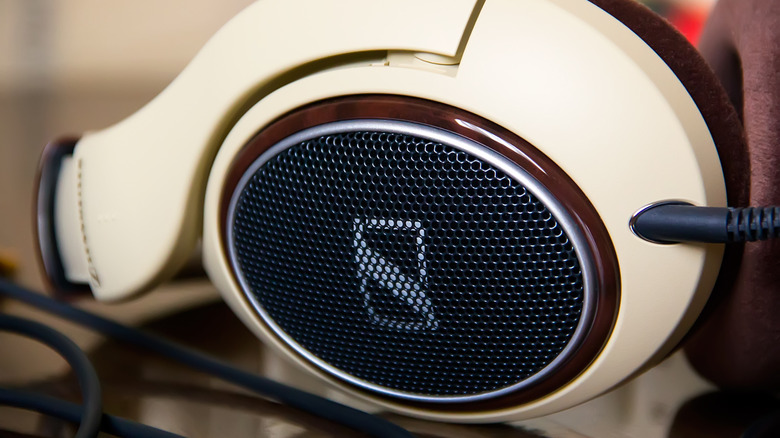
If you search through any sennheiser headphones reddit thread regarding "endgame" gear, the mention of sennheiser headphones wired models is inevitable. Two specific models define the brand's reputation for being indestructible: the HD 650 and the HD 25.
The sennheiser hd 650 longevity is legendary among audiophiles. It is not uncommon to find original units from the early 2000s still performing at peak acoustic fidelity. The secret lies in the simplicity of the build. There are no batteries to fail, no Bluetooth chips to become obsolete, and most importantly, the cables use detachable connectors. Since the cable is usually the first point of failure in sennheiser wired headphones, the ability to swap a $15 cord in seconds effectively resets the clock on the hardware.
Then there are the sennheiser hd 25 dj headphones. Used in the world’s most grueling club environments and broadcast sidelines, the HD 25 is essentially a collection of parts held together by friction and a few screws. Every single component—from the split headband to the individual driver capsules—is user-replaceable. If a DJ snaps the headband during a set, they don't buy a new pair; they buy a replacement headband. This "buy it for life" utility is why the HD 25 has remained a industry standard for over 30 years.
| Model | Construction Material | Repairability Score | Typical Lifespan |
|---|---|---|---|
| HD 650 | High-Impact Polymer / Steel Mesh | 9/10 | 20+ Years |
| HD 25 | Carbon-Fiber Reinforced Polymer | 10/10 | 25+ Years |
| Momentum 4 | Synthetic Leather / Reinforced ABS | 6/10 | 5-7 Years |
The Wireless Factor: Momentum 4 and the Battery Buffer
When we move into the realm of sennheiser headphones wireless, the conversation around durability changes. You are no longer fighting physical wear alone; you are fighting the inevitable decline of lithium-ion technology. However, Sennheiser has engineered a clever workaround for the sennheiser momentum 4 wireless headphones.
Most wireless competitors offer roughly 20 to 30 hours of battery life. The Momentum 4 offers a massive 60-hour battery buffer. Why does this matter for longevity? It’s all about battery cycle life. If you only have to charge your headphones once a week instead of every two days, you go through fewer charge cycles over a year. By reducing the frequency of charges, the battery remains healthy for a much longer period. Even when the battery eventually loses 20% of its capacity, you are still left with 48 hours of play time—more than a brand-new pair from many other manufacturers.
Furthermore, the physical build of these wireless models remains more robust than the industry average. While the internal electronics will eventually succumb to time, the hinges and headbands are designed to outlast the chips inside. Sennheiser also provides consistent firmware updates to ensure sustainable electronics that remain compatible with evolving smartphone codecs.
Maintenance and ROI: The Repairability Advantage
One of the most valuable resources for any owner is a maintaining sennheiser headphones guide. Most people throw away headphones when the ear pads start to flake or the connection becomes crackly. With Sennheiser, these are minor maintenance tasks rather than terminal failures.
The repairability factor is the primary reason the ROI on a pair of $300 Sennheisers is actually higher than a $100 "disposable" pair. Consider the cost over ten years:
- Competitor: $100 pair replaced every 2 years = $500 total.
- Sennheiser: $300 pair + $30 in parts every 3 years = $390 total.
To keep your gear in top shape, follow these steps:
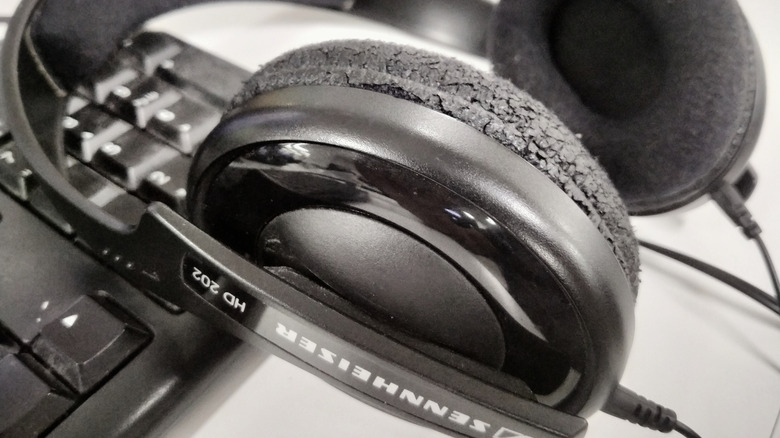
- Fresh Pads: Perform a sennheiser headphones ear pad replacement every 18 to 36 months depending on usage. Compressed pads don't just feel bad; they change the distance between the driver and your ear, degrading the acoustic fidelity.
- Cable Care: For sennheiser headphones wired, always pull from the connector, not the cord. If the sound cuts out, simply order a new cable with the standard detachable connectors.
- Surface Cleaning: Use a dry microfiber cloth after each session. Avoid alcohol-based wipes on synthetic leathers, as this can accelerate drying and cracking.
Sennheiser vs. Rivals: Sony, Bose, and the Build Quality Debate
When comparing sennheiser build quality vs sony headphones or Bose offerings, the data consistently favors the German brand. Based on user-reported reliability data, Sennheiser is ranked as the second-most reliable headphone brand by Consumer Reports, tying for the position with Bowers & Wilkins.
The main difference lies in how "premium" is defined. Sony and Bose often prioritize a soft-touch, luxury feel that uses thin plastics and intricate folding mechanisms. These feel great in a store but create more points of failure. Sennheiser’s professional lineage leads them to prioritize structural integrity. On sennheiser headphones reddit, users often remark that while a Sony hinge might start creaking after a year of commuting, a pair of HD 600s feels exactly the same as the day they were unboxed.
Sennheiser’s use of high-impact polymers and thick metal spring steel in their headbands ensures that even after thousands of "stretch" cycles, the clamping force remains consistent. This attention to mechanical resilience is what separates a tool from a toy.
FAQ
Are Sennheiser headphones good quality?
Yes, they are widely considered among the best in the industry for both sound and build. Their reputation is built on professional studio use where equipment is expected to function 24/7. Their use of high-grade transducers and robust plastics ensures they maintain high performance over many years.
Is Sennheiser better than Sony?
In terms of pure longevity and repairability, Sennheiser generally holds the advantage. Sony often leads in active noise cancellation (ANC) technology and "smart" features, but Sennheiser headphones are typically easier to repair and built with more durable mechanical structures that withstand long-term wear.
Are Sennheiser headphones really that good?
For a listener who values long-term ROI and consistent sound signatures, they are excellent. The brand's commitment to providing sennheiser headphones replacement parts for decades-old models makes them one of the few brands that actually respects the consumer's investment over time.
Is Bose or Sennheiser better?
Bose is often the choice for the frequent flyer due to their focus on comfort and ANC. However, Sennheiser is preferred by audiophiles and professionals who want a more natural frequency response and a build that can be easily serviced by the user when parts wear out.
Which Sennheiser headphone is the best?
The answer depends on your needs. For home listening, the HD 650 or HD 600 are considered timeless classics for their sennheiser hd 650 longevity and neutral sound. For travel, the Momentum 4 Wireless is the current leader due to its 60-hour battery life. For professional DJ or field work, the HD 25 remains the gold standard for durability.