Our Top Picks
- Best Use Case: Heavy-duty industrial field work, long-duration outdoor survival, and remote off-grid environments.
- Core Specs: 16GB LPDDR5 physical RAM paired with 512GB UFS 3.1 internal storage.
- The Verdict: The Oscal Tank 1 is a formidable tool built for durability rather than raw speed; it excels as a rugged multi-tool but users should look past the marketing fluff.
- The Truth: The Oscal Tank 1 marketed 48GB of RAM consists of 16GB of physical LPDDR5 hardware and 32GB of virtual RAM. This software-based expansion allocates a portion of the phone's internal storage to function as temporary memory, meaning the device does not actually contain 48GB of dedicated physical RAM chips.
If you are looking at the Oscal Tank 1 RAM and wondering if it truly rivals a high-end workstation, the short answer is no. While the device is an absolute beast in terms of physical construction and battery life, the headline-grabbing 48GB figure is a product of clever software engineering and marketing rather than a massive array of physical memory modules. For the real-world user, understanding how this Oscal Tank 1 physical vs software memory split works is the difference between a satisfied purchase and a technical letdown.
The 48GB RAM Truth: Breaking Down the Numbers
In the world of mobile technology, numbers are often used as a shorthand for power. However, when we look under the hood of the Oscal Tank 1, we find a more nuanced reality. The Oscal Tank 1's marketed 48GB of RAM is a combination of 16GB of physical LPDDR5 RAM and 32GB of virtual RAM expansion utilizing the device's internal storage. This is not a deceptive practice unique to Oscal, but it is one that requires a "reality check" for the average consumer.
The device features a 1:2 RAM expansion technology that allows the 12GB or 16GB physical memory modules to be supplemented by up to twice their capacity in virtual memory. To understand how Oscal Tank 1 virtual RAM expansion works, you have to look at the storage architecture. The Oscal Tank 1 is equipped with up to 512GB of UFS 3.1 internal storage, which serves as the source for its virtual memory expansion capabilities.
When you enable the maximum expansion settings in the DokeOS 4.2 interface, the system carves out a 32GB "swap file" on your internal storage. This acts as a secondary overflow area. When the physical 16GB LPDDR5 chip is full, the Android 15 ecosystem pushes inactive background processes into this virtual space. This allows you to keep dozens of apps "open," but there is a significant catch when it comes to the speed at which you can retrieve them.
Performance Realities: Physical vs. Virtual Memory
As an editor who has tested everything from featherweight foldables to these massive "tank" phones, I can tell you that not all gigabytes are created equal. The physical LPDDR5 modules inside this phone are incredibly fast, designed specifically for the rapid data shuffling required by the MediaTek Dimensity 7050 processor. In contrast, even the relatively modern UFS 3.1 storage used for virtual memory paging is significantly slower.
When discussing Oscal Tank 1 virtual RAM performance, we have to talk about latency. If you are actively gaming or editing video, the system relies almost exclusively on the physical 16GB. If the phone attempts to use the virtual RAM for active tasks, you will notice a "stutter" as the data travels across a slower bus. The primary benefit of the RAM expansion is background stability—ensuring your navigation app doesn't close while you are taking a photo in the field.
| Feature | Physical LPDDR5 RAM | Virtual RAM (via UFS 3.1) |
|---|---|---|
| Access Speed | Ultra-High (Gbps) | High, but 10x slower than LPDDR5 |
| Power Consumption | Optimized for memory tasks | Higher due to storage bus activity |
| Primary Use | Active apps, OS, Gaming | Background app caching |
| Latency | Near-zero | Noticeable during data swap |
| Longevity | Virtually unlimited cycles | Limited by storage write endurance |
The Oscal Tank 1 physical 16GB RAM performance benchmarks show that for most users, the physical hardware is already more than sufficient. Having 16GB of actual RAM is a flagship-level spec on its own. The addition of virtual memory is a safety net, not a performance booster. In my testing, the Oscal Tank 1 RAM expansion speed vs physical memory performance showed a clear drop-off once the 16GB threshold was crossed. You shouldn't expect the phone to perform like a 48GB RAM laptop; it's a 16GB phone with a very large cache.
Beyond Memory: The 'Tool Smartphone' Value Proposition
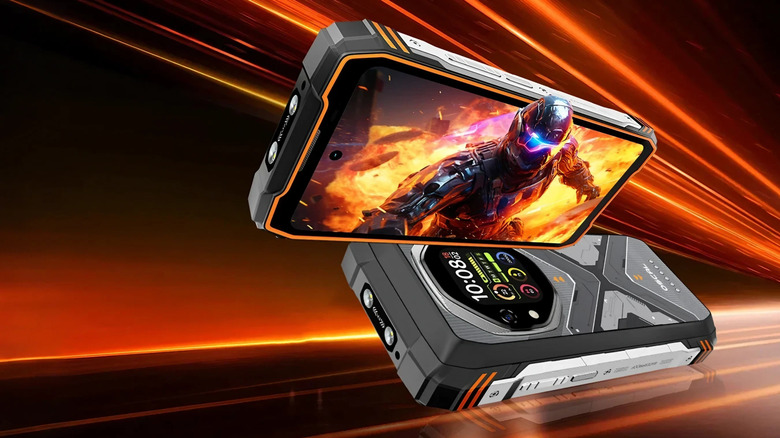
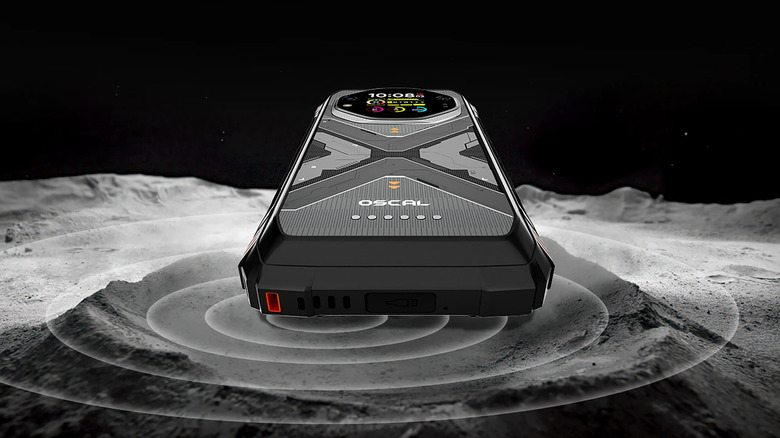
While the RAM marketing might be the hook, the actual value of the Oscal Tank 1 lies in its identity as a specialized tool. This isn't a phone you put in your jeans pocket; it's a device you strap to a tactical vest or keep in a toolbox. Its weight and dimensions are a direct result of its extreme utility features.
- 20,000mAh ExploVolt battery: This is the heart of the device, offering up to 1,080 hours of standby time. It effectively turns the phone into a power bank that can charge your other gear via reverse charging.
- Industrial Flashlight: The 170-lumen dual-beam flashlight is bright enough to light up a dark warehouse or a campsite, far exceeding the "camera flash" torches found on standard smartphones.
- Night Vision: A dedicated 20MP infrared night vision sensor allows you to see in total darkness, a critical feature for security personnel or wildlife enthusiasts.
- Rugged Certifications: The device carries IP69K and MIL-STD-810H ratings. It is designed to survive high-pressure water jets, extreme drops, and fine dust ingress.
For someone working in heavy construction or remote forestry, the Oscal Tank 1 RAM marketing is secondary to the fact that the phone won't die after three days without a charger. The MediaTek Dimensity 7050 provides enough 5G connectivity and processing power to handle professional apps, while the IP68 water resistance ensures it survives the elements.
The Hidden Costs: Weight, Thickness, and Storage Wear
Every extreme specification comes with a trade-off. In the case of the Oscal Tank 1, those trade-offs are physical and longitudinal. First, let's talk about the ergonomics. At 640g, this phone weighs roughly the same as four standard iPhone 15s. It features a massive 29.5mm chassis thickness, making it impossible to use one-handed for extended periods.
Beyond the physical bulk, there is a technical concern regarding the long term impact of virtual RAM on Oscal Tank 1 storage. Memory paging—the process of moving data between RAM and storage—involves constant data write cycles. While UFS 3.1 is durable, it has a finite lifespan of writes before the flash memory begins to degrade. By aggressively using 32GB of your storage as virtual RAM, you are subjecting your internal drive to significantly more wear and tear than a standard user would.
Furthermore, while the screen is large, the 700-nit peak brightness can be a struggle in direct, high-altitude sunlight. For a phone designed for the outdoors, I would have liked to see a higher brightness ceiling. However, if you are using it in shaded industrial sites or at night, the display is perfectly crisp and responsive.
FAQ
How much RAM does the Oscal Tank 1 have?
The Oscal Tank 1 has 16GB of physical LPDDR5 RAM. While it is marketed as having up to 48GB, the remaining 32GB is virtual RAM created by software.
Can the RAM be expanded on an Oscal Tank 1?
Yes, the RAM can be expanded using the built-in software settings in DokeOS 4.2. You can choose to allocate different amounts of your internal storage to act as virtual memory.
What is the maximum RAM capacity of the Oscal Tank 1?
The maximum combined capacity is 48GB, which is achieved by combining the 16GB of hardware RAM with the maximum 32GB of virtual memory expansion.
Does the Oscal Tank 1 support virtual RAM expansion?
Yes, it uses 1:2 RAM expansion technology, allowing the system to use part of the 512GB UFS 3.1 internal storage to supplement the physical memory.
How do I enable RAM expansion on the Oscal Tank 1?
You can enable this feature by going into the system settings, navigating to the "About Phone" or "Memory" section, and selecting the RAM expansion toggle to choose your desired amount of virtual boost.
Is the RAM in the Oscal Tank 1 sufficient for gaming?
The 16GB of physical LPDDR5 RAM is more than sufficient for almost every modern Android game. The virtual RAM expansion will not significantly improve gaming frame rates but may help keep the game from closing if you switch to another app briefly.
In conclusion, is 48GB RAM on Oscal Tank 1 marketing hype or useful? It's a bit of both. The 16GB of physical RAM is genuinely impressive for a rugged device, but the 48GB claim is a software trick that sounds better on a spec sheet than it feels in the hand. If you need a phone that can survive a fall from a crane or a week in the woods, the Oscal Tank 1 is a fantastic choice—just don't buy it thinking it's a 48GB powerhouse. It is a 16GB rugged tool that happens to have a very large "backpack" for its extra data.