Quick Facts
- Price: Approximately $2,064,500 USD (16 million HKD)
- Weight: Approximately 60 kilograms (132 lbs)
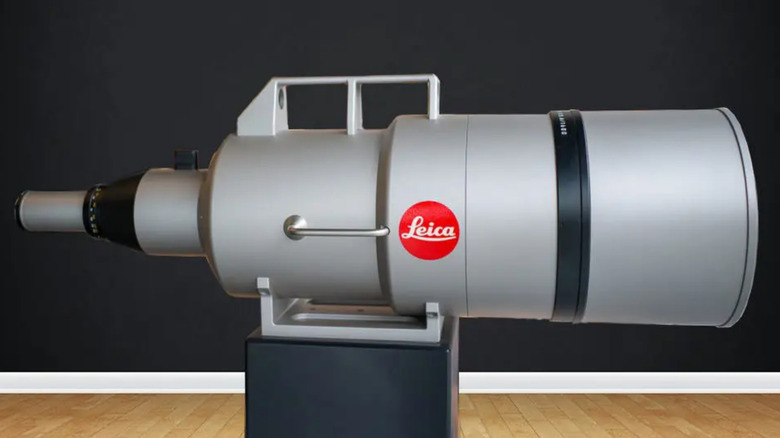
- Length: 1.2 meters, extending to 1.55 meters with hood
- Rarity: Only 3 units ever produced
- Maximum Focal Length: 1600mm native, extendable to 3200mm
- Aperture: Fixed f/5.6
- System: Leica R-mount system compatibility
The Leica APO-Telyt-R 1600mm is more than just glass; it is a $2 million engineering marvel. Often cited as the most expensive camera lens in the world, this 60kg behemoth represents the pinnacle of super telephoto lens engineering.
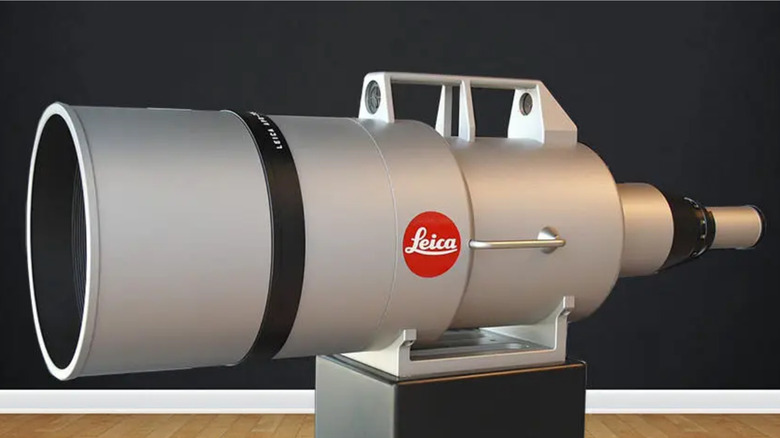
In the world of professional photography, we often talk about "investment pieces." Usually, that means a sharp 70-200mm or a reliable prime that holds its value over a decade. But every so often, the industry produces something that transcends the category of "equipment" and enters the realm of myth. The Leica APO-Telyt-R 1600mm is that myth. It is a lens that challenges our understanding of scale, cost, and optical possibility.
As an editor who has spent years analyzing everything from pancake primes to cinema zooms, I find this particular lens fascinating not just for its price tag, but for the uncompromising technical philosophy it represents. It is a product of a time when a single individual’s vision—and nearly unlimited resources—pushed the Wetzlar production facility to create something that simply shouldn't exist by the laws of traditional manufacturing.
The Royal Commission: History of the $2 Million Lens
The story of this lens begins not in a boardroom, but in the private collection of Sheikh Saud bin Mohammed Al-Thani of Qatar. Known as a prolific collector of art and rare objects, the Sheikh was also a passionate photographer with a particular interest in wildlife. To capture the majestic flight of desert falcons and other distant subjects without disturbing them, he required a focal length that far exceeded the standard offerings of the early 2000s.
The history of the sheikh saud bin mohammed al-thani custom leica lens is inextricably linked to the Leica R-mount system, which was Leica’s premium SLR line before the digital revolution fully took hold. In 2006, the Sheikh commissioned the Wetzlar production facility to build a lens that would offer unparalleled reach while maintaining the legendary light transmission quality and sharpness associated with the Leica name.
The result was a custom-built unit delivered at a price of approximately $2,064,500. While the Sheikh owned one unit, two others were kept by Leica. One of these is famously displayed at the Leica factory in Germany, serving as a testament to what precision optical engineering can achieve when cost is no object. This rarity has cemented its status as a high-end collector value item, making it the most expensive camera lens in the world for civilian use.
Optical Mastery: APO Design and Modular Engineering
To understand why this lens is so significant, we have to look past the price and into the glass. The Leica APO-Telyt-R 1600mm f/5.6 specs and modular design are rooted in the concepts of apochromatic correction. In long-range photography, the greatest enemy is chromatic aberration—the failure of a lens to focus all colors to the same convergence point. This leads to "fringing" or purple halos around distant subjects.
By utilizing an apochromatic design, Leica ensured that three wavelengths of light (red, green, and blue) are focused on exactly the same plane. This Chromatic aberration correction results in images that are incredibly crisp, even when the subject is miles away. When comparing 800mm vs 1600mm super telephoto performance, the leap isn't just in magnification; it is in the total elimination of optical artifacts that usually plague such extreme distances.
The lens also utilizes the APO-Telyt-R modular system, which allows it to be paired with dedicated teleconverters. By calculating effective focal length with leica apo-teleconverters, the capabilities of this lens expand significantly:
| Configuration | Effective Focal Length | Effective Aperture | Angle of View |
|---|---|---|---|
| Lens Alone | 1600mm | f/5.6 | 1.5 degrees |
| With 1.4x APO-Extender | 2240mm | f/8 | ~1.1 degrees |
| With 2x APO-Extender | 3200mm | f/11 | ~0.8 degrees |
The level of precision optical engineering required to maintain f/5.6 at a 1600mm focal length is staggering. It requires a massive front element to gather enough light, which explains the sheer physical volume of the barrel. At 1600mm, the focal plane compression is so intense that the distance between a foreground tree and a background mountain appears almost non-existent, creating a unique visual style that few other lenses can replicate.
The Logistics of 60kg: From Mercedes SUVs to Walkie-Talkies
Owning the Leica APO-Telyt-R 1600mm is only half the battle; the other half is moving it. Weighing in at a 60-kilogram weight, this lens is not "portable" in any traditional sense. For context, that is roughly the same weight as thirty Nikon Z 58mm f/0.95 Noct lenses or a full-grown adult.
The challenges of transporting heavy camera equipment for professional wildlife shoots reached a comedic peak with this project. Because no standard tripod could safely support a 132-pound lens with a camera attached, the Sheikh commissioned a specially-equipped Mercedes-Benz four-wheel-drive vehicle to act as a mobile tripod. The car was modified so that the lens could be mounted directly to its frame, allowing the photographer to track subjects through the desert without the risk of the equipment tipping over.
Beyond the physical support, there is the challenge of communication. When you are using a 1600mm or 3200mm setup, your subject might be over a kilometer away. At these distances, atmospheric haze becomes a factor, and standard shouting or hand signals are useless. Understanding compression in extreme focal length camera lenses means realizing that the photographer and the subject are effectively in two different weather zones. It is rumored that the original owner’s team used walkie-talkies just to coordinate shots because of the extreme distance involved.
Modern Performance: The 1600mm on Mirrorless Bodies
While the lens was designed for the Leica R-mount system, its life didn't end with the retirement of film SLRs. One of the beautiful things about precision optics is their longevity. In recent years, enthusiasts have seen this lens adapted to modern mirrorless systems like the Leica SL3.
Using the lens today requires a specialized Leica R-to-L adapter. When paired with a 60-megapixel sensor, the 1600mm reveals just how far ahead of its time it was. The light transmission quality remains superb, and the resolution of the glass is capable of resolving details that were invisible on the film stocks of 2006.
However, using it on a modern body highlights the difficulties of super telephoto lens engineering. Even a slight breeze can cause enough vibration to blur an image at 1600mm. When you are zoomed in that far, the 1.5-degree angle of view is so narrow that finding your subject in the viewfinder is like trying to find a specific star through a straw. It requires patience, a Custom 4WD transport or a massive static mount, and an understanding that every shot is a feat of engineering.
Conclusion: A Monument to Optical Ambition
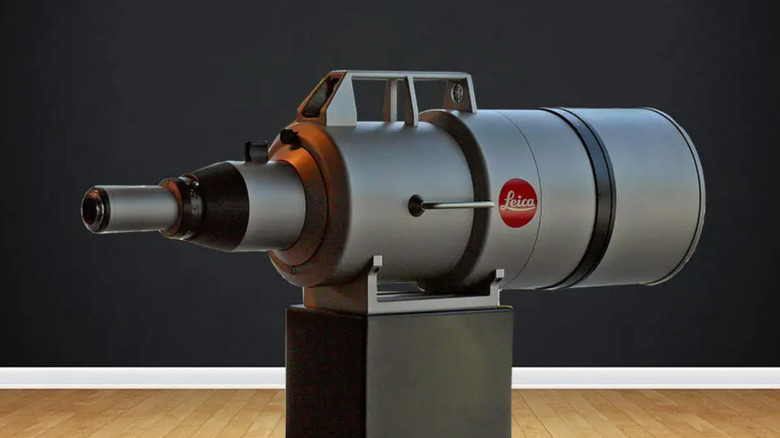
The Leica APO-Telyt-R 1600mm is likely never going to be topped in the civilian market. In an era where software and AI are used to "fake" long-reach and bokeh, this lens stands as a monument to pure, physical glass and metal. It represents an era where the Wetzlar production facility was given a blank check to solve the hardest problems in optics.
Whether it is being used to photograph falcons in the Qatari desert or sitting as a rare prototype units display piece in Germany, the 1600mm reminds us that photography is as much about the tools as it is the vision. It is heavy, it is absurdly expensive, and it requires a truck to move, but it is undeniably one of the greatest achievements in the history of the camera lens.
FAQ
How much does the Leica APO-Telyt-R 1600mm cost?
The lens was custom-ordered for approximately $2,064,500 USD, which converted to roughly 16 million Hong Kong Dollars at the time of the transaction. This price tag includes the bespoke manufacturing process and the specialized materials required for its massive elements.
What is the weight of the Leica 1600mm f/5.6 lens?
The lens weighs approximately 60 kilograms, which is about 132 pounds. This weight makes it impossible to use with standard photographic tripods, necessitating custom support structures or vehicle mounts.
Who commissioned the world's most expensive Leica lens?
The lens was commissioned by Sheikh Saud bin Mohammed Al-Thani of Qatar. He was a prominent art collector and photography enthusiast who wanted the ultimate tool for long-range wildlife photography.
How many Leica APO-Telyt-R 1600mm lenses exist?
Only three units of this lens were ever produced. One was delivered to the private collector who commissioned it, while the other two remain in Leica’s possession, with one often on display at their headquarters in Wetzlar.
What are the specifications of the Leica 1600mm lens?
The lens features a 1600mm focal length with a fixed f/5.6 aperture. It is built using an apochromatic design to eliminate color fringing and is compatible with the Leica APO-Extender 1.4x and 2.0x, allowing for focal lengths of 2240mm and 3200mm respectively.
Can the Leica 1600mm lens be used with an adapter?
Yes, the lens uses the Leica R-mount system. With the appropriate official Leica R-to-L adapter, it can be mounted on modern mirrorless cameras like the Leica SL2 or SL3, where its high-resolution optics continue to perform exceptionally well on modern digital sensors.