Quick Facts
- Legality: Existing authorized DJI drones remain fully legal to fly for both recreational and commercial purposes throughout 2026.
- Cut-off Date: The critical FCC deadline for new equipment authorizations was December 23, 2025.
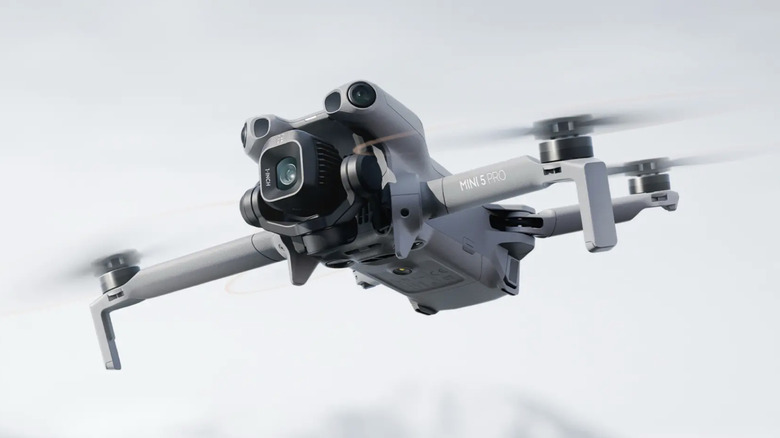
- Safe Models: Popular platforms like the Mavic 4 Pro and Mini 5 Pro are considered safe because they received FCC grants before the ban took effect.
- Market Context: Despite new restrictions, DJI continues to power more than 96% of detected drone operations in the U.S. National Airspace System.
- Public Safety: Approximately 90% of public safety agencies in the United States still rely on DJI hardware for critical missions in 2026.
- Future Imports: The ban primarily targets the importation of new models and the authorization of future radio equipment rather than grounding your current fleet.
- Primary Alternatives: Professional users are increasingly looking toward the Blue UAS list and Green UAS certified platforms for future-proof investments.
As of 2026, the DJI drone ban primarily targets new equipment authorizations and future imports; current owners can continue to use their devices for recreational and commercial purposes under standard Federal Aviation Administration (FAA) guidelines. This means that if your drone already has an FCC ID and was authorized for sale before the late 2025 deadline, you are not legally required to ground your aircraft.
The Legal Landscape: FCC Rules on DJI-Designed Products
Navigating the regulatory waters of 2026 requires understanding exactly what the Federal Communications Commission (FCC) changed. The transition began in earnest following the late 2025 vote, which shifted the focus from broad usage bans to specific hardware authorizations. The core of the current restriction lies in how the FCC views modular radio transmitters and the associated national security risk linked to specific foreign-manufactured technology.
Under the current framework, the FCC has stopped granting new equipment authorizations for products designed or manufactured by DJI. This move was justified under the Secure and Trusted Communications Networks Act, which identifies certain entities as risks to national infrastructure. By targeting the command and control links and the modular transmitters that allow these drones to communicate with controllers, the FCC effectively closed the door on future models entering the U.S. market.
A key nuance in these FCC rules on DJI-designed products is the prevention of white-labeling. In previous years, some expected third-party companies to simply rebrand DJI hardware to bypass restrictions. However, the 2026 rules specifically cover components designed by the restricted entity. This means even a drone with a different logo on the shell cannot receive FCC authorization if its internal radio and transmission logic are DJI-designed. For you as a pilot, this provides a clearer picture: if a new model didn't have its paperwork filed and approved by December 2025, it won't be appearing on store shelves legally this year.
Can You Still Buy or Sell DJI Drones in 2026?
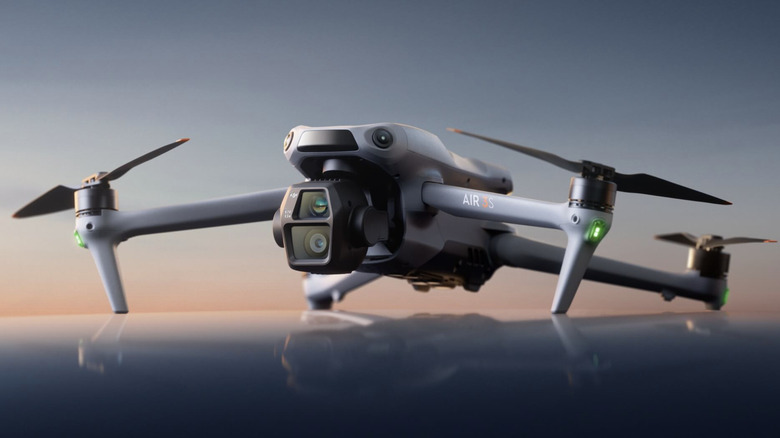
One of the most frequent questions I receive in my inbox is whether it is legal to buy a dji drone in 2026 or if existing stock has been rendered illegal. The answer is a qualified yes, but the window is narrowing. It remains legal to buy and sell existing DJI drone inventory that received FCC authorization before the ban took effect. Retailers who imported stock prior to the FCC drone import deadline 2025 are permitted to clear their shelves.
However, the supply chain is feeling the pressure. Because the FCC drone import deadline 2025 stopped the flow of new shipments for unauthorized future models, the availability of current-generation "safe" models is beginning to dwindle. If you are looking for a Mavic 4 Pro or a Mini 4 Pro, you are likely looking at existing warehouse stock. We are seeing a shift where the secondary market is becoming more active, but this comes with its own set of risks.
When navigating the resale market, DJI drone resale value and selling advice 2026 centers on transparency and account security. If you are selling your gear, you must ensure the drone is properly "unbound" from your DJI account. Without this step, the new owner may face software lockouts that are increasingly difficult to resolve given the limited technical support presence in the U.S. Buyers should be diligent in checking the FCC ID of any used unit. If a drone is marketed as a "new 2026 model" that wasn't part of the pre-2026 authorized list, it may be a grey-market import that lacks legal standing for commercial work.
Fleet Management and Maintenance Post-Ban
For the professional photographer or the enterprise operator, the DJI drone ban is less about immediate grounding and more about long-term operational continuity. While DJI holds an estimated 70% to 90% share of the U.S. drone market, maintaining that fleet in 2026 requires a proactive strategy.
The primary challenge now is not the flight itself, but the maintenance. The dji drone repair and spare parts availability 2026 situation is becoming a significant bottleneck. While the drones themselves are legal, the components required to keep them airworthy—propellers, specialized gimbal ribbons, and especially proprietary batteries—are caught in the same import restrictions if they are classified under new radio equipment filings. Many professional shops are advising clients to maintain a 12-to-24-month supply of consumables to avoid being grounded by a simple cracked plastic casing.
Furthermore, FCC drone regulations for current owners do not technically prohibit software updates, but the logistics are getting complicated. Firmware security audits are more frequent, and there is a lingering concern that future app updates might be removed from major U.S. app stores. I recommend that any serious pilot keeps a dedicated, offline tablet for flight operations, ensuring that a sudden change in app availability doesn't render your controller a paperweight. For those in public safety, the enterprise fleet transition is already underway, as agencies move toward platforms that carry the Blue UAS or Green UAS certification to ensure they remain eligible for federal funding.
Moving Forward: Best Camera Drone Alternatives to DJI for 2026
If you are a photographer looking to buy your first drone in 2026, or if you are ready to retire your aging Mavic, the landscape has finally matured enough to offer viable alternatives. The market is no longer a one-horse race, and the focus has shifted toward security-first designs that still deliver high-end imaging.
When searching for the best camera drone alternatives to dji for 2026, the first place to look is the Blue UAS list. This list, curated by the Department of Defense, identifies drones that have undergone rigorous security reviews and are cleared for use by federal agencies. While these were once prohibitively expensive for the average creator, companies like Skydio and Freefly have expanded their offerings.
- Skydio: Known for world-class obstacle avoidance, their latest consumer-adjacent models are excellent for solo creators who need a "flying tripod" that won't crash into a tree.
- Autel Robotics: While they have faced their own regulatory scrutiny, certain models produced in non-restricted regions remain a strong choice for those who prefer the DJI-like interface and high-resolution sensors.
- Parrot: The Anafi series remains a favorite for those who need a portable, silent, and secure platform, particularly for photogrammetry and mapping.
- Sony: For the high-end cinematographer, the Sony Airpeak remains a formidable, though expensive, alternative that integrates perfectly with the Alpha camera ecosystem.
The transition away from a single dominant manufacturer is painful for the industry, but it is also fostering a new era of modular designs and American-made components. We are seeing a rise in drones that allow you to swap out the camera payload or the radio module, a direct response to the FCC’s focus on command and control links.
FAQ
Is there a ban on DJI drones in the US?
Yes, but it is specifically an FCC-led ban on the authorization of new equipment and the importation of future models. It is not a total ban on the possession or operation of existing, previously authorized DJI drones as of 2026.
Will existing DJI drones be grounded if a ban passes?
No, existing drones that received their FCC authorization prior to the 2025 deadline are not being grounded. They remain legal to fly under current Federal Aviation Administration (FAA) rules, including requirements for Remote ID technology.
Can I still buy a DJI drone right now?
You can still buy DJI drones that are currently in stock at U.S. retailers, provided those models were authorized before the ban. However, you will likely not find any "new" models released after late 2025 in the domestic market.
What happens to DJI drones already in use if a ban is enacted?
They continue to function normally. The FCC rules target the "authorization" and "importation" of equipment, not the "operation" of hardware that has already been legally sold and registered. You should, however, plan for potential difficulties in sourcing official repair parts.
What are the best alternatives to DJI drones?
Top alternatives include Skydio for autonomous flight, Parrot for security and portability, and Sony for professional-grade imaging. Many professionals are now specifically seeking drones on the Blue UAS list to ensure long-term regulatory compliance.
Will the DJI drone ban affect software updates and support?
While the ban focuses on hardware, it indirectly affects the ecosystem. Support may become more limited, and while firmware updates are still possible, the availability of flight apps on U.S. app stores could face future challenges.