Our Top Picks
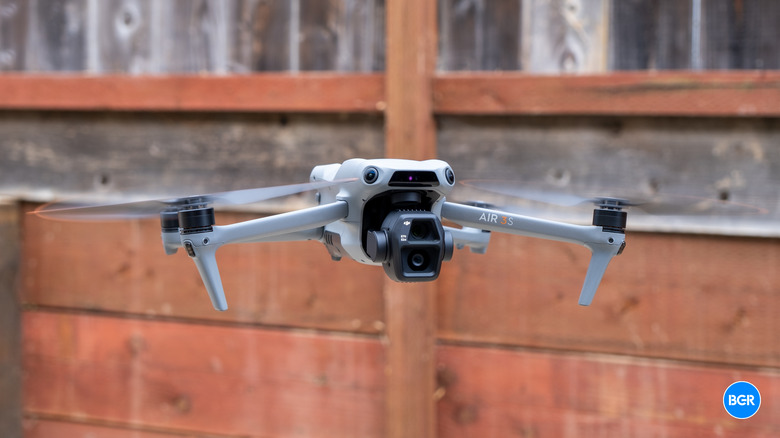
- Best for Professional Creators: The DJI Air 3S is a powerhouse for cinematographers, offering a massive 1-inch primary sensor and a unique 70mm telephoto lens for stunning compression.
- Best for Travel Photographers: With 42GB Internal Storage and high wind resistance, it is built for those who need reliable performance in remote locations without carrying extra SD cards.
- Best for Safety-Conscious Pilots: The inclusion of forward-facing LiDAR makes this the smartest drone for low-light flying and complex subject tracking.
The DJI Air 3S review confirms it as the bridge between hobbyist and pro lines, featuring a dual-camera system and LiDAR safety. The DJI Air 3S features an advanced dual-camera system, including a 1-inch CMOS wide-angle sensor and a 1/1.3-inch medium telephoto lens equivalent to 70mm, making it the ultimate tool for aerial cinematography.
As a gear editor, I often see drones that prioritize either portability or power. Usually, you have to choose between a lightweight flyer that struggles in the wind or a heavy professional rig that requires a dedicated backpack. The DJI Air 3S changes that equation. It is a drone designed for the serious shooter who needs the dynamic range of a pro camera but still wants to hike up a mountain with their gear. During my testing, the balance of hardware and software was immediately apparent. This isn't just an incremental update; it’s a refinement of what a pro-sumer drone should be.
Imaging Power: DJI Air 3S Dual Camera Specs
The real story of this drone lies within the gimbal. For years, photographers have begged for a medium telephoto option that doesn't sacrifice image quality. DJI has answered with a dual-camera system that pairs a 50-megapixel 1-inch CMOS primary sensor with a 48-megapixel 1/1.3-inch medium telephoto sensor. In my field tests, both sensors proved capable of capturing up to 14 stops of dynamic range. This is a massive leap for high-contrast scenes like sunrise or sunset where you need to maintain detail in the shadows without blowing out the highlights.
The 24mm wide-angle lens is your go-to for expansive landscapes, but the 70mm medium telephoto is where the creative magic happens. This focal length provides a natural compression that makes mountains look taller and cityscapes feel denser. It creates a cinematic look that 24mm simply cannot replicate. Both cameras support 4K HDR recording at 60fps and the D-Log M color profile. This profile is a dream for editors, providing a flat color space that holds incredible detail for professional grading in post-production.
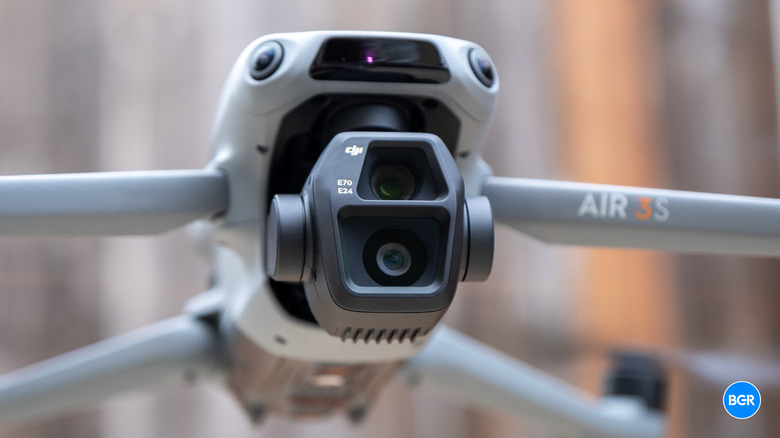
For those focused on social media, the drone offers high-quality 2.7K vertical video. Unlike digital cropping, this mode utilizes more of the sensor to ensure your TikToks and Reels maintain professional clarity. When you combine this with the dual camera video quality, you have a tool that works just as well for a YouTube documentary as it does for a quick Instagram story.
Low-Light Safety: DJI Air 3S Obstacle Avoidance & LiDAR
One of the most stressful parts of drone photography is flying in low light. Whether you are catching the last blue hour glow or filming a city at night, the risk of hitting an unseen obstacle is real. This is where the dji air 3s obstacle avoidance system sets a new industry standard. By incorporating a forward-facing LiDAR (Light Detection and Ranging) sensor, the drone can "see" in the dark much more effectively than standard vision-based systems.
In my testing, I took the drone into a wooded area during twilight. While older models might struggle to identify thin branches in the dim light, the LiDAR testing showed that the Air 3S could accurately map the environment and halt movement before a collision occurred. This tech supports the Nightscape omnidirectional sensing, which gives you 360-degree protection even in challenging lighting.
This advanced hardware also powers the subject tracking. The ActiveTrack 360 feature is more robust than ever, keeping a vehicle or person centered in the frame while the drone actively maneuvers around obstacles. For solo creators, this is like having a professional camera operator in the sky. If you lose connection or decide to call it a day, the Smart Return to Home feature calculates the most efficient and safe path back to the takeoff point, using its sensors to avoid new obstacles that may have appeared during the flight. This reliability is vital for night photography and ensures the drone comes home in one piece every time.
The Travel Experience: Wind Resistance & 42GB Storage
When you are out in the field, small details make a big difference in your workflow. The Air 3S is built for the rugged traveler. I tested the drone in coastal conditions with steady winds and occasional gusts. The 12 m/s Wind Resistance held the gimbal perfectly steady, allowing for long-exposure shots that looked like they were taken from a tripod on the ground. This stability is a key reason why it excels at travel vlogging and capturing smooth, cinematic shots in unpredictable weather.
One of my favorite "quality of life" upgrades is the 42GB Internal Storage. We have all had that moment of panic when we realize we left our microSD card in the card reader at home. With this much built-in space, you can record a significant amount of high-bitrate footage without a card at all. It provides a safety net that every professional will appreciate.
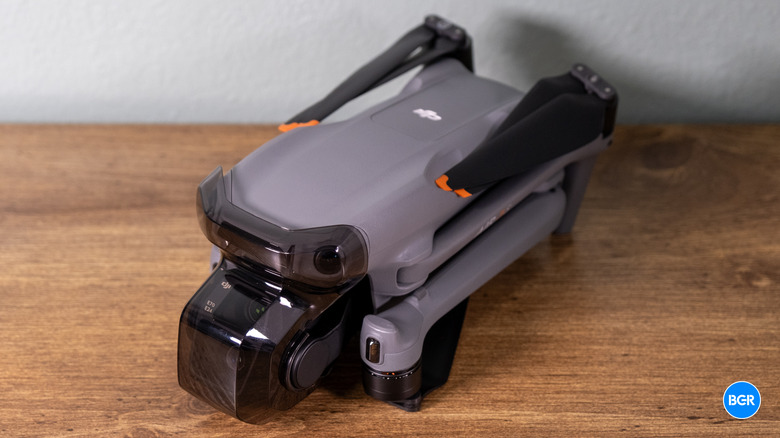
The flight performance is equally impressive. The drone provides a maximum flight time of up to 45 minutes, which is more than enough to scout a location, set up your waypoint mission planning, and get the perfect shot. During these long flights, the O4 video transmission system is a lifesaver. It supports a 1080p/60fps live feed over a maximum distance of up to 20 kilometers, offering a crisp, lag-free view of your subject even in areas with high signal interference.
The RC2 Controller Experience
The drone is often paired with the RC2 controller, which features a built-in screen. Here are the pros and cons based on my field testing:
- Pros:
- No need to drain your phone battery or deal with incoming call interruptions.
- Fast boot-up time gets you in the air in seconds.
- Responsive control sticks with excellent ergonomic grip.
- Cons:
- The RC2 controller screen brightness is rated at 700 nits, which can still be difficult to see in direct, midday desert sun.
- Lack of a cellular dongle slot on the base model (though it supports the O4 link).

Decision Guide: DJI Air 3S vs DJI Mini 4 Pro & Air 3
Choosing the right drone often comes down to the dji air 3s vs dji mini 4 pro comparison. The Mini series is famous for staying under the 249g weight limit, which allows you to fly in many regions without FAA registration. However, the Air 3S weighs 724g, meaning you must register it. So, why take the extra weight? The answer is the 1-inch CMOS sensor and superior wind handling.
| Feature | DJI Air 3S | DJI Mini 4 Pro | Winner |
|---|---|---|---|
| Main Sensor | 1-inch CMOS | 1/1.3-inch CMOS | Air 3S |
| Secondary Lens | 70mm Telephoto | None | Air 3S |
| Internal Storage | 42GB Internal Storage | 2GB | Air 3S |
| Obstacle Sensing | LiDAR + Vision | Vision Only | Air 3S |
| Weight | 724g | 249g | Mini 4 Pro (No Reg) |
| Wind Resistance | 12 m/s Wind Resistance | 10.7 m/s | Air 3S |
For current owners looking at an air 3s vs air 3 upgrade analysis, the decision is slightly more nuanced. If you frequently shoot in low light or need the extra dynamic range of the 1-inch sensor, the upgrade is substantial. The addition of LiDAR and the massive jump in internal storage from 8GB to 42GB are also significant workflow improvements. If you only fly in bright daylight and don't mind carrying SD cards, the original Air 3 is still a very capable machine.
Verdict: Is it Good for Professional Photography?
After extensive dji air 3s review testing, the answer is a resounding yes. While the Mavic 3 Pro remains the king of the mountain with its Hasselblad colors and triple-camera setup, the Air 3S provides about 90% of that performance for a fraction of the price and weight.
For professional photography, the ability to switch between a wide 24mm and a compressed 70mm lens without landing to change filters or drones is a game-changer. The 14 stops of dynamic range ensure that your images have the "thickness" required for heavy editing, and the safety features mean you can focus on the art rather than the flight. If you are a travel creator, a real estate photographer, or an enthusiast who wants the best possible image quality in a portable package, this is currently the best value on the market.
FAQ
Is the DJI Air 3S worth the upgrade?
If you are coming from a Mini or an older Air 2S, the upgrade is massive. The dual-camera system and improved safety features like LiDAR provide a much more professional experience. For Air 3 owners, it depends on whether you need the 1-inch sensor for better low light performance.
What are the main differences between the Air 3 and Air 3S?
The primary differences include the upgraded 1-inch sensor on the main camera (up from 1/1.3-inch), the addition of forward-facing LiDAR for better obstacle avoidance, and the increase of internal storage from 8GB to 42GB.
How does the DJI Air 3S perform in low light?
Thanks to the larger 1-inch sensor and the specialized Nightscape mode, the drone captures significantly cleaner images with less noise than its predecessors. The LiDAR sensor also ensures that obstacle avoidance remains functional in dark environments where vision-only systems fail.
Does the DJI Air 3S have a 1-inch sensor?
Yes, the primary wide-angle camera features a 1-inch CMOS sensor, which is a significant upgrade for image quality and dynamic range compared to the 1/1.3-inch sensors found in smaller drones.
What is the maximum flight time of the DJI Air 3S?
The drone is rated for a maximum flight time of up to 45 minutes in ideal conditions, allowing for extended shooting sessions and complex waypoint missions without needing to land frequently for battery swaps.
Is the DJI Air 3S good for professional photography?
Absolutely. With its 14 stops of dynamic range, 10-bit D-Log M color, and dual focal lengths (24mm and 70mm), it provides the necessary image quality and creative flexibility for high-end commercial and artistic photography.