Our Top Picks
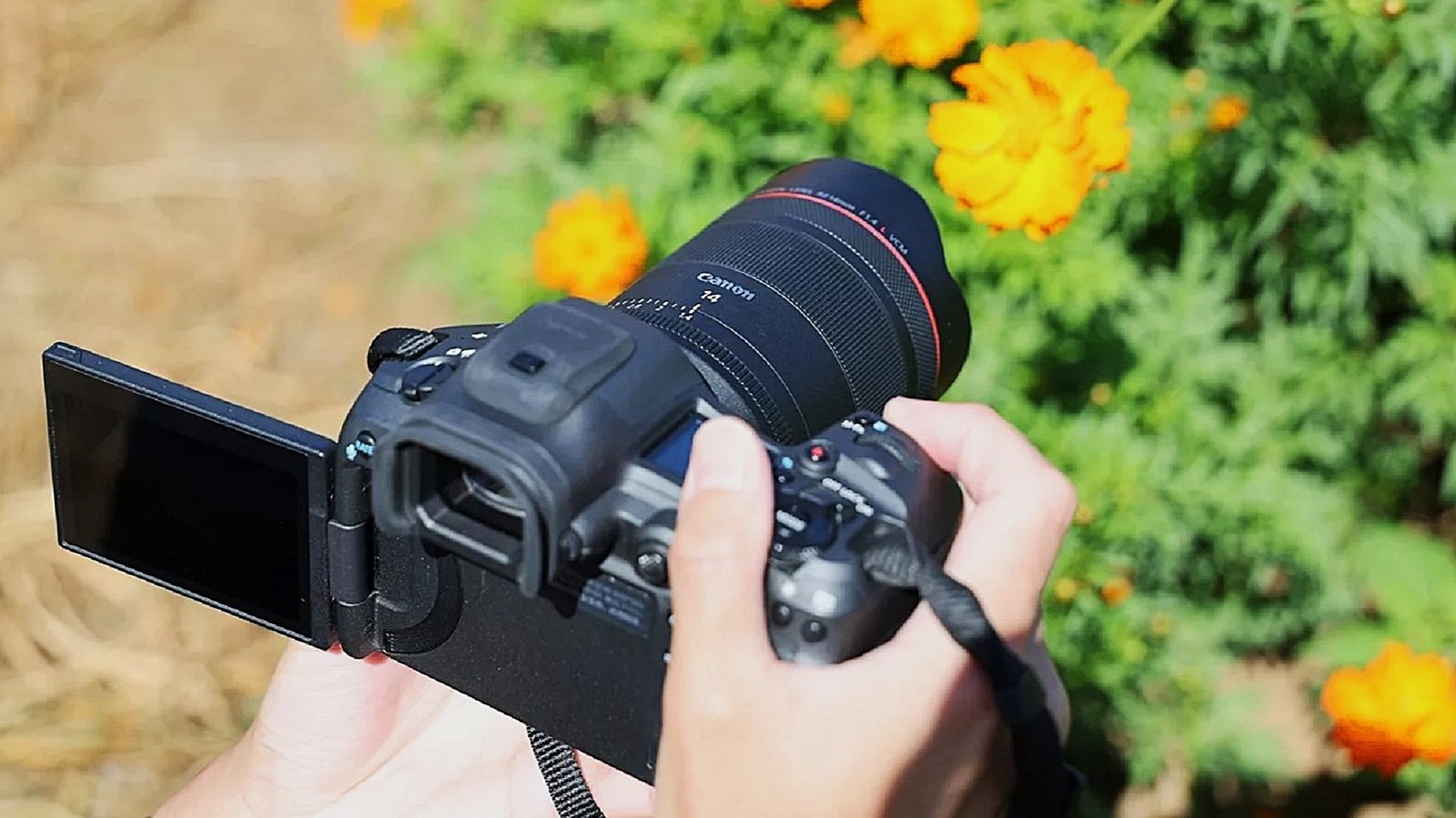
The Canon RF 14mm f/1.4L VCM is a revolutionary tool that redefines ultra-wide hybrid lens performance for professionals who refuse to choose between stills and cinema. It offers unprecedented light-gathering capability with its f/1.4 aperture and introduces a high-torque Voice Coil Motor system for silent, reliable focus. We recommend this lens as the gold standard for astrophotographers and high-end videographers who need a wide, fast prime that remains portable enough for all-day gimbal use.
The Canon RF 14mm f/1.4L VCM is a world-first ultra-wide hybrid lens designed to provide professional photographers and cinematographers with a bright f/1.4 aperture, advanced VCM autofocus benefits, and a lightweight, weather-sealed construction. Its unique combination of a 14mm focal length and high-speed optics makes it the premier choice for capturing expansive landscapes, celestial events, and immersive architectural video.
The Math of Light: Why It's the Best Canon Lens for Astrophotography
When we talk about astrophotography, the conversation always begins and ends with light. For years, the f/2.8 aperture was the industry standard for wide-angle work, but the Canon RF 14mm f/1.4L VCM changes the exposure math entirely. By moving from f/2.8 to f/1.4, you are gaining two full stops of light. In practical terms, a 20-second exposure that risks star trailing can be reduced to a crisp 5-second exposure. This significantly minimizes image noise and ensures that the stars remain pin-sharp points rather than blurred streaks.
To achieve this level of clarity, the optical construction is incredibly complex. The lens features 18 elements in 13 groups, including a Fluorite element, an Ultra-low Dispersion (UD) element, and a Blue Spectrum Refractive (BR) element. This specific combination is curated to fight star coma—that annoying distortion where stars at the edges of the frame look like flying saucers. When you are doing Milky Way photography, having corner-to-corner sharpness at f/1.4 is the difference between a good shot and a gallery-worthy masterpiece.
Furthermore, for those of us who specialize in low light event photography with ultra-wide 14mm lenses, the ability to maintain a lower ISO in dimly lit cathedrals or reception halls is a game changer. The lens also includes a rear gelatin filter holder, which is essential for landscape pros. Since the front element is bulbous, you cannot easily screw on a standard filter. The rear holder allows you to drop in ND or light pollution filters, making this the most complete Canon RF 14mm f/1.4L VCM for astrophotography guide in terms of hardware versatility.

Hybrid Workflow: Canon VCM Autofocus Benefits for Video
In the past, ultra-wide lenses were often manual focus affairs, especially for video. However, the modern creator requires more. This lens introduces the Voice Coil Motor (VCM) to the RF lineup, a technology that uses magnetic fields to move the heavy internal lens groups with incredible speed and silence. When paired with a Nano USM for the lighter elements, the result is a dual-actuator system that delivers the high-speed, near-silent Canon VCM autofocus benefits that hybrid video creators have been demanding.
One of the most impressive aspects of using the Canon RF 14mm f/1.4L VCM for immersive talking head video or real estate videography is the focus breathing suppression. Typically, as you pull focus from a foreground subject to the background, the frame appears to "zoom" slightly. This lens, through its VCM technology and coordination with the camera's processor, keeps the composition stable. This is particularly noticeable when using the EOS R5 Mark II low light performance with RF 14mm VCM, where the eye-tracking autofocus stays locked on your subject even in near-darkness.
For the working cinematographer, the addition of a dedicated iris control ring is a major ergonomic win. It allows for smooth, click-less aperture adjustments during a take, providing that tactile control usually reserved for dedicated cinema glass. Whether you are balancing it on a gimbal for a dynamic sports sequence or using it for a wide establishing shot, the unified design philosophy means your workflow remains uninterrupted.
Design & Portability: Canon RF 14mm f/1.4L vs Sigma 14mm f/1.4 Weight Comparison
The most shocking statistic regarding this lens isn't its aperture, but its weight. Traditionally, a 14mm f/1.4 would be a massive, "front-heavy" beast that makes a camera feel unbalanced. Canon has utilized the shorter flange distance of the mirrorless optical design to create something surprisingly compact. When we look at the Canon RF 14mm f/1.4L vs Sigma 14mm f/1.4 weight comparison, the difference is night and day.
| Specification | Canon RF 14mm f/1.4L VCM | Sigma 14mm f/1.4 DG DN Art |
|---|---|---|
| Weight | approximately 578 grams | 1170 grams |
| Minimum Focus | 0.24 meters | 0.27 meters |
| Aperture Blades | 11-blade circular diaphragm | 11-blade |
| Filter System | Rear Gelatin | Front (Specialized) + Rear |
The Canon is less than half the weight of its closest competitor. This makes it a gimbal-friendly weight champion. You can fly the EOS R5 Mark II and this lens on a medium-sized stabilizer without stressing the motors or your forearms. Furthermore, the L-series build quality ensures it features weather-sealed construction, allowing you to shoot in the desert for a Milky Way sequence or in a misty forest without fear of dust or moisture ingress.
Optical Reality: Compactness vs. Corner Performance
Every lens design involves trade-offs, and in the world of ultra-wide glass, that trade-off is often distortion. To keep the lens as light as 578 grams, Canon relies on a hybrid approach of optical excellence and digital correction. When you look at the raw, uncorrected files, there is a noticeable amount of barrel distortion—common for a 14mm focal length. However, once the profile is applied in-camera or in post-processing, the lines straighten out perfectly for architectural photography.
In terms of sharpness, the Fluorite and BR elements do an incredible job of chromatic aberration control. You won't see that distracting purple fringing around high-contrast edges, such as tree branches against a bright sky or city lights at night. While the lens is very sharp wide open at f/1.4, I found that the "sweet spot" for absolute corner-to-corner biting detail for ultra-wide architecture photography tips with Canon RF lenses is around f/1.8 to f/2.0.
It is worth noting that when the lens is powered off, you might hear a faint rattle if you shake it. This is not a defect; it is the VCM magnets resting. Once the camera is turned on, the magnetic field engages, and the lens becomes a silent, precision-tuned instrument. This radical transparency is important for new owners to understand so they don't mistake a high-tech feature for a mechanical flaw.
Verdict: Is the Canon RF 14mm f/1.4L VCM Worth the Investment?
At a professional price point of $2,599, the Canon RF 14mm f/1.4L VCM is not a casual purchase. However, if you are a hybrid creator, you have to view this lens as a multi-tool. It replaces a dedicated astro prime, a wide-angle video lens, and a high-end landscape tool all at once.
The light-gathering capability alone justifies the cost for serious celestial photographers, but the VCM-driven autofocus makes it equally indispensable for filmmakers. The weight savings of nearly 600g over its rivals means you are more likely to actually bring this lens into the field rather than leave it in the studio. If you demand the absolute best in ultra-wide hybrid lens performance, this is currently the undisputed king of the RF mount.
FAQ
Is the Canon RF 14mm f/1.4L VCM good for astrophotography?
Yes, it is arguably the best Canon lens for astrophotography currently available. The f/1.4 aperture allows for four times more light than an f/2.8 lens, which means shorter shutter speeds and less noise. The inclusion of BR and Fluorite elements specifically targets star coma, ensuring points of light stay sharp even at the edges of the frame.
What does VCM stand for in Canon lenses?
VCM stands for Voice Coil Motor. It is a high-torque autofocus actuator that uses magnetic fields to move heavy lens groups quickly and silently. In this lens, it works in tandem with a Nano USM motor to provide the smooth and precise focus transitions required for professional video and high-speed stills.
Is the Canon RF 14mm f/1.4L VCM weather sealed?
As a member of Canon's professional L-series, the lens features comprehensive weather-sealed construction. This includes gaskets at the mount, rings, and switches to prevent dust and moisture from entering the lens, making it suitable for use in challenging outdoor environments.
What filter size does the Canon RF 14mm f/1.4L VCM use?
This lens does not support traditional front-screw-on filters due to its large, curved front element. Instead, it utilizes a rear gelatin filter holder. This allows users to cut and insert specialized filters behind the rear element, which is a common and effective solution for ultra-wide-angle optics.
How does the 14mm f/1.4 compare to the RF 15-35mm f/2.8L?
The 14mm f/1.4 is significantly brighter (two stops), wider, and lighter than the 15-35mm f/2.8L. While the 15-35mm offers the versatility of a zoom, the 14mm f/1.4 is superior for low light, astrophotography, and video work where focus breathing suppression and a dedicated iris ring are prioritized.