Our Top Picks
- For Collectors: The Graphite 30th Anniversary Edition is a beautifully crafted homage to three decades of imaging history, featuring a rare graphite finish and a diamond-knurled control ring that provides a premium tactile experience.
- For Content Creators: While it remains a vlogging powerhouse with uncropped 4K and superior skin tones, the $1,299 price tag represents a significant premium for aesthetic upgrades that do not change the internal imaging performance.
- For Value Seekers: The standard G7 X Mark III, if available, offers the same high-end sensor and lens for hundreds of dollars less, making it the more logical choice for those focused solely on functional output.
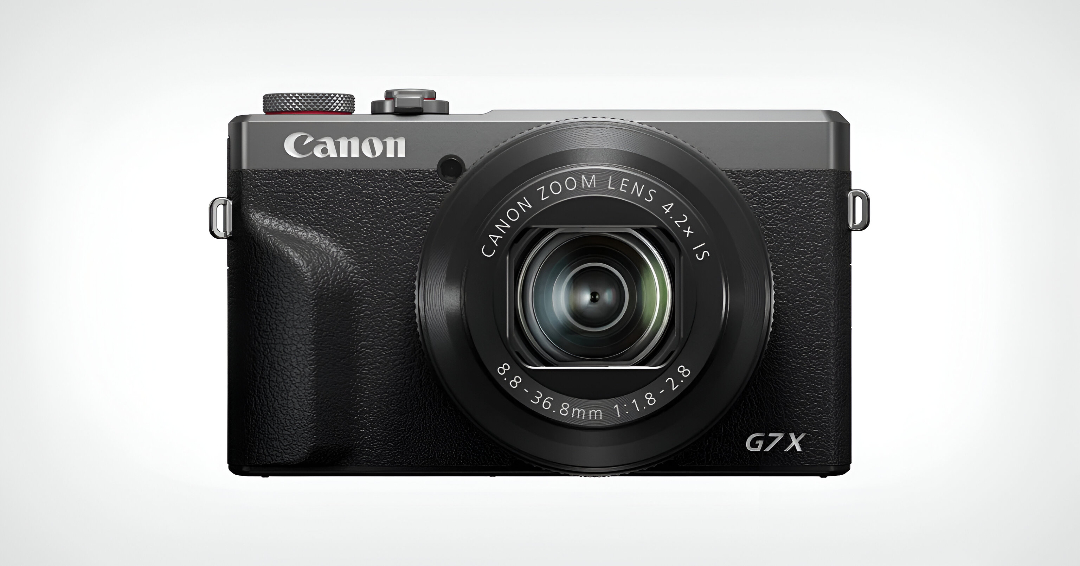
This Canon G7 X Review examines the PowerShot G7 X Mark III graphite edition features to determine if its status as a commemorative limited edition justifies the $1,299 investment. By blending heritage design with the proven 1-inch stacked CMOS sensor, Canon has created a device that sits at the intersection of professional imaging and social media trend-setting.
The world of compact digital cameras has seen a massive resurgence lately, driven largely by a generation of creators looking for "the look"—that specific, high-quality but organic aesthetic that smartphones often over-process. In early 2026, Canon leaned into this nostalgia by announcing the Canon PowerShot G7 X Mark III Graphite 30th Anniversary Edition to mark three decades since the 1996 debut of the original PowerShot line. As an editor who has seen compacts go from everyday essentials to niche collector items, I find this release particularly fascinating. It is not just a tool; it is a statement piece.
The Anniversary Face-lift: What Makes the Graphite Edition Special?
The first thing you notice when picking up this limited run is the weight and texture. While the internal dimensions are the same as the 2019 original, the new graphite-colored body finish gives it a sophisticated, stealthy appearance that differentiates it from the standard black or silver models. It feels less like a gadget and more like a piece of high-end horology.
One of the standout PowerShot G7 X Mark III graphite edition features is the diamond-knurled tactile control ring. For a photographer, the feel of a dial is everything. The increased grip and the precise "click" of the knurling make adjusting aperture or exposure compensation a more intentional act. Furthermore, the commemorative branding is subtle yet effective. You will find a 30th-anniversary logo on the flash housing and specialized packaging that highlights the brand's 30-year journey.
This edition is also sold as a complete kit, including a limited-edition Peak Design Cuff Wrist Strap and a 32GB SD card. For those tracking market scarcity, this is not just a general production change but a limited production run designed to maintain its value among enthusiasts.
Is the Premium Worth It? Price vs. Performance Audit
The most common question I receive is: is the Canon G7 X Mark III graphite edition worth the premium? At an estimated retail price of $1,299, it is roughly $400 more expensive than the standard model’s MSRP. When you break down the math, you are paying for the exclusive finish, the branding, and the Peak Design accessories.
For many users upgrading from Canon G7 X Mark II to 30th Anniversary edition, the jump in performance is significant. You move from 1080p to uncropped 4K and gain a microphone jack. However, if you already own a standard Mark III, the internal hardware is identical. The $419 markup is almost entirely cosmetic and collector-focused.
| Feature | Standard G7 X Mark III | 30th Anniversary Graphite Edition |
|---|---|---|
| MSRP (2026) | ~$880 (Market Dependent) | $1,299 |
| Finish | Black / Silver | Exclusive Graphite |
| Control Ring | Standard Ridges | Diamond-Knurled Tactile |
| Included Accessories | Battery, Charger, Strap | Peak Design Cuff, 32GB SD, Commemorative Box |
| Sensor | 20.1MP 1-inch Stacked CMOS | 20.1MP 1-inch Stacked CMOS |
| Video | 4K 30p Uncropped | 4K 30p Uncropped |
In the world of compact digital cameras, rarity often dictates the price more than megapixels do. If you view your camera as an investment or a piece of gear that reflects your personal style, the premium makes sense. If you are a pragmatist, you might find the markup hard to swallow for a sensor that has been on the market since 2019.
Still the Vlogging GOAT? Content Creation in 2026
When evaluating the Canon PowerShot G7 X vlogging performance in the current landscape, it is clear why this camera refuses to die. Even with the rise of the Sony ZV series, the G7 X maintains a cult following because of its color science. Skin tones appear warm and natural, a vital factor for TikTok production and Instagram Reels.
The vertical video mode is a life-saver for modern creators. You can record a clip vertically, and the camera metadata ensures it imports correctly into your editing software or phone without needing rotation. Vlogging with the Canon PowerShot G7 X Mark III in 2026 still feels remarkably modern because of its 180-degree flip screen. It allows for perfect framing while keeping the footprint small enough to fit in a jacket pocket.
The camera's uncropped 4K at 30fps ensures that you get the full width of the 24mm equivalent lens, which is wide enough for handheld vlogging without making your face look distorted. While the autofocus system relies on contrast detection rather than the more advanced phase detection found in newer R-series cameras, it remains reliable enough for most static and walking-and-talking shots.
The Technical Legacy: 1-Inch Sensor and Optics
At the heart of the device is the 20.1-megapixel 1.0-inch stacked CMOS sensor. This sensor architecture allows for fast data readout, enabling the camera to shoot RAW bursts at up to 30 frames per second. This is a massive advantage for capturing fleeting moments in street photography or fast-moving subjects.
The lens is the unsung hero here. The 24-100mm f/1.8-2.8 focal range is incredibly versatile. At 24mm, the f/1.8 aperture allows for beautiful background blur (bokeh) that smartphones still struggle to replicate naturally. When zoomed in to 100mm, the f/2.8 aperture remains fast enough for decent low-light shots.
In terms of Canon G7 X Mark III 1-inch sensor low light performance, it significantly outperforms even the best smartphones of 2026. Because the sensor is physically larger, it captures more light with less noise. For night-time city vlogs or dim restaurant settings, the G7 X provides a "pro" look that computational photography often masks with artificial smoothing.
"The magic of the G7 X isn't in its specs on paper, but in its optics. The f/1.8-2.8 aperture lens provides a physical depth of field that AI-driven 'portrait modes' simply cannot match in terms of transition and accuracy." — Nina Patel
Final Verdict: A Masterpiece of Niche Appeal
Concluding this Canon G7 X Review, the 30th Anniversary Edition is a fascinating study in brand loyalty and aesthetic value. It doesn't push the technical envelope—it uses the same DIGIC 8 image processor we have known for years—but it perfects the user experience through superior materials and a limited-edition cachet.
For a professional who wants a backup camera that looks as good as the photos it takes, or for a top-tier influencer who wants the specific "G7X look" in a unique graphite shell, this is the definitive version of a classic. However, for the average student starting their YouTube journey, the standard model remains the smarter financial move.
FAQ
Does the Canon G7X Mark III have autofocus issues?
The G7 X Mark III uses a contrast-detection autofocus system. While it is generally fast and includes face tracking, it can occasionally "hunt" in very low light or busy backgrounds compared to Sony’s phase-detection systems. However, firmware updates have significantly improved its reliability since launch.
Can the Canon G7X record in 4K?
Yes, it can shoot uncropped 4K at up to 30p. This is a major advantage for vloggers because it uses the full width of the sensor, providing a wider field of view without the crop factor seen in some earlier compact cameras.
How does the G7X compare to the Mark II?
The Mark III is a significant upgrade over the Mark II, offering uncropped 4K video, a 3.5mm external microphone jack, a stacked CMOS sensor for faster burst shooting, and the ability to livestream directly to YouTube. The Mark II is limited to 1080p and lacks the microphone input.
Is the Canon G7X better than the Sony ZV-1?
This depends on your priority. The Sony ZV-1 has superior autofocus and a side-flipping screen which is better for mounted mics. However, the Canon G7X is often preferred for its "warmer" color science, its longer 24-100mm zoom range, and its superior touchscreen interface.