Quick Facts
- Top for Privacy: Mullvad (Features a zero-email, token-based account system for total anonymity).
- Best for Streaming: NordVPN (Post-quantum ready and optimized for 4K global content).
- Best Free Option: Proton VPN (Sets the standard with unlimited free data and Swiss-grade security).
- Best Value: Surfshark (Ideal for households with unlimited simultaneous device connections).
- Security Benchmark: In 2026, RAM-only server infrastructure and WireGuard protocol are the minimum requirements.
- Primary Risk: Avoid peer-to-peer proxies like Hola VPN that turn your home connection into an exit node.
- Market Insight: The global Virtual Private Network (VPN) market is projected to reach approximately $86.02 billion by 2026.
As the VPN market hits $86 billion, choosing the best vpn 2026 requires looking beyond speed to post-quantum security and server infrastructure. The most reliable services today prioritize technical transparency through independent security audits and zero-knowledge architecture to ensure your data remains truly private.
The State of Privacy in 2026
If you think a VPN is just for watching regional Netflix shows, the data suggests a much darker reality for 2026. Security researchers recently found that vulnerabilities in VPNs and firewalls were the primary entry point for 58% of recorded ransomware incidents in 2024. This makes choosing a high-quality provider a matter of fundamental digital hygiene rather than a luxury.
We have moved past the era where simple AES-256 encryption was the only metric that mattered. Modern threats now require a zero-knowledge architecture where the provider physically cannot see your traffic, even if they were compelled to by a court order. As we look at the landscape for 2026, the best vpn 2026 services are those that have successfully transitioned to RAM-only server infrastructure, ensuring that no data is ever written to a physical hard drive.
| Feature | Mullvad | NordVPN | Proton VPN | Surfshark |
|---|---|---|---|---|
| Primary Strength | Anonymity | Performance | Free Tier | Value |
| Protocol | WireGuard | NordLynx | WireGuard | WireGuard |
| No-Logs Audit | Yes | Yes | Yes | Yes |
| Max Devices | 5 | 10 | 10 | Unlimited |
| Jurisdiction | Sweden | Panama | Switzerland | Netherlands |
The 6 Best VPN Apps of 2026: Expert Picks
1. Mullvad: The Privacy Purist
Mullvad remains the top rated vpn for privacy because it stays true to a singular mission: anonymity. When you sign up, you aren't asked for an email address or a password. Instead, you are generated a random 16-digit account number. You can even pay in cash via mail to ensure there is no financial paper trail.
Pros:
- Total anonymity with no personal identifiers required.
- Flat pricing that hasn't changed in over a decade.
- Excellent implementation of the WireGuard protocol.
Cons:
- Not optimized for unblocking streaming services.
- Fewer server locations compared to major competitors.
2. NordVPN: The All-Rounder
NordVPN has evolved from a simple tool into a comprehensive security suite. By passing its 6th independent audit by Deloitte, it has proven that its verified no-logs policy is more than just marketing fluff. It is currently the best vpn 2026 for streaming netflix and disney plus due to its massive server network and proprietary NordLynx technology, which minimizes the speed loss typically associated with encryption.
Pros:
- Massive network with over 6,000 servers.
- Includes Threat Protection to block malware and trackers.
- Double VPN and Obfuscated servers for high-censorship areas.
Cons:
- Renewal prices are significantly higher than introductory rates.
- Desktop interface can feel cluttered with extra features.
3. Proton VPN: The Free Standard
For users who aren't ready to commit to a monthly subscription, Proton VPN offers the only secure free vpn apps with unlimited data. Based in Switzerland, it benefits from some of the world's strongest privacy laws. Unlike other free services that sell user data, Proton funds its free tier through its paid "Plus" subscribers.
Pros:
- Truly unlimited data on the free tier.
- Open-source apps that anyone can inspect for security flaws.
- Secure Core architecture routes traffic through multiple servers.
Cons:
- Free tier is limited to a few server locations (USA, Netherlands, Japan, Romania, Poland).
- Highest speeds are reserved for the paid tier.
4. ExpressVPN: The Traveler
ExpressVPN has long been the most reliable vpn for international travel 2026. Its Lightway protocol is designed to reconnect almost instantly when you switch between Wi-Fi and mobile data, making it perfect for use in airports or on trains. Its commitment to RAM-only servers ensures that even if a server is physically seized, no user data can be recovered.
Pros:
- Extremely easy to use with a "one-click" interface.
- Works consistently in countries with heavy internet censorship.
- Top-tier 24/7 customer support.
Cons:
- One of the most expensive options on the market.
- Supports fewer simultaneous connections than competitors.
5. Surfshark: The Budget Leader
If you need to protect a whole family or a small business, Surfshark is the best budget vpn for multiple devices 2026. While most providers limit you to 5 or 10 devices, Surfshark allows unlimited simultaneous connections on a single account.
Pros:
- Incredible value for money on two-year plans.
- CleanWeb feature blocks ads and cookie pop-ups.
- Dynamic MultiHop allows you to choose your entry and exit servers.
Cons:
- Customer support response times can be slow.
- Some servers can be inconsistent during peak hours.
6. Windscribe: The Family Filter
Windscribe is unique because of its integrated content filtering engine called R.O.B.E.R.T. It allows parents to block entire categories of content (like gambling, porn, or social media) at the server level, meaning the filtering works on every device connected to the VPN.
Pros:
- Highly customizable filtering for families.
- Generous free tier (10GB/month) with an easy upgrade path.
- Simple, no-nonsense interface.
Cons:
- Server network is smaller than Nord or Express.
- Speeds can be lower on long-distance connections.
5 Critical Security Risks and VPN Services to Avoid
Not all VPNs are created equal. In my years of testing hardware and software, I have seen numerous "free" apps that do more harm than good. When researching vpn services to avoid for data security, look for these red flags.
1. The P2P Architecture Risk (Hola VPN)
Hola VPN does not use a traditional server network. Instead, it uses a peer-to-peer (P2P) model where your computer acts as an exit node for other users. This means if someone else uses the service to commit a crime, it could look like the traffic originated from your home IP address.

2. DNS Leakage and Logging (Turbo VPN & Opera VPN)
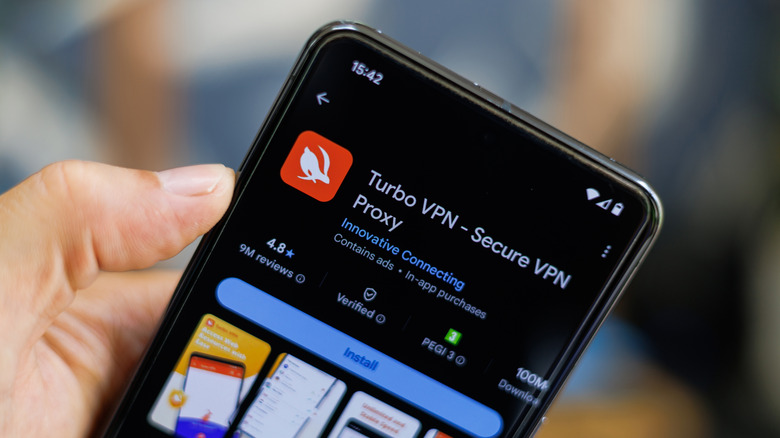
Many popular mobile apps like Turbo VPN have been caught exhibiting DNS leaks. This happens when your browser sends a request to your ISP's servers instead of the encrypted VPN tunnel, effectively revealing your browsing history. Opera VPN, while convenient, is technically a browser proxy rather than a full system-wide VPN, and its logging policy is often criticized for being opaque.
3. The Jurisdictional Trap (HMA & Psiphon)
HMA (formerly HideMyAss) has a documented history of handing over user logs to authorities. While they claim to have a no-logs policy now, their location in the UK—a key member of the Five Eyes surveillance alliance—is a significant concern for high-privacy users. Psiphon is an excellent tool for bypassing censorship, but it is not designed for privacy and explicitly states that it logs some user data.
4. Corporate Ownership Conflicts
It is vital to know who owns your VPN. Several top-rated apps are owned by companies with checkered pasts in the advertising or malware industries. Always research the parent company before trusting an app with your unencrypted traffic.
5. Affiliate Bias
Be wary of review sites that only recommend VPNs that pay high commissions. A real expert will tell you about the flaws of a service, not just the features. If a review sounds like a sales pitch and lacks technical data like DNS leak protection test results, move on.
Buyer’s Guide: How to Choose a Reliable VPN in 2026
When evaluating a service, don't get distracted by flashy websites. Look for these technical specifications:
RAM-Only Server Infrastructure Traditional servers use hard drives that store data until it is overwritten. RAM-only servers run entirely on volatile memory. The moment the server is turned off or loses power, every byte of data is instantly wiped. This is the only way to guarantee that no logs exist for a government to seize.
WireGuard Protocol Support In 2026, you should avoid older protocols like L2TP or PPTP. The WireGuard protocol is the modern standard, offering significantly faster speeds and better security than the older OpenVPN. It has a much smaller code base, which makes it easier for security experts to audit for vulnerabilities.
Independent Security Audits A VPN can claim anything in its marketing. A reliable provider will hire a third-party firm (like PwC, Cure53, or Deloitte) to inspect their servers and code. Look for an audit that has been completed within the last 12 months.
Kill Switch Functionality A kill switch is a non-negotiable feature. If your VPN connection drops for even a second, the kill switch automatically cuts your internet connection to prevent your real IP address from leaking to the site you are visiting.
FAQ
Which VPN is considered the best for 2026?
The answer depends on your specific needs, but for the majority of users, NordVPN provides the best balance of speed, security, and streaming capability. If you are a privacy extremist, Mullvad is the superior choice due to its anonymous account system.
Are free VPNs safe enough to use in 2026?
Most free VPNs are not safe because they monetize your data or lack essential features like DNS leak protection. However, Proton VPN is a notable exception, offering a secure and unlimited free version that adheres to the same strict privacy standards as its paid tiers.
What are the key features to look for in a VPN for 2026?
You should prioritize RAM-only server infrastructure, a verified no-logs policy, the WireGuard protocol, and a functional kill switch. Post-quantum encryption is also becoming a standard feature for top-tier providers to protect against future computing threats.
Does using a VPN still slow down internet speeds?
While all encryption adds some overhead, modern protocols like WireGuard and NordLynx have reduced this impact significantly. On a high-speed fiber connection, the speed loss is often less than 5-10%, which is unnoticeable during 4K streaming or gaming.
Are VPNs effective against modern tracking and surveillance?
A VPN is a powerful tool for hiding your IP address and encrypting your traffic, but it is not a silver bullet. To avoid modern tracking, you must also use a private browser, block third-party cookies, and avoid logging into social media accounts while browsing, as these can still identify you regardless of your VPN status.