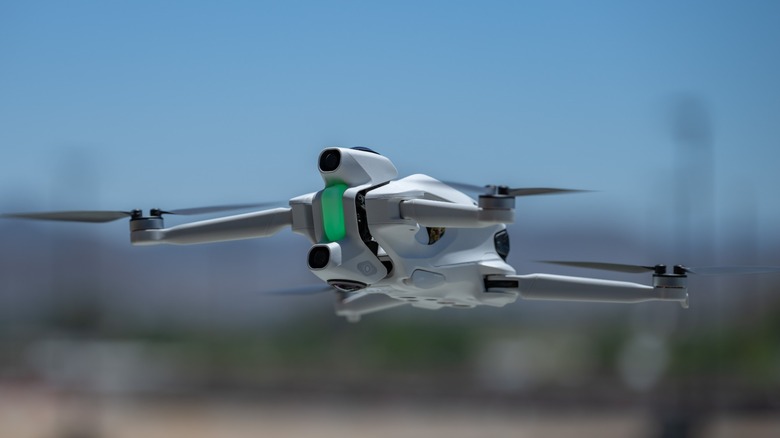
Our Top Picks
- Starter Bundle ($1,599): The essential entry point for creators, featuring the A1 aircraft, standard flight battery, and the immersive Micro-OLED VR goggles.
- Infinity Bundle ($1,999): The professional choice for serious cinematographers, adding high-capacity batteries, a dedicated carrying case, and advanced charging hubs.
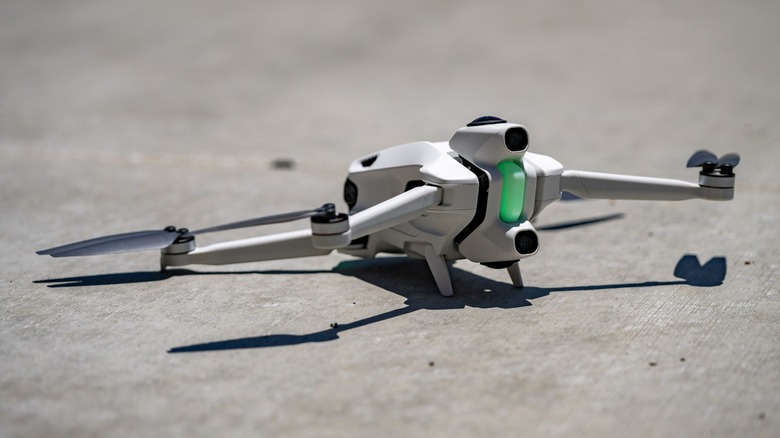
The Antigravity A1 review reveals a 249g drone that delivers 8K 360 video and a unique VR experience, making it a powerful DJI alternative. This specialized 360-degree camera drone offers a uniquely immersive VR-style flight experience by allowing pilots to look around freely during flight using head-tracking technology, fundamentally changing how we approach aerial storytelling.
The 360-Degree Paradigm Shift: Beyond Traditional FPV
I have spent the last decade reviewing every major release in the imaging world, but my first flight with the Antigravity A1 was one of the few times I felt a genuine sensory disconnect. In a traditional FPV setup, your eyes are locked to the nose of the drone. If the drone turns, your world turns. The A1 utilizes what the company calls FreeMotion technology. When I donned the Micro-OLED goggles, I realized I could look left to track a passing car or look down to check my altitude while the drone continued its steady path forward.
This is the beauty of spherical video capture. Instead of framing the shot perfectly while flying—a task that requires immense skill—you simply fly a safe, smooth path. The dual-lens system captures everything in every direction. This allows for extensive post-production reframing where you decide where the camera points long after the drone has landed. The latency-free transmission in the goggles makes this feel less like flying a machine and more like a floating out-of-body experience. Using motion-based flight control, the drone responds to subtle hand tilts, making the act of piloting secondary to the act of observing.
The head-tracking technology is remarkably responsive. During my tests over the rolling hills of California, I found myself instinctively ducking as I flew under tree canopies because the immersion was so convincing. This isn't just a gimmick; it is a tool for aerial videography workflows that eliminates the need for a secondary camera operator. You are the pilot and the cinematographer simultaneously, yet those roles are decoupled in a way that feels natural.
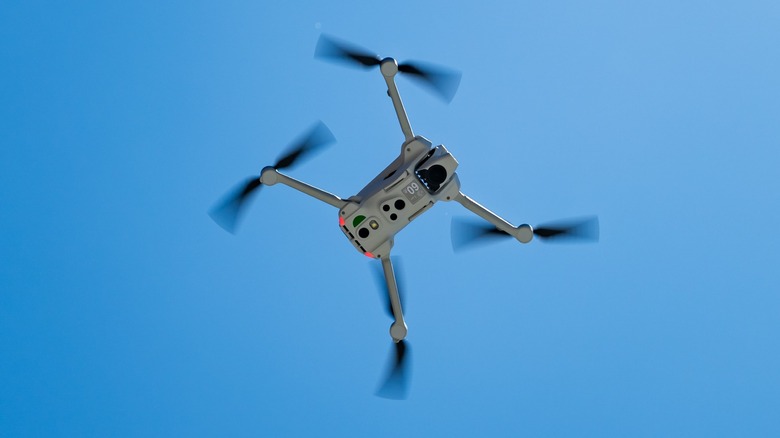
Hardware & Regulatory Freedom: The 249g Advantage
From a technical perspective, the Antigravity A1 8K camera specs are impressive for a device of this size. It is equipped with a dual-lens 1/1.28-inch sensor system capable of recording 8K 360-degree video at 30 frames per second. The larger sensor size compared to typical sub-250g drones means better dynamic range and cleaner shadows, which is critical when you are stitching two hemispherical images together. The image stitching technology has improved significantly via recent firmware, making the "stitch line" nearly invisible in most lighting conditions.
The most significant practical feature is the airframe weight. With a takeoff weight of 249 grams with its standard battery, the Antigravity A1 complies with sub-250-gram registration thresholds in many international jurisdictions. For those of us who travel frequently, this Antigravity A1 249g drone performance means fewer regulatory hurdles with the FAA or UK CAA, though you should always check local "no-fly" zones.
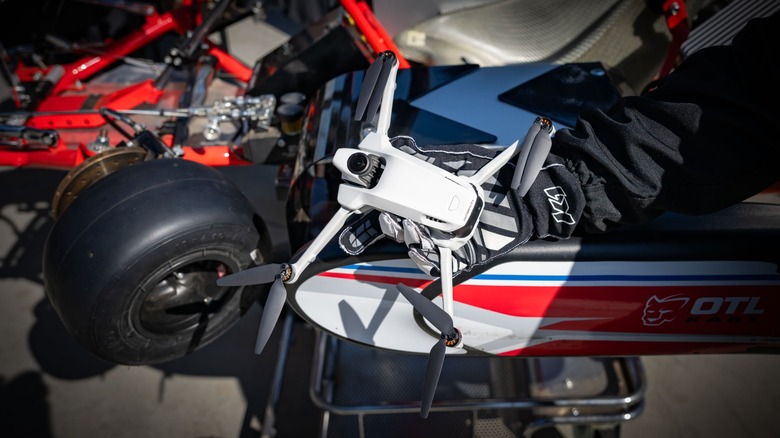
In terms of endurance, the drone provides a maximum flight time of up to 24 minutes using the standard flight battery and up to 39 minutes with the high-capacity battery option. During my real-world testing, I averaged about 21 minutes on the standard battery, which is still excellent for a drone running a dual-sensor 8K array and electronic image stabilization. The internal 20GB storage is a nice safety net, though you will definitely want a high-speed microSD card to handle the massive 8K bitrates.
Antigravity A1 vs DJI Avata 2: Which Should You Buy?
When choosing between the Antigravity A1 vs DJI Avata 2, you have to ask yourself what kind of creator you are. The Avata 2 is a surgical tool built for speed and tight gaps. The A1 is a canvas built for atmosphere and perspective.
| Feature | Antigravity A1 | DJI Avata 2 |
|---|---|---|
| Primary Resolution | 8K 360-degree | 4K Standard |
| Weight | 249g (Regulatory Friendly) | 377g (Requires Registration) |
| Flight Experience | Immersive Head-Tracking | Fixed FPV Perspective |
| Sensor Size | Dual 1/1.28-inch | Single 1/1.3-inch |
| Best For | Cinematic Reframing | High-Speed Agility |
The Antigravity A1 vs DJI Avata 2 comparison often comes down to the environment. DJI’s O4 transmission system is legendary for its distance, whereas I noticed some Antigravity A1 range limitations and connectivity issues when flying in dense urban environments. If you go beyond 300m in a city, the signal can jitter. However, for capturing a wide-angle sunset or a mountain bike descent where the action happens all around the drone, the A1 is untouchable. The ability to produce a 9:16 vertical reel, a 16:9 YouTube video, and a 2.35:1 cinematic wide shot from a single flight is a workflow miracle.
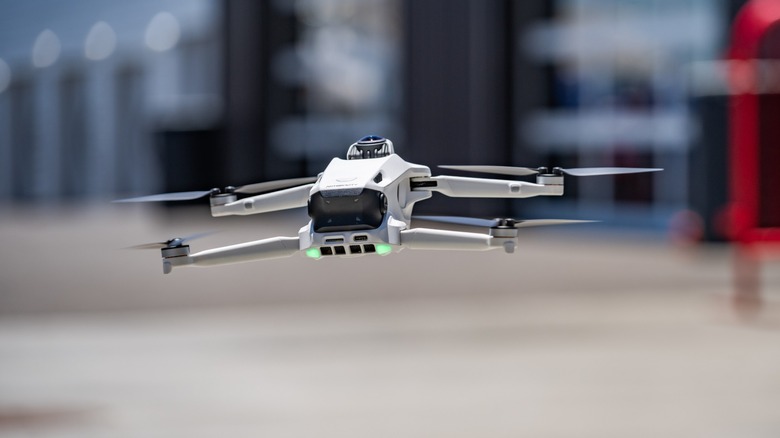
Real-World Logistics: Cables, Software, and Early Quirks
No first-generation or specialized tech is perfect. The Antigravity A1 review would not be honest without mentioning the hardware quirks. One minor annoyance is the external goggle battery; you have to run a USB-C to barrel cable from the goggles to a battery pack in your pocket. It feels a bit clunky compared to integrated solutions.
I took the A1 out during a biting Chicago winter to see how the sub-250g frame handled the cold. The drone stayed stable even in 15mph gusts, thanks to the obstacle avoidance sensors that help maintain positioning. The software suite for post-production reframing is intuitive, but it requires a powerful computer to stitch 8K spherical video without lag. This is an unmanned aerial vehicle that demands respect for its processing requirements.
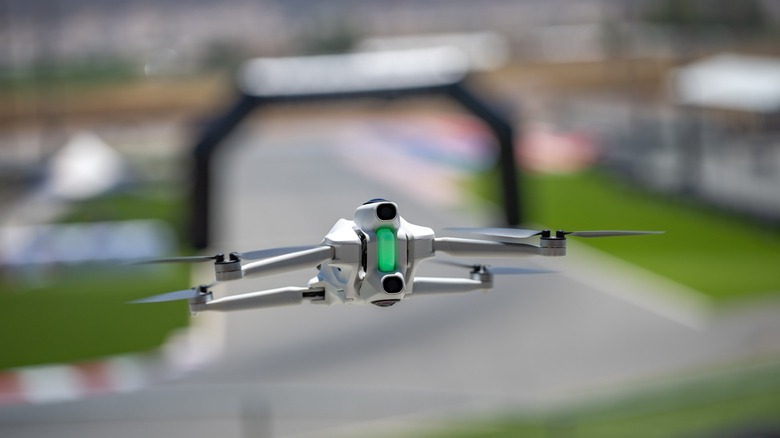
For those wondering is the Antigravity A1 drone worth the investment, the answer depends on your output. If you are a commercial videographer, the time saved by not needing a second flight to "get the other angle" pays for the drone in a single weekend. If you are a hobbyist who just wants to feel the rush of flight, the immersion of the VR goggles is a brain-breaking experience that traditional drones simply cannot replicate.
FAQ
Is the Antigravity A1 worth the money?
If your goal is to create high-end cinematic content or immersive VR experiences without a large crew, the A1 is a stellar investment. The ability to reframe 8K footage in post-production offers a level of creative flexibility that standard drones cannot match, justifying its premium price point.
How long does the Antigravity A1 battery last?
The standard battery provides approximately 24 minutes of flight time, while the high-capacity battery extends that to 39 minutes. Real-world conditions like wind and cold temperatures will typically reduce these figures by 10-15%.
What are the pros and cons of the Antigravity A1?
The main pros include the sub-250g weight for easy regulation compliance, the stunning 8K 360-degree resolution, and the immersive head-tracking flight. The cons involve a limited 300m range in urban settings, the external battery cable for the goggles, and the high processing power required for editing the footage.
What is the difference between the A1 and other models?
The A1 is specifically designed for spherical 360-degree capture, whereas most consumer drones capture a fixed forward-facing view. This allows the A1 to capture everything happening around it, which is a significant departure from the traditional FPV or cinematic drone flight path.
Does the Antigravity A1 come with a warranty?
Yes, Antigravity offers a standard manufacturer's warranty that covers hardware defects. They also offer an optional protection plan that provides coverage for accidental damage, which is highly recommended for FPV-style flying.