Our Top Picks
Choosing the right equipment for a professional shop often involves balancing cost and performance, but some items simply fail to meet the standard. Our review of the 2026 catalog identifies the five products with the lowest recommendation percentages based on verified professional feedback.
| Product | Recommendation % | Est. Price | Primary Issue |
|---|---|---|---|
| Icon T8 Intelligent Diagnostic Scanner | 62% | $899 | Software instability and crash logs |
| Multispline Screw Extractor Set | 58% | $45 | Material fatigue and bit snapping |
| Underhood Flood Light | 71% | $140 | Marketed vs. actual physical span |
| 7-Inch Inline Wire Strippers | 65% | $25 | Manufacturing tolerance errors |
| 12-Inch Precision Snap Ring Pliers | 85% | $30 | Tip sizing and ergonomic constraints |
Professional mechanics report significant performance issues with the T8 Intelligent Diagnostic Scanner, citing frequent software crashes and an inability to clear codes on newer vehicles. Similarly, the Multispline Screw Extractor set faces criticism for material fatigue, with many users experiencing snapped extractor bits during their first use despite the hardened steel construction. These specific worst Icon tools struggle with professional demands due to design flaws despite the lifetime warranty.
1. Icon T8 Diagnostic Scanner: Software Stability Issues
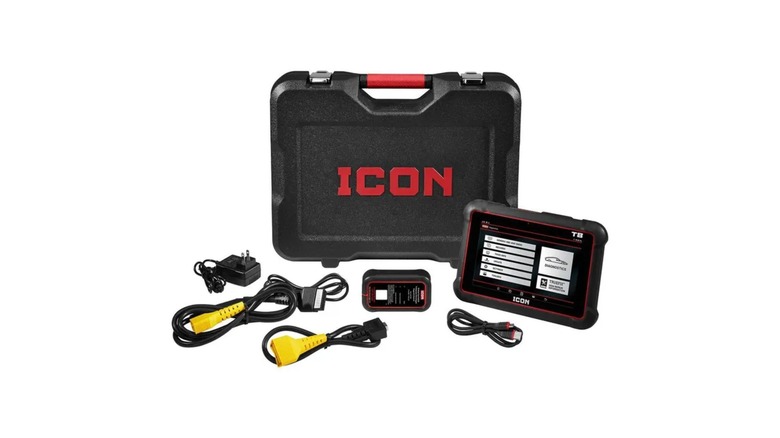
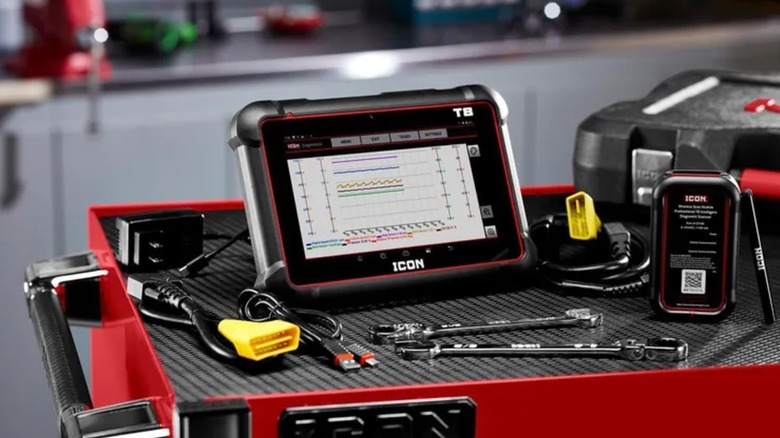
The entry of Harbor Freight into the high-end diagnostic market was met with significant anticipation, particularly with the T8 Intelligent Diagnostic Scanner. Positioned as a cost-effective alternative to Snap-On or Autel, the $900 price point suggests a professional-grade experience. However, the reality in 2026 is that the hardware capabilities are frequently overshadowed by critical software bugs.
Field reports from automotive technicians indicate that the scanner suffers from frequent application hangs, particularly when performing bi-directional controls on 2025 and 2026 model year vehicles. While the processor is capable, the integration of new communication protocols seems rushed. Users have documented instances where the scanner fails to communicate with the Body Control Module (BCM) on late-model domestic trucks, making it impossible to perform simple resets or adaptations.
The gap between diagnostic hardware and software maturity is the primary reason why some Harbor Freight Icon tools fail for professionals who cannot afford the downtime of a rebooting tablet mid-procedure. When a tool costs nearly a thousand dollars, the expectation is a seamless handoff between the vehicle gateway and the user interface. Unfortunately, Icon T8 diagnostic scanner software bugs 2026 remain a persistent headache for those working on a deadline.
2. Multispline Screw Extractor Set: Material Fatigue Under Pressure
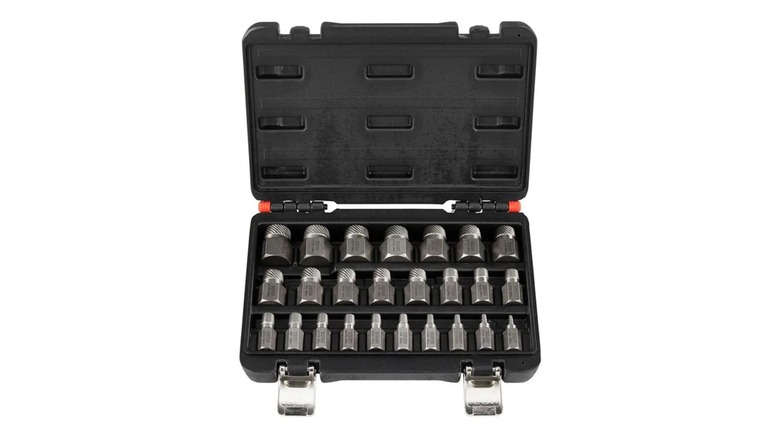
There is perhaps no tool failure more frustrating than an extractor snapping inside the very bolt it was meant to remove. The Multispline Screw Extractor set has earned nearly one hundred 1-star ratings from professionals who report that the bits fail under standard torque loads. This is a classic example of Icon tool quality concerns where the choice of material does not align with the tool’s intended high-stress function.
Technical specifications for the set:
- Material: Hardened S2 steel construction
- Drive: Hex head for use with sockets or wrenches
- Sizing: Comprehensive range for internal and external extraction
Despite the hardened steel branding, the material often exhibits extreme brittleness. In high-torque applications, such as removing a seized manifold stud, the splines tend to shear or the entire bit snaps flush with the fastener. This leads to Harbor Freight Icon screw extractor snapping complaints that highlight a lack of proper heat treatment during manufacturing. When an extractor fails, it often leaves a hardened piece of steel behind that is nearly impossible to drill out, turning a ten-minute job into a four-hour disaster.
3. Underhood Flood Light: The 20-Inch Specification Discrepancy
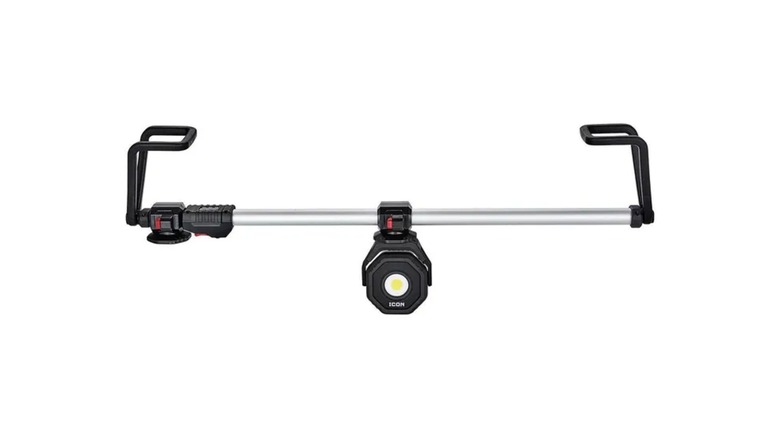
Workshop lighting is essential for precision work, and the Icon Underhood Flood Light was marketed as a premier solution for wide-span illumination. The marketing materials prominently feature a 77-inch reach, which would theoretically cover the engine bays of even the largest heavy-duty pickups. However, a significant number of users have found that the actual usable span is closer to 57 inches.
This discrepancy in Icon underhood flood light actual dimensions vs specs has led to significant installation frustrations. Many technicians find that the light simply cannot bridge the gap on modern wide-body vehicles without significant modification or precarious mounting. This inaccuracy in product specifications damages Harbor Freight Icon reliability in the eyes of professionals who plan their shop layouts based on these advertised figures.
Beyond the reach issue, the 2,100-lumen output often experiences thermal throttling. After thirty minutes of continuous use, the light frequently dims to protect the LEDs, significantly reducing its effectiveness during long engine teardowns.
4. 7-Inch Inline Wire Strippers: Manufacturing Tolerances and QC
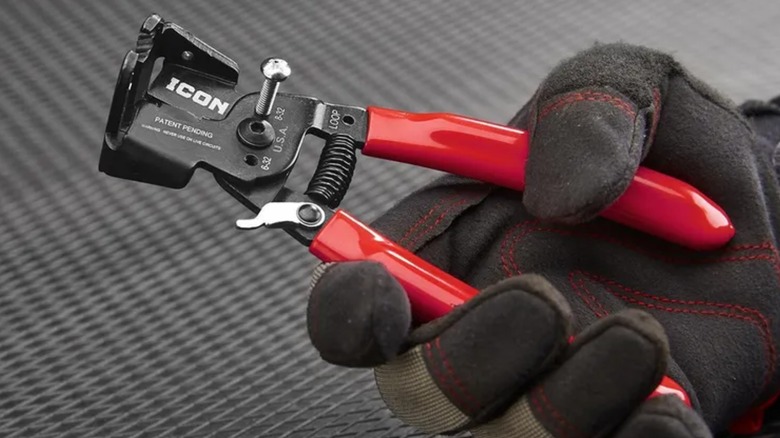
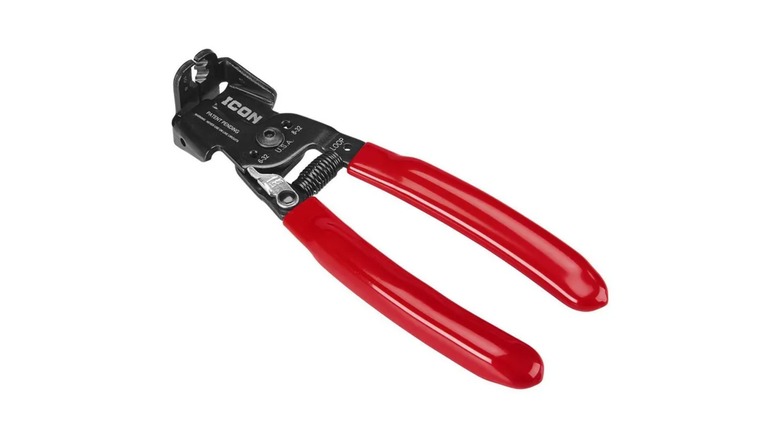
For electrical work, precision is non-negotiable. The 7-inch inline wire strippers were designed to offer a compact, ergonomic alternative for tight spaces behind dashboards or inside door panels. Unfortunately, these tools have been plagued by inconsistent manufacturing tolerances that make them a liability for delicate wiring harnesses.
The most common Icon inline wire stripper manufacturing defects involve the sizing of the cutting notches. Verified reviews frequently mention that the 18-gauge notch often cuts into the copper strands of 18-gauge wire, while the 16-gauge notch fails to fully strip the insulation. This inconsistency forces the technician to "guess" which notch to use, often resulting in damaged conductors or incomplete strips.
In a professional environment, damaging a factory harness because of a poorly machined tool is an expensive mistake. These quality control issues led to many units being cleared out of inventory in late 2025, but remaining stock continues to appear on shelves, posing a risk to unsuspecting buyers.
5. 12-Inch Precision Snap Ring Pliers: Ergonomic and Tip Sizing Flaws
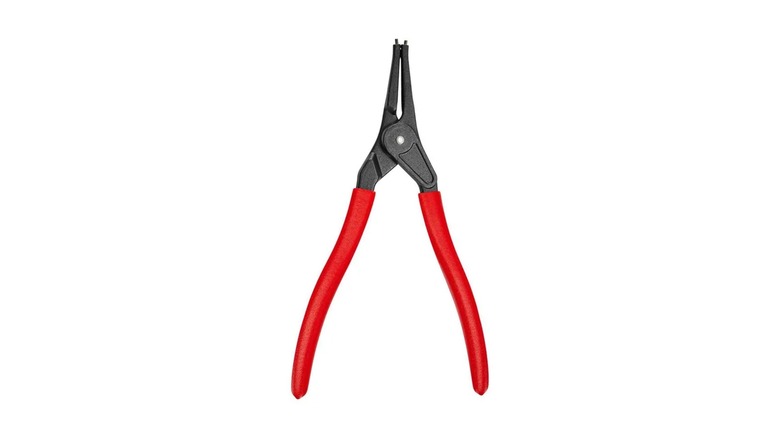
While the 12-inch precision snap ring pliers maintain a relatively high overall rating, the recommendation percentage sits at a mediocre 85%. This is largely due to specific design flaws that limit their utility in standard automotive applications. For many users, these are among the lowest rated Harbor Freight Icon tools to avoid if you primary work on passenger vehicles.
Specific issues reported by users include:
- Tip Diameter: The interchangeable tips are often too large for standard snap rings found in alternators or small pumps.
- Handle Span: The ergonomics require a very wide hand grip, making one-handed operation nearly impossible for those with average-sized hands.
- Retention: The set screws used to hold the tips in place have a tendency to vibrate loose during heavy use.
Common issues with Icon snap ring pliers tips revolve around the lack of a "fine" option for precision work. While they are marketed as precision instruments, they function more like heavy-duty industrial pliers. For a technician who needs a versatile tool for varied snap ring sizes, the bulky nature of this set often results in it being left in the drawer in favor of more refined alternatives.
The Professional Gap: Is the Lifetime Warranty Enough?
The value proposition of Harbor Freight has always been the lifetime warranty. If it breaks, you bring it back and get a new one. However, in the professional world, the Harbor Freight Icon lifetime warranty value vs reliability is a complex calculation. A warranty covers the cost of the tool, but it does not cover the two hours of lost labor when a scanner crashes or the cost of a customer’s vehicle sitting on a rack while you drive to the store for a replacement extractor.
There is a distinct difference between the "new tool haul" hype found on social media and long-term professional utility. Certain parts of the Icon line are exceptional—such as the benefits of Icon G2 ratchets over low rated sets, which have proven to be durable and smooth under daily use. However, when it comes to complex electronics or high-stress extraction tools, the manufacturing shortcuts become evident.
For those building a professional kit, the takeaway is clear: buy the Icon ratchets, wrenches, and sockets, but exercise extreme caution with their diagnostic equipment and specialty extraction sets. Reliability on the job site is about more than just a free replacement; it is about the confidence that the tool will perform the first time, every time.
FAQ
What are the most common issues with poor icon design tools?
The most frequent problems involve a lack of vector support and poor export options. When a design tool cannot export to multiple formats like SVG or PDF, it limits the versatility of the icons. Additionally, a lack of grid-snapping features often results in icons that look inconsistent when used together in a set.
Why do some icon generators produce low-resolution results?
Low-resolution output usually stems from the tool processing images as rasters rather than vectors. If the generator is simply resizing a PNG file, it will inevitably lead to pixelation. High-quality tools use mathematical paths to ensure that the icon remains crisp at any size, from a favicon to a large display header.
Which features make an icon editor difficult to use?
A cluttered user interface and hidden layers are the primary culprits. Editors that lack intuitive keyboard shortcuts or those that require multiple clicks for basic functions like "color fill" or "path adjustment" significantly slow down the creative process. Poorly labeled tools also contribute to a steep learning curve for new users.
Are there risks to using free online icon makers?
The risks often involve data privacy and licensing limitations. Many free platforms may claim ownership of the designs created on their site or lack the proper commercial use licenses, leaving the user vulnerable to copyright issues. Furthermore, free tools often lack the security protocols necessary to protect uploaded proprietary brand assets.
What are the downsides of outdated icon design software?
Outdated software often lacks support for modern display standards like Retina or high-DPI screens. It may also fail to integrate with current workflow plugins, such as those for Figma or Adobe Creative Cloud. This isolation makes it difficult to maintain a collaborative environment and results in assets that look dated on modern hardware.