Our Top Picks
The Synth-a-Sette is our gold-standard recommendation for anyone seeking a creative, tactile music experience on a budget. It is the best pocket synthesizer under 30 dollars for music lovers who want to bridge the gap between physical objects and electronic sound. With its all-analog design and clever alligator clip expansion, it stands out as a unique DIY music instrument kit that offers far more educational and musical value than its price tag suggests.
The Synth-a-Sette is a budget-friendly pocket synthesizer that features a 13-key monophonic touchpad and an all-analog design. It generates sound electronically through circuits, making it an ideal portable tool for music students and hobbyists. Its retro cassette-inspired design and battery operation allow for immediate musical experimentation without the need for coding or complex software setups.
Quick Facts
- Top Gift Pick: Synth-a-Sette Analog Synthesizer
- Price Range: Under $30, making it one of the most affordable music tech gifts for creative musicians on a budget
- Connectivity: Alligator clip connections for turning fruit, silverware, or people into keys
- Sound Engine: 13-key monophonic oscillator using genuine analog circuitry
- Power Source: Battery-operated gadget requiring 2x AAA batteries
- Best For: STEM learning, mobile music sketching, and unique musical gifts
The $30 Breakthrough: Meet the Synth-a-Sette
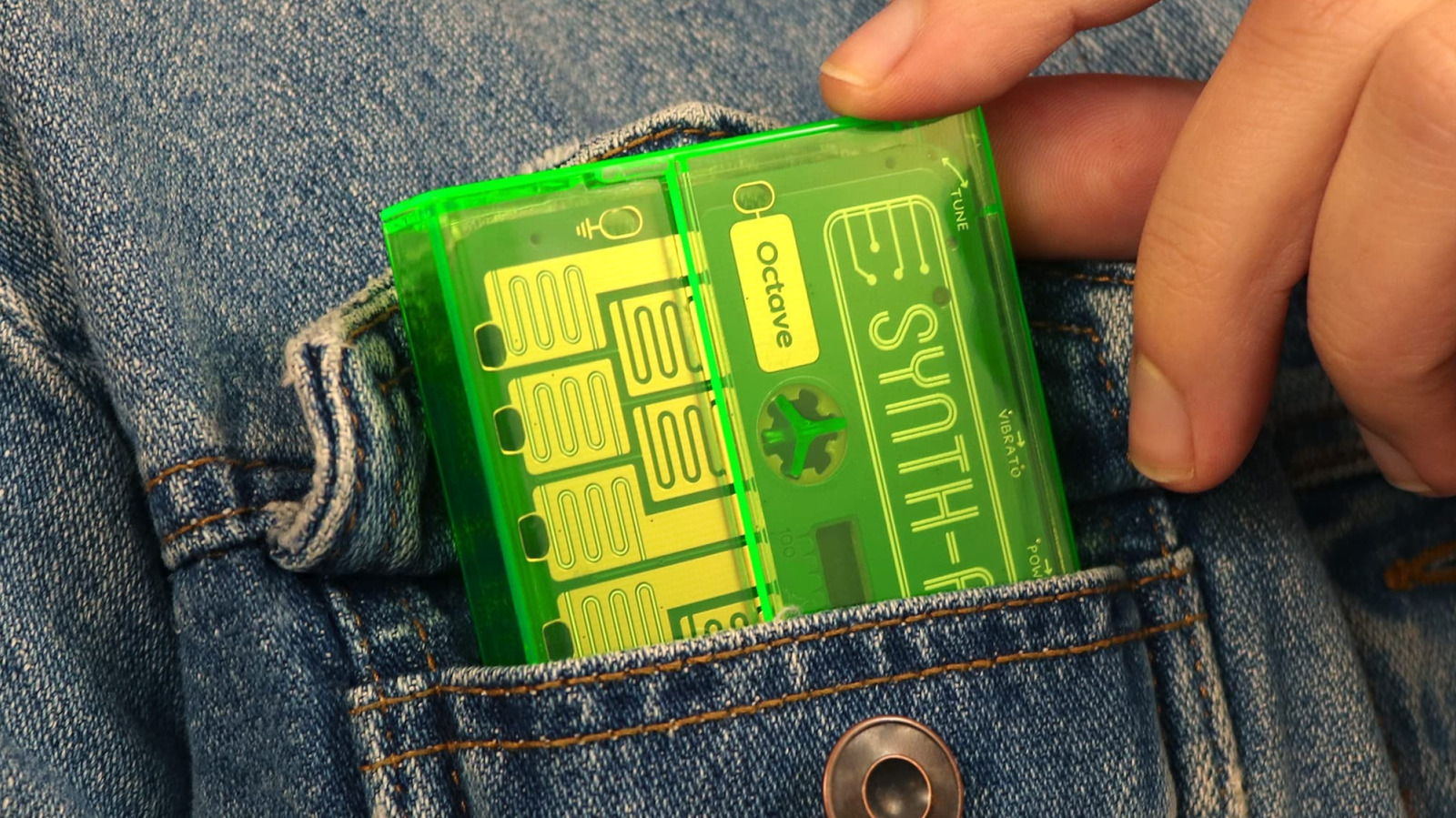
I have spent decades testing high-end studio monitors and thousand-dollar modular racks, but there is something undeniably infectious about a device that costs less than a decent steak dinner yet invites hours of play. The Synth-a-Sette is a no code analog synthesizer kit for beginner electronic music that strips away the intimidation of traditional production. Wrapped in a housing that looks exactly like a classic cassette tape, this pocket synthesizer is a love letter to the era of physical media and tactile interface design.
In a market where the parts and accessories segment generated approximately $22.77 billion in revenue in 2024, finding a device that offers true analog circuitry at this price point is a rarity. Most budget gadgets rely on cheap digital chips that sound thin or sterile. However, the Synth-a-Sette uses an actual monophonic oscillator to create sound. This means the audio has a warmth and presence that feels alive, reacting to your touch in a way that a smartphone app simply cannot replicate. It is a monophonic pocket synthesizer for creating melodies anywhere, whether you are on a train or sitting at your kitchen table.
Spec Snapshot: Synth-a-Sette Technical Overview
| Feature | Specification |
|---|---|
| Circuitry | All-analog signal path |
| Keyboard | 13-key tactile touchpad |
| Expansion | 6-port alligator clip input |
| Audio Output | 3.5mm headphone/speaker jack |
| Power | 3V (2x AAA batteries) |
| Sound Type | Monophonic square-wave style |
The beauty of this device lies in its simplicity. There are no menus to navigate and no firmware updates to install. It is a pure electronic experimentation tool. For those looking for affordable music gifts for musicians, this hits the sweet spot of being a "toy" that actually functions as a legitimate sound design instrument.
Turning Bananas into Basslines: The Magic of Conductivity
The real "magic moment" happens when you move away from the built-in touchpad and start exploring the world around you. By utilizing the included alligator clips, you can learn how to use alligator clips to turn conductive objects into a synth keyboard. The concept is based on signal conductivity. When you connect one clip to the synth and the other to a piece of fruit, like a banana, you essentially extend the internal circuit. When you touch the fruit, your body completes the circuit, triggering a note.
This makes it a fantastic diy music instrument kit for turning fruit into a keyboard. I have spent my weekend afternoons connecting this device to everything in my kitchen. Silverware, bowls of water, and even damp houseplants become part of your musical arrangement. It is an incredible way to visualize how electricity moves through conductive materials.
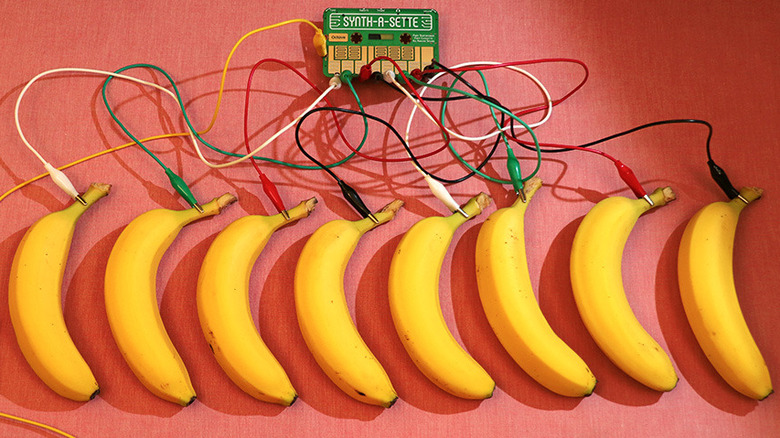
The audio signal flow is straightforward: the oscillator generates the pitch, which is then routed through the alligator clip connections to your chosen object. Because the human body is conductive, touching the object acts as the final switch. This tactile interface provides a level of engagement that is often lost in modern "in-the-box" music production. You aren't just clicking a mouse; you are physically interacting with the physics of sound.
Conducting Your First Experiment
- Clip one end of the alligator cable to the metal contact points on the Synth-a-Sette.
- Clip the other end to a conductive material like a spoon or an apple.
- Hold the "ground" contact on the synthesizer with one hand.
- Touch the object with your other hand to trigger the monophonic oscillator.
Beyond Play: Why It’s a STEM Learning Powerhouse
While I approach this from the perspective of an audio editor, the educational value is impossible to ignore. The Synth-a-Sette functions perfectly as an educational analog synthesizer for students of all ages. In an era where over 62 million learners are using digital tools globally, there is a growing need for physical, hands-on experiences. Beginner instrument sales saw a 28% increase in 2023, largely driven by people wanting to understand the "how" behind the music.
By using this pocket synthesizer, students can engage in STEM learning without the barrier of complex coding. It teaches the fundamentals of analog circuitry—how a circuit is completed, what resistance does to a signal, and how sound waves are generated. It encourages electronic experimentation by asking the user to guess which household items are conductive and which are insulators.
Is a dry cracker conductive? No. But what if you dip it in water? These are the kinds of questions that turn a simple music session into a science experiment. This device demonstrates sound design principles in their most raw form. You learn about pitch, frequency, and signal flow not through a textbook, but through a battery-operated gadget that fits in your pocket.
Setup Essentials: What You Need to Start Jamming
While the Synth-a-Sette is ready to go out of the box, a few small additions will significantly improve your experience. Since it is an analog device, it doesn't have a built-in speaker. This is actually a benefit, as it allows you to connect it to high-quality headphones or a guitar amp for a much larger sound.
What's in the Box
- 1x Synth-a-Sette pocket synthesizer
- 6x Alligator clip cables
- 1x Instruction manual explaining conductivity basics
What You'll Need to Add
- Batteries: 2x AAA batteries. I recommend rechargeable ones if you plan on long jam sessions.
- Headphones: Any standard pair with a 3.5mm jack.
- Amplification: If you want to share the sound, a portable Bluetooth speaker with an "Aux In" works wonders.
- External Objects: Collect a variety of conductive materials like silverware, fruit, and even pencil graphite (pencil lead is conductive!).
For more advanced DIY enthusiasts, you can even pair this with piezo contact microphones which can be found for under $30 to capture vibrations from other surfaces, further expanding your sound design toolkit. Whether you are using it as a mobile sketching tool or a classroom prop, the setup remains remarkably simple and portable.
Final Verdict
In the world of professional audio, we often get bogged down in the minutiae of sample rates and bit depths. The Synth-a-Sette reminds us that music is, at its core, about play and discovery. For $30, you aren't just getting a pocket synthesizer; you are getting a doorway into the world of electronic music and physics. It is one of the most thoughtful and affordable music tech gifts for creative musicians on a budget, and a brilliant educational tool for the next generation of sound designers.
FAQ
What is a pocket synthesizer?
A pocket synthesizer is a compact, portable electronic musical instrument designed for sound creation on the go. Unlike full-sized workstations, these devices focus on portability and often feature a simplified interface, such as a touchpad or small buttons, to trigger sounds. They usually run on battery power and provide a headphone jack for private listening.
Are pocket synthesizers good for beginners?
Yes, they are excellent for beginners because they often eliminate the complexity of software and menu diving. Devices like the Synth-a-Sette offer a hands-on introduction to analog circuitry and sound design, allowing users to learn the relationship between physical touch and electronic sound without needing prior musical or technical knowledge.
Do pocket synthesizers need external speakers?
Most pocket synthesizers, including the Synth-a-Sette, do not have built-in speakers to keep the device small and affordable. You will generally need a pair of headphones or a portable speaker with a 3.5mm auxiliary input to hear the sound produced by the internal oscillator.
What features should I look for in a portable synthesizer?
When shopping for a portable synth, look for the type of sound engine (analog vs. digital), the power source (internal rechargeable vs. standard batteries), and connectivity options. For those interested in DIY projects, features like alligator clip connections or CV (Control Voltage) inputs are highly desirable for expanding the instrument's capabilities.
Can you record music directly from a pocket synthesizer?
Yes, you can record the output by connecting the 3.5mm jack of the synthesizer to the input of an audio interface or a handheld digital recorder. This allows you to capture the unique analog tones and use them as samples or lead lines in a larger music production setup.
How long do the batteries typically last on portable synthesizers?
Battery life varies depending on the complexity of the circuits, but a simple battery-operated gadget like the Synth-a-Sette can typically last between 20 to 40 hours on a pair of fresh AAA batteries. Using high-quality alkaline or rechargeable batteries will ensure the most stable pitch and longest play time.