Quick Facts
- Entry-Level Floor: $499.99 for basic 1080p tethered units such as the Chasing Dory.
- Mid-Range Sweet Spot: $1,300 - $2,000 for models featuring 4K video and 100m depth ratings.
- Professional Threshold: $2,500 - $10,000 for specialized aquaculture and marine research tools.
- Industrial Ceiling: $250,000+ for heavy-duty work-class ROVs used in subsea construction.
- Primary Cost Driver: Tether length, sensor quality, and thruster power account for 60% of the sticker price.
- Hidden Expenses: Additional costs for manipulator claws, long-range sonars, and insurance can double the initial investment.
In 2026, a standard underwater drone price for high-quality consumer use ranges from $1,200 to $2,000, while industrial-grade ROVs start at $10,000. Entry-level underwater drone price points start at $500, but professional units can exceed $10,000 depending on features like robotic arms and depth ratings.
The Beginner Tier: Finding Affordable Underwater Drone Models
For many photographers and hobbyists, the jump from aerial to aquatic imaging feels like a steep financial climb. However, the market in 2026 has matured significantly, offering several affordable underwater drone models that cater to those just starting their subsea journey. These entry-level units typically serve as a gateway to the world of a Remotely Operated Vehicle (ROV), providing a stable platform for exploring shallow reefs, inspecting boat hulls, or simply seeing what lies beneath the dock.
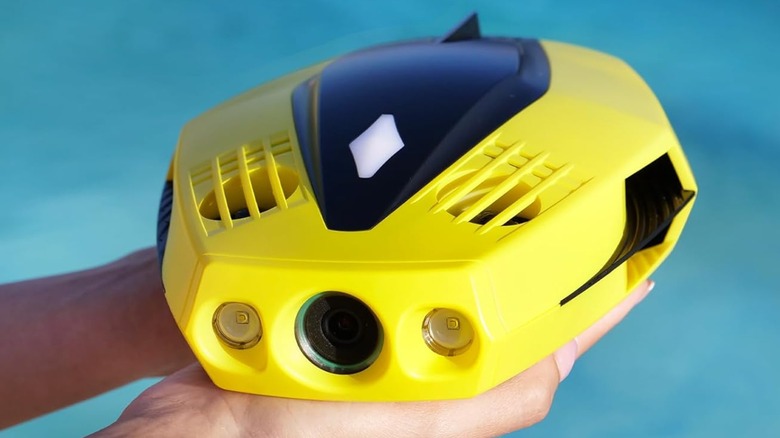
The entry-level threshold currently sits at approximately $500. At this price point, you are looking at highly portable, palm-sized drones like the Chasing Dory. While these units are incredible for their size, it is important to understand the trade-offs. Most budget models are limited to 1080p resolution and depth ratings of about 15 to 30 meters. They rely on basic Thruster propulsion systems that may struggle in moderate currents. Furthermore, these units often utilize simplified Low-light image sensors, which perform well in clear, sunlit water but may lose clarity as you descend into the shadows.
Choosing the cheapest underwater drones for beginners 2026 requires a realistic assessment of your goals. If you are a casual snorkeler who wants to capture vacation memories, a $500 investment is a fantastic value. These drones use Tethered communication cables that connect to a floating Wi-Fi buoy, allowing you to control the unit via a smartphone app. It is a user-friendly entry point, but if you have professional aspirations for your imagery, you may find the lack of 4K resolution and advanced stabilization limiting.
Professional Submersible Drone Cost: From Prosumer to Industrial
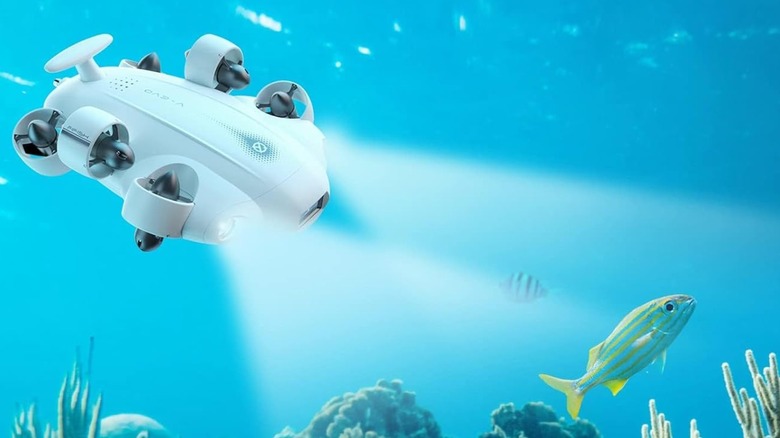
As we move into the "prosumer" and professional space, the underwater drone price reflects a significant leap in hardware capability. This is the category where most serious content creators and small-scale commercial operators find their stride. Consumer-grade underwater drones typically range in price from $1,200 to $2,000, offering the best value 4k underwater drones under 2000 dollars. These models, such as the QYSea FIFISH series, introduce 4K/60fps video, enhanced electronic image stabilization, and more sophisticated movement capabilities like 360-degree rotation.
When comparing consumer vs professional underwater drones, the difference is often found in the reliability of the Real-time video downlink and the expandability of the platform. A professional submersible drone cost often includes a dedicated remote controller, higher-capacity batteries, and tethers that extend to 100 or 200 meters. For those involved in Aquaculture monitoring or Infrastructure inspection, these drones are not just toys; they are essential productivity tools.
Stepping up into the industrial tier, the prices scale rapidly. Professional 'prosumer' models used for aquaculture and research generally cost between $3,000 and $7,000. These systems are designed for high-duty cycles and harsh environments. If your work involves professional ROV cost for underwater inspections, you must account for the high-end industrial work-class Remotely Operated Vehicle (ROV) market, where units start at $250,000 and can reach several million dollars for tasks like deep-sea welding or heavy construction.
For the average photographer, the $2,000 to $5,000 range represents the "sweet spot" where imaging technology meets rugged durability. Marine research equipment at this level often features modular ports, allowing the user to swap out lights or add specialized sensors as the mission requires.
Beyond the Sticker Price: Hidden Costs and Accessories
What no one tells you about the underwater drone price is that the base unit is often just the beginning. In the world of marine photography and research, the hidden costs of owning a submersible drone can catch even seasoned professionals off guard. The environment dictates the gear; saltwater is relentless, and the depths require more than just a good lens.
The cost of underwater drone accessories and robotic arms is a major factor. A basic base unit might be capable of filming, but if you need to interact with the environment, you will need Manipulator claws. These attachments can add anywhere from $800 to $3,000 to your total. For those performing a Hull inspection or Salvage operations, these tools are non-negotiable. Furthermore, if you are working in low-visibility water, you may need to invest in external lighting kits, which can run several hundred dollars.
The most substantial price hikes come from specialized sensors. For example, high-end imaging sonars often cost upwards of $20,000, and advanced navigation packages ranging from $20,000 to over $100,000 are common in professional sectors. Even simple logistics like an E-Reel (an electric winch for your tether) can cost $500 to $1,000, but they are essential for managing 200 meters of cable without it becoming a tangled nightmare.
- Tether Management: Manual reels are standard, but electric reels are necessary for deep dives.
- Additional Lighting: Standard LEDs often cause "backscatter"; external high-lumen lights are needed for cinematic quality.
- Transport Cases: Rugged, waterproof Pelican-style cases are a requirement for protecting your investment during transit.
- Spare Parts: O-rings, replacement thruster blades, and tether repair kits should be in every pilot's bag.
Maintenance, Insurance, and Long-Term Value
Owning a submersible drone is a commitment to maintenance. Unlike an aerial drone that you can simply wipe down and store, an underwater unit requires a rigorous post-dive routine. Saltwater corrosion is the number one killer of these machines. Every dive must be followed by a freshwater rinse and a careful inspection of seals and connectors.
Users must also budget for underwater drone insurance and repair costs. For professional operators, insurance is a significant line item. Marine environments are unpredictable; a tether can get snagged on a submerged tree, or a sudden current can slam a $5,000 drone into a rock. Standard electronics insurance rarely covers "total loss at sea," so specialized hull insurance is often required.
Battery longevity is another factor. Most underwater drones have internal batteries to maintain structural integrity at depth, meaning when the battery eventually degrades after several hundred cycles, the unit may need to be sent back to the manufacturer for service. This "Buy Once, Cry Once" philosophy is prevalent in the industry. Investing in a unit with high-quality Thruster propulsion and reputable customer support may cost more upfront, but it prevents the drone from becoming an expensive paperweight after its first encounter with a sandy bottom or a salty breeze.
FAQ
How much does a decent underwater drone cost?
A decent consumer-level underwater drone that offers 4K video, stable flight (or swim) controls, and a depth rating of 100 meters typically costs between $1,200 and $2,000. These models provide the best balance of image quality and durability for enthusiasts.
What is the average price of a professional ROV?
Professional ROV systems designed for commercial work like aquaculture or infrastructure inspection generally start at $2,500 for entry-level professional tools and scale up to $10,000 for turnkey solutions. High-end industrial units can exceed $250,000.
Are cheap underwater drones worth it?
Cheap underwater drones, priced around $500, are worth it for recreational hobbyists and casual explorers who stay in shallow, calm waters. However, they lack the camera resolution, thruster power, and battery life required for professional imaging or commercial tasks.
What factors influence the price of an underwater drone?
The primary factors include depth rating, camera specifications (1080p vs 4K), thruster power, tether length, and the inclusion of specialized sensors like sonar or GPS navigation. The quality of materials used to resist saltwater corrosion also plays a role.
Do underwater drones require expensive maintenance?
While the daily maintenance of rinsing with freshwater is free, long-term maintenance includes replacing O-rings, thruster propellers, and eventually internal batteries. Professional units may also require periodic pressure testing and seal certification, which can be costly.
Are there rental options for underwater drones?
Yes, many marine technology companies and specialized camera houses offer rental options for professional-grade ROVs. This is often a cost-effective solution for short-term research projects or specific inspections where the $10,000+ purchase price isn't justified.