Quick Facts
- Total Revivals: 5 Key Hardware/UX Features
- Expected Tech Standard: TSMC 2nm chip architecture for efficiency
- User Demand: 79% of users still request Touch ID integration
- Primary Design Shift: From Software-First to Tactile Efficiency
- Audio Baseline: Move toward 24-bit/192kHz audiophile-grade sound
- Biometric Goal: Hybrid Under-Display Fingerprint + Face ID
- Key Constraint: EPEAT sustainability and water resistance (IP68)
Modern smartphone design trends for 2026 suggest a return to tactile user interface elements that prioritize physical feedback. Features like 3D Touch and dedicated hardware toggles for connectivity are highly sought after to reduce software friction and provide users with more immediate, intuitive control over their device settings.
The Return of Tactile Control: 2026 Smartphone Design Trends
As we approach 2026, the mobile industry is entering what many call the era of Cognitive Calm. For nearly a decade, we have been sprinting toward an all-glass, buttonless future. While this achieved a stunning minimalist aesthetic, it introduced significant user interface friction. We have traded the muscle memory of physical buttons for a labyrinth of software-based gestures. In my years covering iPhone hardware evolution, I have seen the pendulum swing from mechanical complexity to sterile simplicity. Now, it is swinging back toward a sophisticated middle ground.
In 2026, the iPhone is more than just a communications device; it is the hub for local AI processing and complex peripheral ecosystems. To manage this complexity, users are demanding a return to intentional, physical interactions. The current trends in smartphone design indicate that we are no longer satisfied with haptic emulations that feel like a poor substitute for the real thing. Instead, we are looking for tactile user interface design that bridges the gap between digital power and human intuition.
This shift is not about being retro for the sake of nostalgia. It is about efficiency. By 2026, the efficiency of the TSMC 2nm process will provide the thermal and spatial headroom needed to reintegrate specialized hardware components that were previously sacrificed for battery life or thinness. We are looking at a future where 2026 smartphone design trends bringing back physical hardware buttons represent a leap forward in ergonomics rather than a step backward in technology.
1. True 3D Touch: Hardware vs. Software Pressure Sensitivity
One of the most lamented losses in the history of iPhone hardware evolution was the removal of 3D Touch. Introduced with the iPhone 6s, 3D Touch used a dedicated capacitor layer to sense actual pressure. When Apple replaced it with Haptic Touch, they replaced a hardware feature with a software delay. Haptic Touch is essentially just a long-press with a vibration, which lacks the instantaneous, crisp feedback of the original Taptic Engine.
For modern smartphones, tactile user interface design could be revolutionized by bringing back a refined version of this pressure-sensitive layer. In 2026, we expect to see 2nm efficiency allowing Apple to reinstate these sensors without adding bulk. Unlike the original version, a new 3D Touch would benefit from improved haptic feedback loops that could simulate different textures or infinite click depths based on the app you are using.
Imagine gaming on a mobile device where the harder you press the screen, the faster your character accelerates, or the more precisely you can aim. This is not just about convenience; it is about reducing the software friction that comes with looking for menus. By customizing haptic touch sensitivity to mimic 3d touch features, Apple could allow power users to peek and pop through information with a level of speed that current software-based gestures simply cannot match. This hardware-software integration would specifically cater to those who find current navigation too sluggish for professional workflows.
2. Hybrid Biometrics: Why Face ID Isn't Enough
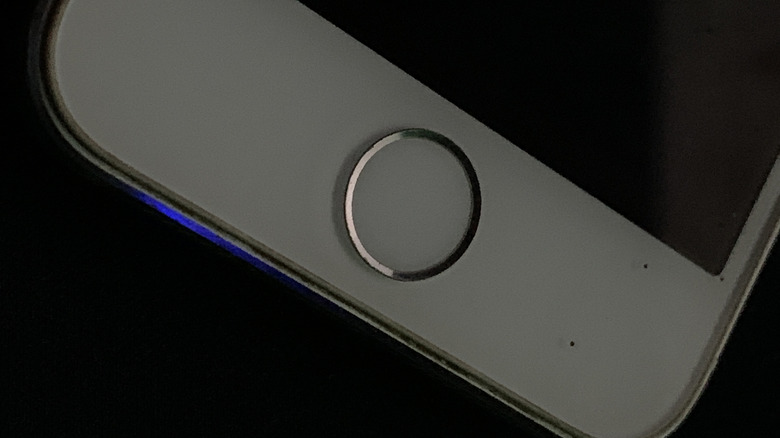
The future of smartphone biometrics is moving toward a hybrid approach that recognizes the limitations of a single-source solution. While Face ID is a marvel of depth-mapped security, it still fails in specific real-world scenarios: when wearing certain sunglasses, when the phone is flat on a desk, or in extreme lighting conditions. A survey of over 2,000 U.S. iPhone users found that 79% of respondents wanted Apple to bring back Touch ID fingerprint authentication in future models.
For 2026, the solution is not a return to the bulky home button, but the integration of under-display components. The future of smartphone biometrics with under-display fingerprint sensors relies on ultrasonic technology that can read a fingerprint through several layers of display and glass. This allows for a completely bezel-less display while offering the convenience of biometric encryption that works when your face is obscured.
The pros and cons of switching from touch id to face id for legacy users have been debated for years. Face ID is superior for passive authentication, but Touch ID is often faster for active intent, such as authorizing a banking transaction or making a payment at a terminal. By offering both, Apple provides a redundant security layer that is virtually impossible to spoof. This hybrid system would be a hallmark of a device designed for the security-conscious professional.
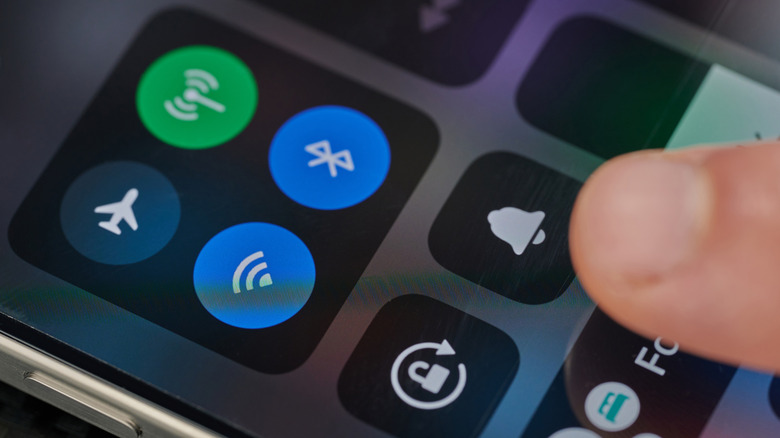
3. Dedicated Connectivity Toggles: Solving the Control Center Friction
One of the most frustrating aspects of modern iOS is the lack of a true, hardware-level disconnect for radios like Wi-Fi and Bluetooth. Since iOS 11, toggling these off in the Control Center only partially disconnects them, leaving the hardware active for background tasks. This has created a demand for physical control toggles that offer users absolute privacy and control.
Following the success of the Action Button on the iPhone 15 Pro, we predict 2026 smartphone design trends bringing back physical hardware buttons as dedicated connectivity toggles. This would move away from software-based gestures that often feel unpredictable. A physical switch that provides an air-gap-like disconnection would be a massive win for privacy-conscious users and those trying to minimize distractions.
This fits into the broader iPhone hardware evolution where the device becomes more modular and intentional. Instead of swiping and tapping through three menus to ensure your Bluetooth is truly off, a single physical click gives you immediate, tactile confirmation. This reduces user interface friction and reinforces the feeling that the user, not the software, is in final control of the device hardware.
4. Audiophile-Grade Audio: Beyond Wireless Limitations
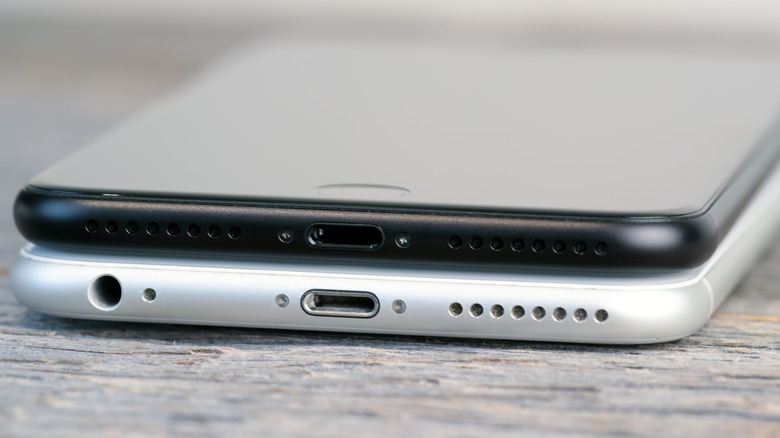
The removal of the 3.5mm headphone jack was a watershed moment in iPhone hardware evolution. Since then, global shipments of wireless audio devices grew to exceed 1.3 billion units annually by 2023. However, for many audiophiles and professionals, Bluetooth simply cannot match the fidelity or lack of latency provided by a wired connection.
While we don't expect the 3.5mm jack to return in its original circular form, we do expect 2026 smartphone design trends to prioritize audiophile-grade sound through advanced digital-to-analog converters (DAC) and high-fi USB-C integration. The current wireless standards struggle with 24-bit/192kHz lossless audio without significant compression.
| Feature | Wireless (Bluetooth 5.4+) | Wired (High-Fi DAC) |
|---|---|---|
| Latency | 40ms - 200ms | < 5ms |
| Max Bitrate | ~990 kbps (LDAC) | Up to 9.2 Mbps |
| Battery Impact | High (Internal radio) | Low (Passive draw) |
| Stability | Variable (Interference) | Absolute (Physical) |
For users who require low-latency audio for video editing or music production, the search for the best usb-c to headphone adapters for charging and listening simultaneously has become a tedious part of the mobile lifestyle. By 2026, we hope to see Apple incorporate a specialized peripheral ecosystem where the USB-C port is optimized for high-fidelity audio pass-through, perhaps even via a dedicated audio-processing chip that offloads the work from the main SoC.
5. Localized Desktop-Class Management
As smartphones become as powerful as laptops, with 12GB or more of RAM expected in 2026 Pro models, the way we manage data needs to evolve. We want a revival of the desktop-class app and file management features that were once part of the iTunes ecosystem, but updated for the modern era.
In the past, managing your phone via a computer felt like a chore. However, as we move toward localized AI models (Large Language Models running directly on the device), users need better desktop synchronization tools. This isn't just about cloud backups; it's about the iPhone hardware evolution toward being a portable workstation. We miss the granular control over app layout, local file directory management, and system-level diagnostics that have become increasingly gated behind simplified software interfaces.
Reviving these power-user features would cater to a segment of the market that uses their iPhone as a primary compute device. By integrating this into a more robust localized management suite, Apple can reduce the user interface friction that currently exists when trying to handle large datasets or complex file structures on a 6.7-inch screen.
FAQ
What are the current trends in smartphone design?
Current trends are shifting toward tactile efficiency and intentional hardware. After years of pursuing a completely smooth, buttonless slab, manufacturers are reintroducing physical elements like the Action Button and dedicated camera shutters to reduce software friction and provide immediate user feedback.
Are physical buttons being phased out of smartphones?
While there was a temporary trend toward capacitive-only buttons, the market is seeing a resurgence in physical buttons. These provide better tactile user interface design and are more reliable for critical functions like photography, emergency calls, and quick-access toggles.
What role does under-display camera technology play in design?
Under-display camera technology is the final hurdle in achieving a truly bezel-less, all-screen design. By 2026, this technology is expected to mature enough to allow for high-quality selfies and Face ID sensors to be hidden beneath the pixels, eliminating the need for notches or dynamic islands.
Will smartphones ever have completely bezel-less displays?
Yes, the industry is approaching a true edge-to-edge finish. This is made possible by under-display components for biometrics and cameras, as well as new manufacturing techniques that allow screens to wrap or terminate at the very edge of the device frame.
How is smartphone design becoming more sustainable?
Sustainability is now a core part of the design process. Manufacturers are using higher percentages of recycled rare earth elements and designing for easier repairability to meet EPEAT standards. This includes using internal architectures that allow for easier battery swaps and modular component replacement.

The trajectory of the iPhone has always been about more than just raw power; it has been about how we interface with that power. As we look toward 2026, the revival of features like 3D Touch, Touch ID, and physical connectivity toggles suggests a future where technology is more transparent and responsive. By combining the sleek, modern hardware of tomorrow with the tactile reliability of the past, Apple has the chance to create the most human-centric device in its history.