Upgrade your living space with these 16 best functional 3D prints designed for home organization and efficiency. Whether you're a beginner or a pro, these projects offer practical solutions that bridge the gap between high-tech smart homes and everyday utility.
Quick Facts
- Economic Impact: Research indicates a household can save between $300 and $2,000 annually by printing their own organizers and replacement parts.
- Consumer Motivation: A major driver for home 3D printer ownership is the ability to print everyday items (36%) and fix broken household objects.
- Top Recommended Project: The Gridfinity ecosystem is the gold standard for modular bin systems and workshop organization.
- Material Selection: PLA is best for general organizers, while PETG is preferred for items exposed to moisture or mechanical stress.
- Beginner Tip: Start with projects that have a large flat base and require no supports to ensure a high success rate.
- Smart Home Integration: Custom mounts for sensors and cameras provide a cleaner look than generic adhesive solutions.
The best functional 3D prints for home organization include modular storage systems like the Gridfinity ecosystem, kitchen essentials such as chip clips and can stacking rings, and bathroom accessories like toothpaste squeezers and hair styling tool stands. These practical 3D printer projects optimize space and provide bespoke hardware solutions that outperform generic store-bought items.
Kitchen Efficiency: 3D Printed Kitchen Organization Ideas
We have all been there—staring at a cluttered pantry or a "junk drawer" that seems to devour everything we put in it. In my experience, the kitchen is where 3D printing truly proves its worth. Standard organizers are often one-size-fits-all, but our cabinets are anything but standard. By leveraging 3D printed kitchen organization ideas, we can reclaim those lost inches of vertical and horizontal space.
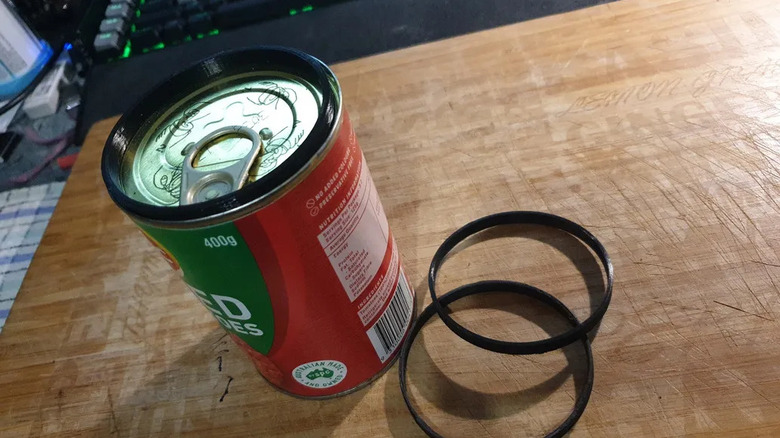
1. Vertical Can Stacking Rings
Cans often take up a massive footprint in the pantry because they cannot be easily stacked without toppling. Simple stacking rings allow you to nestle cans on top of one another securely. I recommend using PETG filaments for these because of their durability and slight flexibility, which prevents the rings from snapping under the weight of heavy soup cans.
2. Heavy-Duty Chip Clips
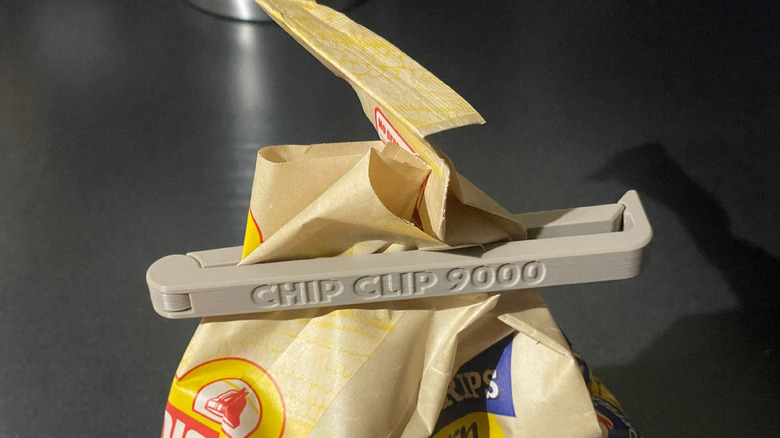
This is arguably the most printed functional item in the 3D printing community. Unlike the cheap plastic clips from the grocery store that snap after three uses, a well-printed clip with a living hinge or a printed-in-place spring can last years. These are excellent easy functional 3D prints for beginners because they print quickly and provide immediate utility.
3. Precision Measuring Spoons
If you have lost the "tablespoon" from your favorite set, you don't need to buy a whole new ring. You can find high-accuracy models on design repositories like Thingiverse. When printing these, I always suggest a food-safe epoxy coating or using a brand-new nozzle to avoid lead contamination from brass.
4. Customized Fridge Drawer Dividers
Fridge organization is a nightmare because every brand has different drawer dimensions. Using a simple CAD tool or a parametric model, you can print thin-walled dividers that snap into place. These are great for keeping fruits separated from vegetables. Because fridges are cold, PLA works perfectly fine here without the risk of warping.
- Recommended Materials: PETG for weight-bearing; PLA for cold storage.
- Difficulty: Low (Level 1-2).
Bathroom & Utility: Durable Storage Solutions
The bathroom is a challenging environment for 3D prints due to high humidity and frequent temperature swings. When we talk about functional 3D prints for bathroom storage, the material choice becomes the most important factor. I generally steer away from PLA in the shower because it can harbor bacteria in its layer lines and may soften if your shower is particularly steamy. Instead, PETG is the hero here.
5. Self-Draining Soap Dishes
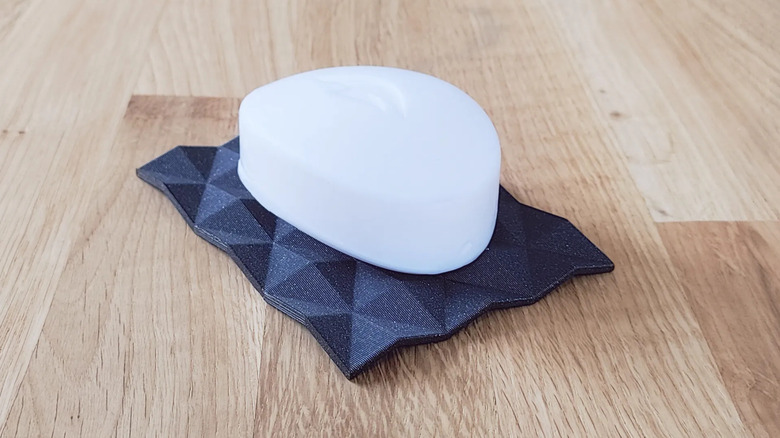
The biggest problem with store-bought soap dishes is the "slime factor." A 3D printed dish can be designed with a steep 45-degree internal angle that funnels water directly back into the sink. This keeps your soap dry and your countertop clean.
6. Toothpaste Squeezers
This is a classic example of a simple tool that saves money over time. A small, sliding squeezer ensures you get every last drop of toothpaste out of the tube. It’s a five-minute print that every household should have.
7. Custom Hair Styling Tool Mounts
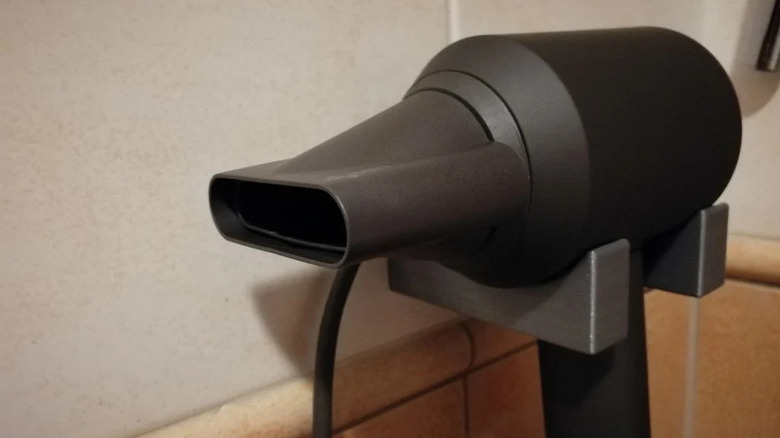
High-end hair dryers and straighteners often come with awkward cords and heavy bodies. We can design custom cradles that mount directly to the wall or the inside of a cabinet door. Using functional 3D prints to secure these expensive tools prevents them from falling and breaking, while also clearing up counter space.
8. Shower Curtain Hooks and Replacements
How many times has a plastic shower hook snapped? Instead of buying a pack of 12 when you only need one, you can print a replacement in ten minutes. If you use a colorful filament, it can even become a design accent.
- Recommended Materials: PETG for moisture resistance.
- Difficulty: Moderate (Level 2-3) due to mounting requirements.
Home Office & Tech: Cable Management and Smart Home
As a smart home editor, I am obsessed with "tech aesthetics." Nothing ruins a clean, automated home faster than a "cable nest" under the desk. This is where 3D printer projects for cable management become essential. These prints allow us to hide wires, mount hubs, and create a workspace that actually fosters productivity.
9. Under-Desk Cable Routing Brackets
Instead of using sticky tape that eventually fails, you can print screw-in brackets that hold thick power strips and bundles of HDMI cables. For these, I recommend a high-infill setting (at least 40%) to ensure the brackets don't sag under the weight of the cables over time.
10. Modular Headphone Stands
A dedicated spot for your headset keeps the ear pads from getting dusty or crushed. You can find designs that clip onto the side of your monitor or sit elegantly on the desk. This is a great project for practicing desktop organization.
11. ESP32 and Sensor Housings
For the DIY smart home enthusiast, functional 3D prints for smart home devices are a game changer. If you are building your own temperature sensors or LED controllers using ESP32 chips, a custom-printed housing makes the project look professional rather than like a science experiment gone wrong.
12. Bespoke Tablet and Phone Docks
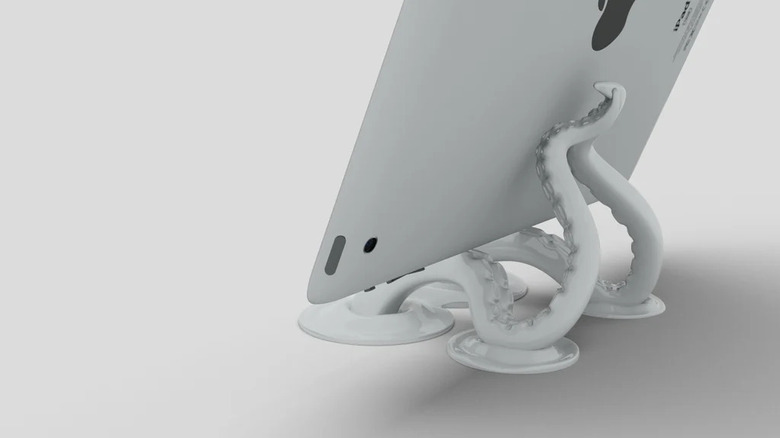
Store-bought stands are often too light or the wrong angle for video calls. A 3D printed stand can be weighted (by pausing the print and adding metal washers inside) and angled exactly to your eye level.
- Recommended Materials: PLA for stiffness; PETG for enclosures near heat-generating electronics.
- Key Focus: Space optimization and desktop organization.
Garage & Workshop: The Power of Modular Systems
If you haven't heard of the Gridfinity ecosystem, prepare to have your life changed. Created by Zack Freedman, this is an open-standard modular storage systems for home workshops. It uses a base grid that allows you to "click" different bins and tool holders into place, ensuring nothing slides around when you open a drawer.
13. Gridfinity Modular Bin Systems
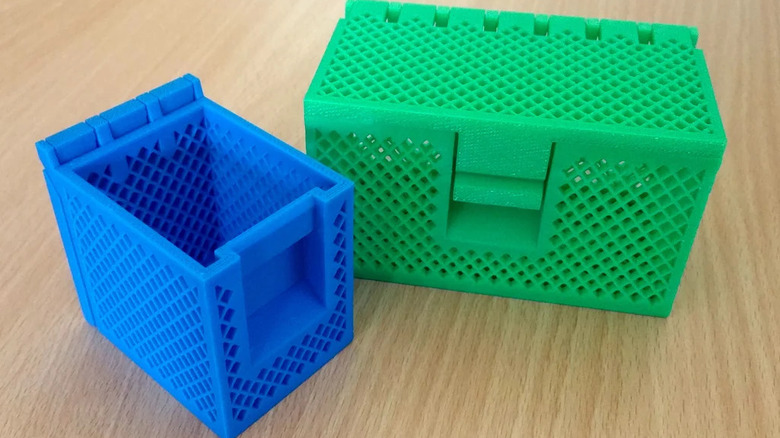
The beauty of this system is its infinite customizability. You can print bins specifically sized for AA batteries, wood screws, or even your favorite set of hex keys. It is the ultimate expression of useful 3D printing projects for garage and workshop.
14. Battery Dispensers
Stop digging through a cardboard box for a fresh battery. Gravity-fed battery dispensers can be mounted to the wall, letting you see exactly how many Duracells you have left at a glance.
15. Vacuum Hose Adapters
This is a lifesaver for woodworkers. Often, a power sander from one brand won't fit the vacuum hose from another. A simple tapered cylinder printed in 3D can bridge that gap perfectly. This falls under the category of replacement household components that are nearly impossible to find in a hardware store.
16. Wrench and Screwdriver Wall Mounts
Instead of a messy pegboard, you can print "shadow board" style holders that cradle each tool perfectly. This not only looks great but ensures you notice immediately if a tool is missing.
- Recommended Materials: PETG or ASA for garage environments where temperatures can fluctuate.
- Difficulty: Low to High (depending on the complexity of the modular system).
Technical Guide: Materials and Calibration for Success
To ensure your functional 3D prints actually work, you need to move beyond "cool looking" and focus on mechanical integrity. A beautiful print is useless if it snaps the first time you put a load on it.
Before You Print Checklist
- Print Bed Leveling: Ensure your first layer is squished perfectly for maximum bed adhesion.
- Calibration Cube: Print a 20mm cube to check that your printer's X, Y, and Z axes are accurate.
- Dry Your Filament: PETG is notorious for absorbing moisture, which leads to "stringing" and weak layer bonds.
- Initial Layer Speed: Keep your first layer slow (15-20 mm/s) to ensure the foundation of your print is solid.
Material Comparison Table
| Feature | PLA | PETG | ASA |
|---|---|---|---|
| Ease of Use | Highest | Moderate | Low (requires enclosure) |
| Heat Resistance | Low (up to 50°C) | Moderate (up to 80°C) | High (up to 100°C) |
| UV Resistance | Low | Moderate | High |
| Best For | Desktop organization | Kitchen/Bathroom | Garage/Outdoor |
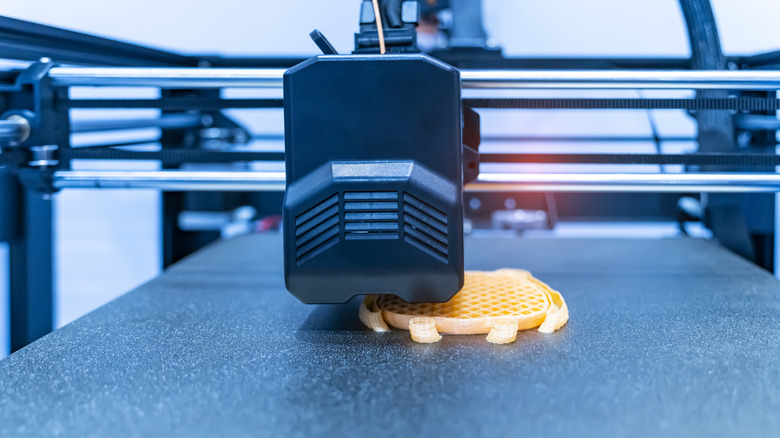
When starting out with easy functional 3D prints for beginners, stick with PLA. It is the most forgiving material and is more than strong enough for items like shelf brackets or key holders. As you gain confidence, moving to PETG will unlock more high-temperature resistance and moisture-resistant applications.
FAQ
What are some examples of functional 3D prints?
Functional prints are items designed for a specific utility rather than just aesthetics. Common examples include cable clips, wall mounts for smart speakers, replacement knobs for stoves, custom-sized drawer organizers, and specialized tools like center-finding gauges for woodworking.
What is the best material for functional 3D printing?
The best material depends on the environment. For general indoor use and organization, PLA is excellent due to its rigidity. For items that will be outdoors, in a car, or in a humid bathroom, PETG or ASA is preferred because of their superior high-temperature resistance and UV stability.
Are 3D printed functional parts strong enough for daily use?
Yes, provided they are designed and printed correctly. Increasing the number of "walls" (perimeters) is often more effective than increasing infill percentage for strength. For parts under mechanical stress, orienting the print so the load doesn't pull the layers apart is key to longevity.
Can you 3D print replacement parts for household appliances?
Absolutely. 3D printing is widely used for replacement household components like dishwasher rack wheels, washing machine knobs, and vacuum cleaner attachments. However, avoid printing parts for high-heat appliances like ovens or space heaters, as standard filaments will melt.
Is PLA or PETG better for functional prints?
PLA is better for parts that need to be very stiff and won't be exposed to heat, such as brackets or stationary organizers. PETG is better for "tougher" parts that need a bit of flex to avoid snapping and for any item that might be washed in warm water or kept in a hot garage.
Whether you are looking to save a few dollars on pantry staples or want to fully customize your smart home sensor mounts, 3D printing offers a level of bespoke home improvement that was once reserved for professional contractors. Start small, calibrate often, and watch your home transform into an organized, high-efficiency space.