Our Top Picks
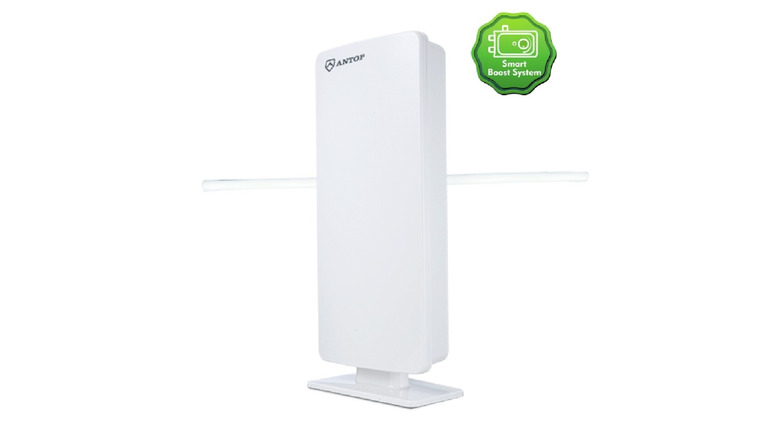
- Overall Best: Antop AT-800SBS — A versatile beast that works both indoors and outdoors, offering a massive range and a signal booster that actually works.
- Best for Urban Apartments: Mohu Leaf 50 — The original paper-thin antenna that remains the gold standard for discreet, high-performance reception in cities.
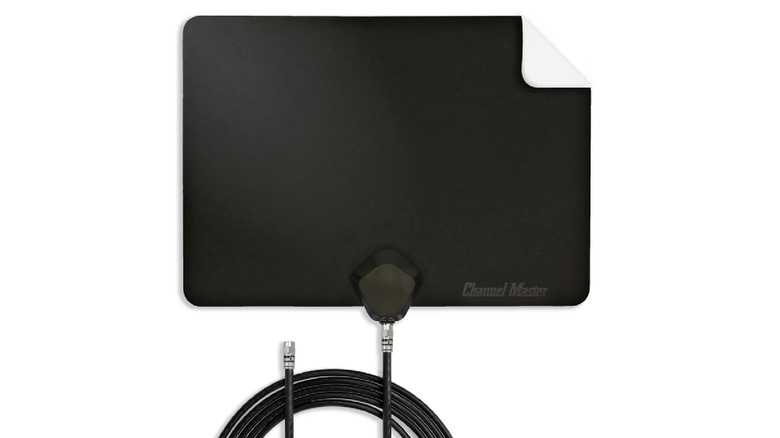
- Best Budget Choice: Channel Master FLATenna 35 — Surprising performance at a fraction of the cost, perfect for those living within 35 miles of a tower.
- Best for Rural Areas: Antennas Direct DB8e — If you live far from the city, this multi-directional powerhouse is designed to pull in weak signals from multiple directions.
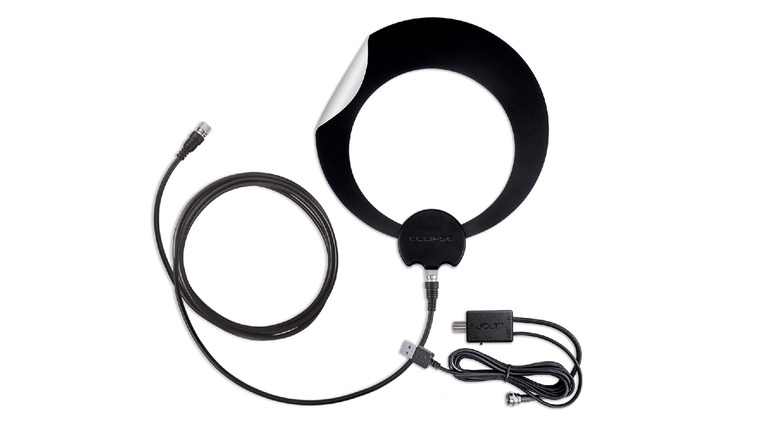
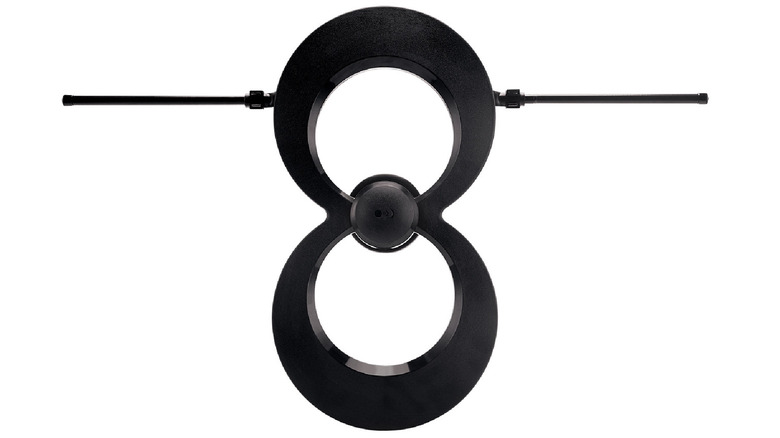
- Best Design: Antennas Direct ClearStream Eclipse — A circular, sleek form factor that grips to windows and disappears into your home decor.
The best hdtv antennas for cord-cutters include the Mohu Leaf 50 and the Antop AT-800SBS. For indoor setups, the Antennas Direct ClearStream Eclipse and the Antop HD Smart Bar provide strong reception with integrated amplification. Budget-friendly options like the Channel Master Flatenna 35 are effective for users living near broadcast towers.
Why Your Choice Matters in 2026: The Cord-Cutting Shift
We have officially hit a tipping point in how we consume media. In 2024, the total number of cord-cutters and 'cord-nevers' in the United States is estimated to reach 138.1 million, surpassing the population of traditional pay-TV viewers for the first time. For many of us in the smart home space, the goal isn't just to save money—it's to integrate high-quality, free-to-air programming into our automated ecosystems without the bloat of a cable box.
The move toward over-the-air (OTA) television is driven by more than just avoiding high bills. Approximately 23% of consumers who cancel their cable or satellite subscriptions transition to using digital antennas to access free local channels and live sports. As we look toward 2026, the arrival of the ATSC 3.0 standard, often called NextGen TV, is a game-changer. This standard allows for 4K resolution, high dynamic range (HDR), and even interactive features through your antenna. Choosing the right hardware now ensures you are ready for this 4K future.
Beyond resolution, modern smart homes require devices that don't interfere with our existing wireless networks. The latest best over the air tv antennas now include hardware to mitigate the noise of a connected home, ensuring that your 5G mesh router or smart lights don't cause your favorite local news broadcast to pixelate.
Best Indoor Antennas for Apartments and Urban Areas
If you live in a city or a dense suburb, you likely don't need a massive rig on your roof. Indoor digital antennas account for approximately 69% of the TV antenna market share in 2024, primarily because they are incredibly easy to install and work exceptionally well when broadcast tower proximity is within 30 to 50 miles.
In our testing, the Mohu Leaf 50 continues to lead the pack for urban dwellers. It is a paper-thin, reversible antenna that can be pinned to a wall or taped to a window. What sets it apart in the world of amplified vs non-amplified tv antenna reviews is the Jolt signal amplifier. Unlike cheaper boosters that just amplify noise, the Mohu’s amplifier uses a clean-peak filter to improve the signal-to-noise ratio, which is crucial when you are surrounded by the electronic interference of an apartment building.
For those looking for the best indoor tv antennas for apartment living that won't look like a piece of tech gear, the Antennas Direct ClearStream Eclipse is our go-to recommendation. Its unique circular design is patented for multi-directional reception, meaning you don't have to be quite as precise when aiming it at the nearest tower.
Finally, for the minimalist on a budget, we recommend the Channel Master FLATenna 35. It lacks an amplifier, which is actually a benefit if you live very close to towers, as over-amplification can sometimes "blind" a TV tuner. It provides a crisp, reliable signal for a fraction of the cost of its competitors.
| Model | Reported Range | Type | Best For |
|---|---|---|---|
| Mohu Leaf 50 | 60 Miles | Indoor / Amplified | Apartments / Urban |
| ClearStream Eclipse | 35+ Miles | Indoor / Multi-directional | Aesthetic setups |
| Channel Master FLATenna 35 | 35 Miles | Indoor / Passive | Budget / Near towers |
Best Outdoor and Long-Range Antennas for Rural Settings
When you live further out, the indoor vs outdoor tv antennas debate ends quickly: you need height and gain. Rural environments present challenges like hilly terrain and thick foliage that can block signals. This is where long range digital antenna reviews often point toward high-gain, directional units.
The Antennas Direct DB8e is a standout for anyone living in a "fringe" area. It features two separate panels that can be aimed in different directions. This is a massive advantage if your local stations are located in two different cities. Because of its high directional antenna gain, it can pull in signals that smaller antennas simply can't "see."
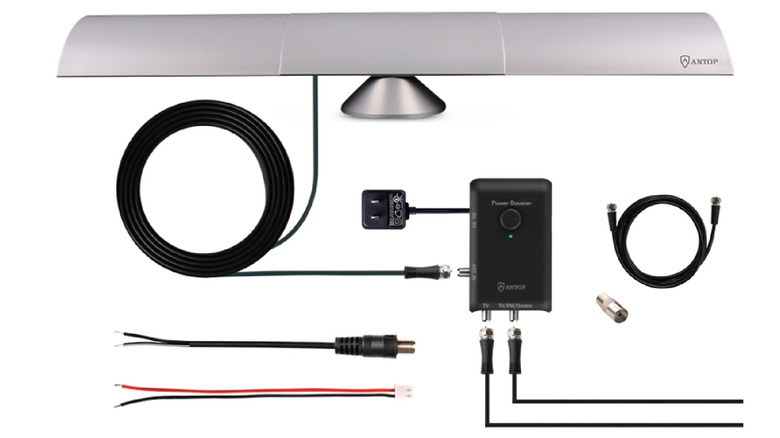
For those who need an all-in-one solution that can handle almost any environment, the Antop AT-800SBS (also known as the HD Smart Bar) is an incredible piece of engineering. We found that its signal gain decibels are highly adjustable thanks to its Smart Boost System. You can literally turn a dial to increase or decrease the amplification, allowing you to find the sweet spot where the signal is strongest but the noise is lowest.
In the most remote locations, we look toward the Televes Dat Boss Mix LR. Televes is known for bringing commercial-grade technology to the consumer market. Their TForce technology automatically adjusts the gain in real-time. If a signal is weak, it boosts it; if it's too strong, it attenuates it. This makes it one of the high range digital antennas for rural areas that requires the least amount of maintenance once it’s mounted on your roof.
When installing these, remember that indoor vs outdoor tv antenna comparison guide metrics often rely on line-of-sight transmission. Getting the antenna above the roofline is the single best way to improve your reception in a rural setting.
Technical Buyer's Guide: 4K, ATSC 3.0, and LTE Filters
As an IoT editor, I’m often asked if users need to buy a specific 4k hdtv antennas for nextgen tv. The short answer is: No, but the quality of the antenna still matters. A TV antenna is a piece of metal tuned to specific frequencies; it doesn't "know" if the data it’s carrying is 1080p or 4K. However, because ATSC 3.0 signals are transmitted differently, a high-quality antenna with a good signal-to-noise ratio will ensure that your tuner can decode that 4K data without errors.
One feature you should never skip in 2026 is an LTE interference filter. With the rollout of 5G networks, the airwaves are more crowded than ever. 5G signals operate on frequencies very close to the UHF and VHF frequencies used by television stations. Without digital tv antennas with built-in 5g filters, your TV reception can suffer from "dropouts" every time a nearby cell tower ramps up its power.
We also recommend paying attention to your coaxial cable shielding. Even the best antenna in the world will perform poorly if it’s connected to your TV with a thin, unshielded cable that picks up interference from your microwave or Wi-Fi router. Always look for RG-6 cables with high-quality shielding to maintain signal integrity from the roof down to your living room.
Understanding Frequencies
- UHF (Ultra High Frequency): Most modern digital channels live here. Antennas for UHF are usually smaller and more compact.
- VHF (Very High Frequency): Some local stations still use these lower frequencies. You need an antenna with longer "elements" (the metal bars) to capture these effectively.
- Omnidirectional vs. Directional: Omnidirectional reception is great for cities where signals bounce off buildings. Directional antennas are better for long distances where you need to point exactly at a tower to get a signal.
FAQ
Is an indoor or outdoor antenna better?
The answer depends entirely on your distance from the broadcast towers and your home's construction. Indoor antennas are convenient, easy to install, and perfect for urban areas where towers are less than 30 miles away. However, outdoor antennas are superior for long-range reception because they are mounted higher and are not obstructed by your home's walls, insulation, or radiant barriers. If you are in a rural area or a "dead zone," an outdoor antenna is almost always the better choice.
What is the difference between amplified and non-amplified antennas?
A non-amplified (passive) antenna simply captures the signal and sends it to your TV. An amplified antenna includes a powered signal booster designed to strengthen the signal before it reaches your tuner. Amplification is helpful if you have a long cable run (over 50 feet) or if you are splitting the signal to multiple TVs. However, if you live very close to a tower, an amplifier can actually cause interference by over-driving the tuner.
Do I need a special antenna for 4K?
No, any antenna capable of receiving UHF and VHF frequencies can receive 4K signals. The "4K Ready" label on many boxes is largely a marketing term. What you actually need is a TV with an ATSC 3.0 (NextGen TV) tuner. The antenna’s job is simply to capture the signal; your TV or an external converter box does the work of decoding the 4K content.
How can I improve my TV antenna reception?
The most effective way to improve reception is height and placement. Moving an indoor antenna to a window facing the broadcast towers can make a massive difference. You should also keep the antenna away from other electronic devices like computers, Wi-Fi routers, and LED lights, which can cause interference. If you are using an outdoor antenna, ensure all your coaxial connections are tight and that you are using high-quality RG-6 cabling.
How far can an HDTV antenna reach?
Due to the curvature of the Earth and the physics of broadcast signals, the practical limit for most consumer antennas is about 60 to 80 miles. You may see antennas marketed with a 200 or 500-mile range, but these claims are usually exaggerated and physically impossible for terrestrial signals. For distances beyond 70 miles, you usually need a very large, high-gain outdoor antenna mounted on a tall mast to overcome the horizon.