Quick Facts
- Top Verdict: The Arc Ultra is a massive performance leap for home cinema, offering authentic 9.1.4 spatial audio that the Beam 2 cannot physically match.
- Acoustic Power: The Arc Ultra features 14 drivers and 15 Class-D amplifiers, compared to the 5-driver array found in the Beam 2.
- Bass Innovation: New SoundMotion transducer technology allows the Arc Ultra to deliver double the bass output of the original Arc without needing a separate subwoofer.
- Atmos Reality: While the Beam 2 uses virtualization to simulate height, the Arc Ultra utilizes dedicated upward-firing drivers for true overhead effects.
- Room Fit: The Arc Ultra is designed for rooms larger than 20 square meters and TVs 55 inches or larger; the Beam 2 is optimized for smaller, more intimate spaces.
- Connectivity: Both support HDMI eARC and Trueplay tuning, but the Arc Ultra adds Bluetooth support for more versatile casual listening.
The Sonos Arc Ultra offers a significant performance boost over the Beam 2 by utilizing a 9.1.4 spatial audio architecture and dedicated upward-firing drivers. Unlike the Beam 2, which relies on virtual Atmos processing, the Arc Ultra features a SoundMotion woofer for deeper internal bass and a wider physical soundstage, making it a superior choice for dedicated home cinema enthusiasts. Upgrading from a Beam 2 to an Arc Ultra is worth the price jump if you prioritize true overhead Atmos effects and high-fidelity dialogue clarity.
Acoustic Architecture: 14 Drivers vs 5
When we peel back the grille of these two soundbars, the engineering gap is immediately apparent. The Sonos Arc Ultra features an acoustic architecture with 14 drivers, including seven tweeters, six mid-woofers, and a Sound Motion woofer, compared to the five-driver array in the Sonos Beam (Gen 2). This isn't just a numbers game; it is a fundamental shift in how sound is pressurized and moved throughout your room.
In the Beam 2, the five drivers are tasked with handling everything from deep rumbles to crisp dialogue while simultaneously trying to trick your ears into hearing height channels. It is an impressive feat of psychoacoustic engineering, but it has physical limits. The Arc Ultra, however, assigns specific roles to each of its 14 drivers. It utilizes 15 Class-D amplifiers to drive this complex array, ensuring that high-fidelity sound remains distortion-free even at high volumes.
One of the most critical technical improvements in this Sonos Arc Ultra vs Beam 2 audio specifications comparison is the crossover frequency. While the Beam 2 typically hands off low-end duties at around 110Hz, the Arc Ultra is capable of reaching down to 70Hz. This lower crossover point allows for a much more seamless integration with the mid-range, resulting in a richer, more authoritative vocal performance that never sounds thin. The addition of side-firing speakers also ensures that the horizontal soundstage feels significantly wider, reaching the far corners of your seating area rather than just the sweet spot in front of the TV.
The SoundMotion Advantage: Internal Bass Performance
For years, the biggest compromise with slim soundbars was the lack of low-frequency impact. You usually had to add a bulky subwoofer to feel the weight of an explosion or the thrum of a double bass. Sonos claims that its Sound Motion transducer technology allows the Arc Ultra to deliver up to double the bass performance of the original Sonos Arc within a more compact frame. This technology moves the motor of the woofer to the side, allowing for a much larger diaphragm area in a shallow cabinet.
When evaluating the Sonos Arc Ultra vs Beam 2, the bass response is where the value proposition becomes clear. The Beam 2 provides a punchy and respectable low-end for its size, but it lacks the physical displacement to create "room feel." If you are watching a high-octane action sequence, the Arc Ultra delivers a level of cinematic weight that makes a standalone subwoofer feel like an optional luxury rather than a necessity.
For users currently using an Arc Ultra SoundMotion woofer vs Beam 2 and Sub Mini combo, the choice is nuanced. The Sub Mini will still provide a more focused sub-bass rumble (the kind you feel in your chest), but the Arc Ultra provides a more cohesive and balanced bass response that blends perfectly with the mid-range. The SoundMotion transducer solves the "thinness" often associated with soundbars, providing a warm, full-bodied sound that makes music listening just as enjoyable as movie watching.
Soundstage Comparison: Physical Height vs. Virtual Simulation
The most significant differentiator for home theater enthusiasts is how these bars handle Dolby Atmos. The Sonos Arc Ultra provides a 9.1.4 spatial audio experience with dedicated upward-firing drivers, whereas the Sonos Beam (Gen 2) utilizes virtualization technology to simulate height channels in a 5.0 configuration.
In a Sonos Arc Ultra vs Beam 2 soundstage comparison, the difference in height perception is night and day. Because the Arc Ultra has physical drivers angled toward your ceiling, the sound literally bounces off the overhead surface and back down to your ears. When a helicopter flies overhead in a film, or rain falls in a jungle scene, the sound originates from above you. The Beam 2, conversely, uses timing and frequency manipulation to convince your brain that sound is coming from above. While effective for a compact bar, it lacks the precision and "air" of the Arc Ultra’s physical height channels.
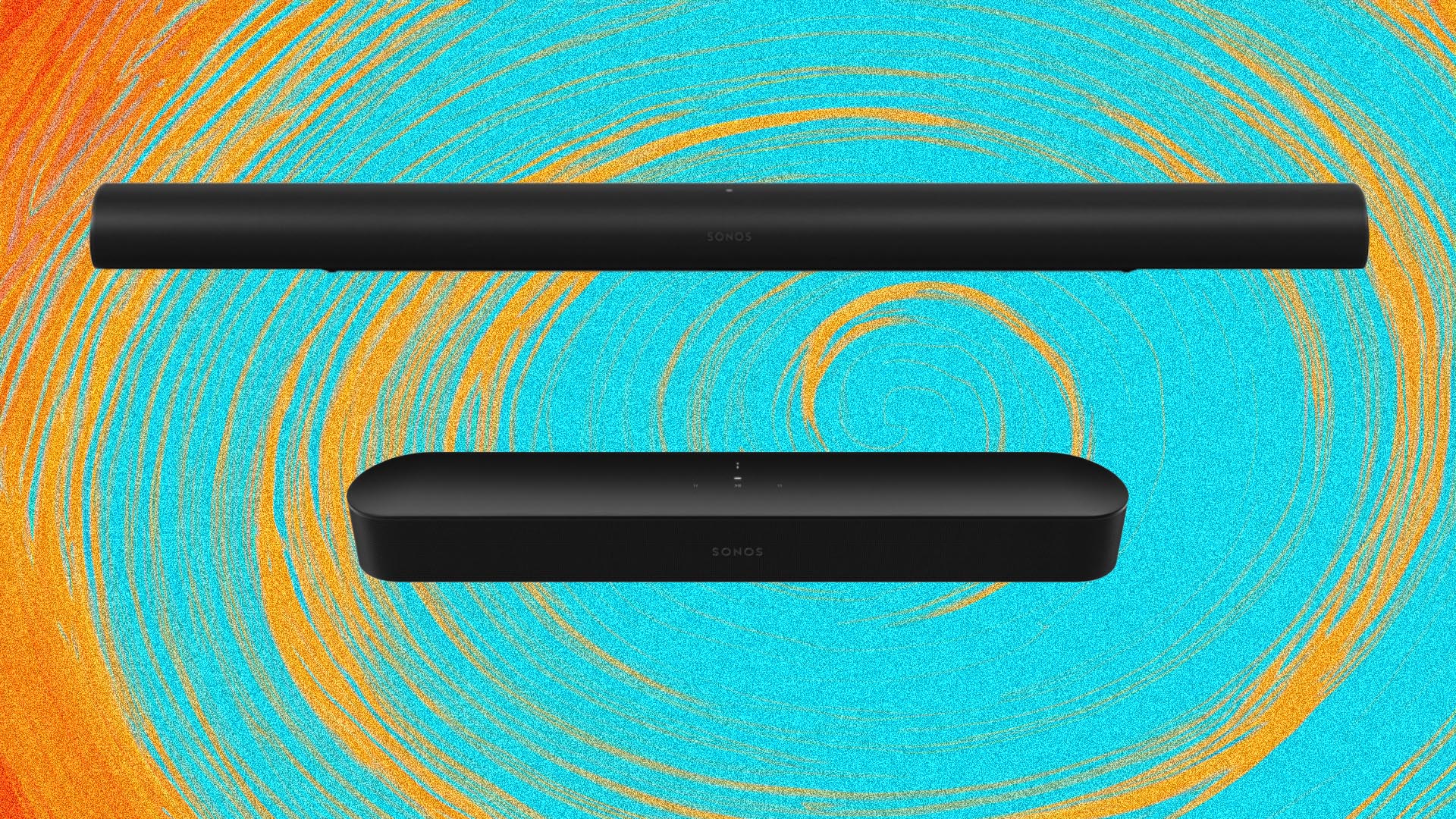
The physical width of the units also plays a major role in the Sonos Arc Ultra vs Beam 2 soundstage width for home cinema. At roughly 1178mm wide, the Arc Ultra creates a massive wall of sound that matches the scale of large modern televisions. The Beam 2, at 651mm, is a master of focus and clarity, but it cannot reproduce the same sense of distance and separation between left, right, and center channels. For those upgrading from Sonos Beam Gen 2 to Arc Ultra for movies, the first thing you will notice is how much larger the "sonic image" becomes—the sound fills the room rather than just coming from the TV.
| Feature | Sonos Beam (Gen 2) | Sonos Arc Ultra |
|---|---|---|
| Acoustic Architecture | 5 Drivers | 14 Drivers |
| Spatial Audio | 5.0 (Virtual Atmos) | 9.1.4 (Physical Atmos) |
| Bass Technology | Standard Woofers | SoundMotion Transducer |
| Amplification | 5 Class-D Amps | 15 Class-D Amps |
| Bluetooth | No | Yes (v5.3) |
| Dimensions (WxHxD) | 651 x 69 x 100 mm | 1178 x 75 x 110.6 mm |
| Best For | Small/Mid rooms, 43-50" TVs | Large rooms, 55"+ TVs |
Room Size and TV Match: The Selection Matrix
One of the most common questions I receive as an editor is whether a premium soundbar is "too much" for a specific room. The Sonos soundbar room size suitability is a critical factor in your decision. If you put an Arc Ultra in a 10-square-meter bedroom, you may find the sound overwhelming and the bass difficult to tame, even with Trueplay tuning. Conversely, a Beam 2 in a large, open-concept living room will struggle to project sound to the back of the room, losing its immersive quality.
Room Selection Matrix
- Small Room (10–18 m²): The Beam 2 is the clear winner. Its compact footprint fits perfectly on smaller media consoles, and its virtual surround sound provides plenty of immersion without dominating the space.
- Medium Room (18–25 m²): This is the crossover zone. If you have a 55-inch TV and want the best possible Atmos experience, the Arc Ultra is worth the investment. If you prefer a minimalist look, a Beam 2 paired with a Sub Mini is a fantastic middle ground.
- Large / Open Plan Room (>25 m²): The Arc Ultra is essential. The increased driver count and physical side-firing speakers are necessary to "pressurize" a large volume of air and ensure that everyone on the sofa hears a balanced soundstage.
The physical Sonos Arc Ultra vs Beam 2 dimensions for 55-inch TV setup also matter for aesthetics. The Beam 2 can look a bit "lost" under a 65-inch or 75-inch screen. The Arc Ultra was designed to complement the width of larger displays, creating a cohesive visual and auditory experience. However, remember that because the Arc Ultra has up-firing drivers, it should not be placed inside a tight cabinet shelf; it needs open air above it to function correctly.
The Price-to-Performance Verdict: Standalone Flagship vs. Mid-Range Bundle
The question of whether is the Sonos Arc Ultra worth the price jump from Beam 2 often comes down to budget strategy. The Arc Ultra sits at a premium price point, nearly double that of the Beam 2. For many, the debate isn't just bar-vs-bar, but whether to buy the flagship standalone or the mid-range bar with accessories.
If you have a fixed budget, you might wonder if an Arc Ultra SoundMotion woofer vs Beam 2 and Sub Mini combo is the better move. The Beam 2 with a Sub Mini will provide deeper, more visceral bass than the Arc Ultra can on its own. However, the Sub Mini cannot fix the Beam 2’s lack of physical height channels. If your primary goal is the "wraparound" feeling of modern cinema, the Arc Ultra is the superior foundation. You can always add a Sub 4 or Era 300 surrounds later to build a truly world-class 9.1.4 system.
Which Persona Are You?
- The Minimalist: If you want one single cable, one single bar, and zero extra boxes in your room, the Arc Ultra is the ultimate solution. Its internal SoundMotion woofer provides enough bass that most people won't feel the need for an external sub.
- The Apartment Dweller: If you have neighbors and can't crank the bass anyway, the Beam 2 is incredible value. It provides high-definition dialogue and a wide soundstage without the low-frequency energy that travels through walls.
- The Cinephile: If you have a 4K Blu-ray collection and a 77-inch OLED, do not settle for virtual Atmos. The Arc Ultra is the only choice here to match the visual fidelity with equally expansive sound.
Both bars utilize the Sonos S2 app for seamless multi-room audio ecosystem integration. They both feature HDMI eARC for high-bandwidth audio formats and support Trueplay tuning to calibrate the sound to your specific room's acoustics. While the Beam 2 remains one of the best value-for-money soundbars on the market, the Arc Ultra represents the current pinnacle of what is possible in a single-chassis soundbar.
FAQ
Is the Sonos Arc Ultra significantly better than the Beam Gen 2?
Yes, the Arc Ultra is a significant step up in terms of hardware and immersion. With nearly triple the number of drivers and dedicated upward-firing speakers, it creates a much more authentic 9.1.4 spatial audio environment. While the Beam 2 is excellent for its size, it cannot match the sheer scale, bass depth, and height precision provided by the Arc Ultra.
Is the price difference between the Beam 2 and Arc Ultra worth it?
The price jump is justified if you have a large living room and a TV 55 inches or larger. You are paying for a massive increase in acoustic engineering, including 15 amplifiers and the new SoundMotion transducer technology. If you value true Dolby Atmos height effects and high-fidelity dialogue clarity, the Arc Ultra is a worthwhile long-term investment.
Which soundbar is better suited for a small living room?
The Sonos Beam 2 is better suited for small living rooms or bedrooms. Its compact length allows it to fit on a variety of furniture, and its sound profile is tuned to provide an immersive experience without overwhelming smaller spaces. The Arc Ultra may actually be "too much" for a very small room, where its powerful bass and wide soundstage could lead to muddy acoustics.
Does the Sonos Arc Ultra require a separate subwoofer for deep bass?
Unlike the original Arc or the Beam 2, the Arc Ultra is designed to be a true standalone powerhouse. Thanks to the SoundMotion transducer, it delivers double the bass performance of previous models. While a dedicated Sub 4 will always provide more low-end rumble, most users will find the Arc Ultra provides plenty of cinematic weight on its own.
What are the size and dimension differences between Arc Ultra and Beam 2?
The Arc Ultra is significantly larger, measuring roughly 1178mm in width, making it ideal for 55-inch to 85-inch TVs. The Beam 2 is much more compact at 651mm wide, making it a better fit for 32-inch to 50-inch TVs or setups with limited shelf space. The Arc Ultra also requires more vertical clearance to ensure its upward-firing drivers aren't blocked.
The Final Word
In the battle of Sonos Arc Ultra vs Beam 2, there is no loser—only different solutions for different needs. The Beam 2 remains the king of compact performance, offering a taste of the Sonos ecosystem and Atmos immersion at a price that is hard to argue with. It is the perfect entry point for those upgrading from TV speakers.
However, the Arc Ultra is a different beast entirely. It is a statement piece of audio technology that finally solves the "thin bass" problem of soundbars while delivering a physical spatial audio experience that was previously only possible with a multi-speaker setup. If your room can handle the size and your budget allows for the premium, the upgrade to the Arc Ultra is one of the most impactful changes you can make to your home theater.