Quick Facts
- Safety Risk: High probability of fire hazards or component death due to lack of OVP/SCP.
- 2026 Recall: Over 17,730 units recalled in April 2026 for missing safety labels and documentation.
- Efficiency Sweet Spot: PSUs are most reliable and efficient when running at 50-80% load.
- The 'Dirty Power' Effect: Unstable voltage regulation causes slow, irreversible degradation of silicon in CPUs and GPUs.
- Longevity Indicator: Reputable manufacturers offer 7-10 year warranties, while generic units often offer only one year or none.
- Modern Standard: ATX 3.1 is the current benchmark for handling high-wattage transient spikes from modern graphics cards.
Using cheap power supplies poses significant risks to your computer because they often lack essential safety features like over-voltage and short-circuit protection. These units can cause system instability or even catch fire under load. If a low-quality PSU fails, it can destroy the GPU and motherboard. Investing in reliable power supply brands is the only way to ensure component longevity and system stability.
The Chain Reaction: Why PSU Failure is Different
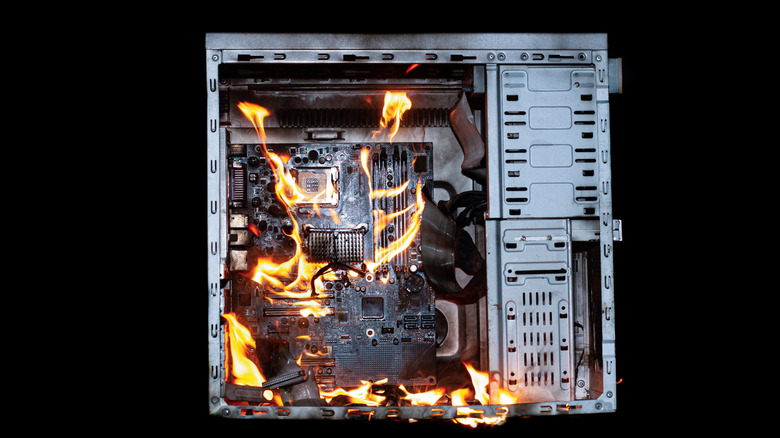
In my years of testing hardware, I have seen CPUs die, RAM sticks throw errors, and GPUs artifact until they give up the ghost. Usually, these failures are contained. If your RAM fails, you swap the stick, and you are back in business. However, a power supply failure is rarely a solitary event. Think of the Power Supply Unit (PSU) as the heart of your system. When it goes, it does not just stop beating; it can potentially send an electrical "heart attack" to every other component connected to it.
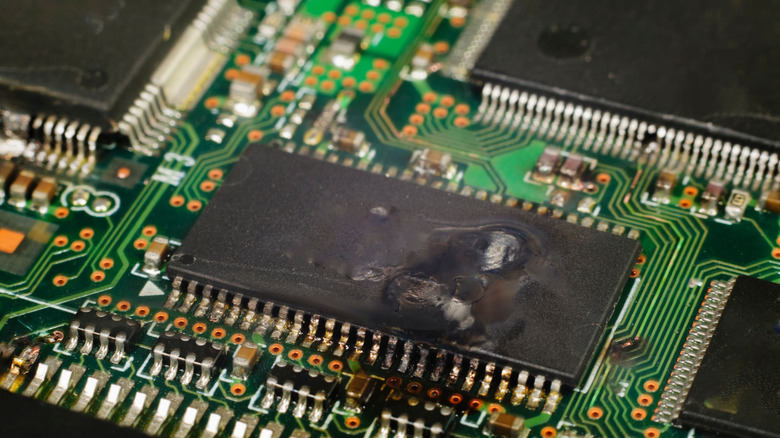
The primary danger lies in the lack of off-brand PSU risks mitigation. A high-quality unit is designed to sacrifice itself to save the system. If there is a massive surge, a fuse blows or a protection circuit trips, cutting off the flow of electricity instantly. Cheap power supplies often lack these safeguards. Instead of shutting down, they may pass a massive over-voltage through the 12V rail directly into your $800 graphics card or your $500 motherboard. This creates a chain reaction where one failure "bricks" the entire PC.
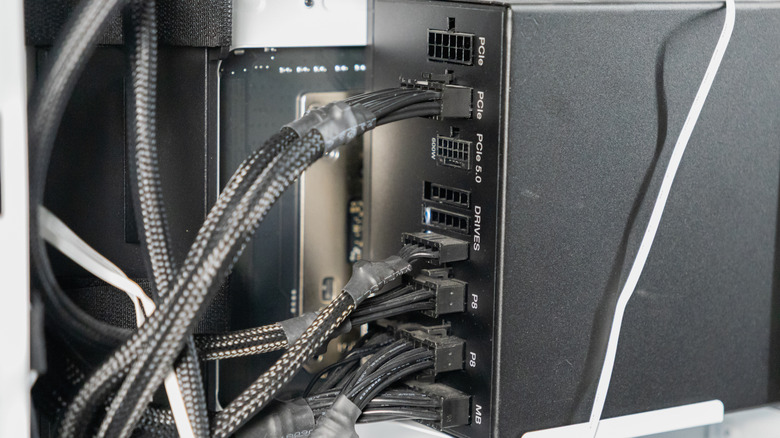
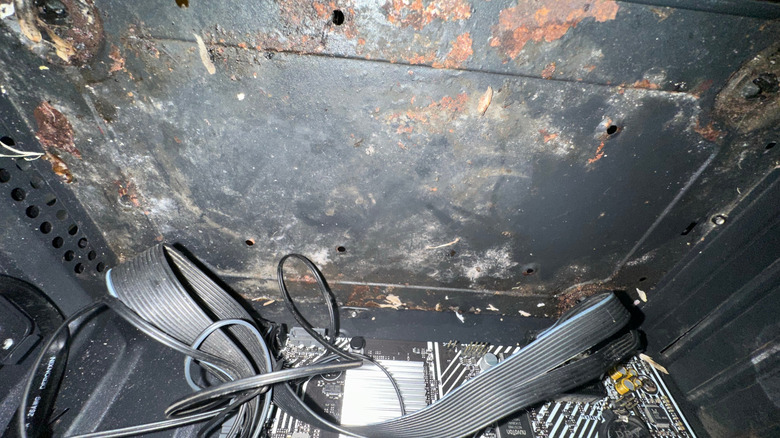
I often see builders try to save $40 by buying a generic unit, only to lose $1,500 worth of hardware six months later. This is especially true when users experiment with cable management. A common mistake is mixing modular cables from different brands. Because modular pinouts are not standardized on the PSU side, using a cable from a different manufacturer can instantly flip the polarity of the power, leading to immediate hardware death. Furthermore, environmental factors like 30-40% humidity can accelerate the degradation of the low-grade metals used in these units, increasing the chance of a short circuit over time.
Anatomy of a "Time Bomb": Cheap vs. Quality Internals
To understand why a generic unit is dangerous, we have to look under the hood. The difference between a $30 PSU and a $130 PSU is not just branding; it is the quality of the silicon, copper, and capacitors inside. Reliable units almost exclusively use Japanese capacitors rated for 105°C. These components are significantly more resilient to heat and electrical stress than the cheap generic alternatives found in off-brand units. When a capacitor in a cheap unit fails, it can leak electrolyte or simply explode, leading to fire hazards.
Another critical factor is voltage regulation and ripple suppression. Your PC components require a very steady "clean" stream of DC power. In a high-quality unit, the 12V rail might stay within 1% of its target. In a cheap unit, that voltage might fluctuate wildly. This is called voltage ripple. While it might not kill your PC today, high ripple suppression failure acts like a slow poison. It stresses the voltage regulator modules (VRMs) on your motherboard and GPU, causing them to run hotter and fail prematurely. Over time, this results in reduced component longevity for your most expensive parts.
Finally, we have to talk about wattage headroom. Most cheap units are "rated" for a peak wattage they can only hit for a few seconds before overheating. A 600W generic PSU might actually only be capable of delivering 400W of sustained, clean power. Modern GPUs are known for transient spikes—brief moments where they draw double their rated power. If your PSU does not have the overhead to handle these spikes, the system will crash, or worse, the PSU will suffer a catastrophic failure.
Decoding Ratings: 80 Plus vs. Cybenetics
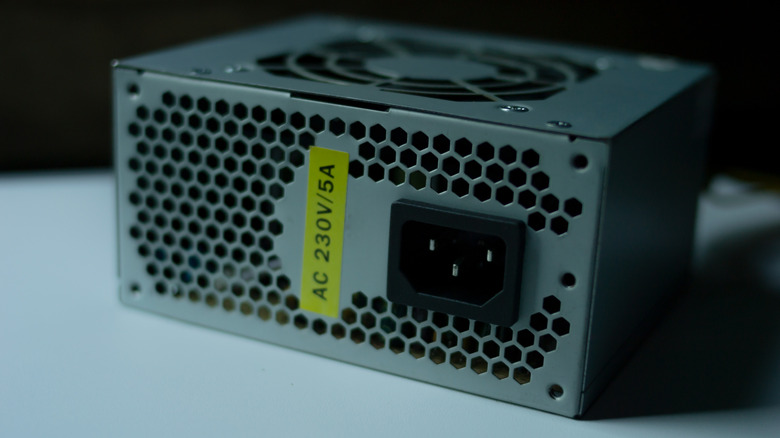
When you are shopping, you will see various stickers on the box. For a long time, the 80 Plus efficiency ratings were the only game in town. These ratings—ranging from White/Bronze to Titanium—tell you how much power is wasted as heat. An 80 Plus Gold unit is more efficient than a Bronze unit, meaning it pulls less power from your wall and generates less heat inside your case. Lower heat directly correlates to a longer-lasting unit.
However, the industry is moving toward Cybenetics certification. While 80 Plus only measures efficiency at a few specific load points at a cool room temperature, Cybenetics tests thousands of data points across various temperatures and even measures noise levels. Understanding 80 plus efficiency ratings for psus is still helpful, but Cybenetics provides a much clearer picture of how a unit will perform in a real-world, hot PC chassis.
| Feature | 80 Plus | Cybenetics |
|---|---|---|
| Primary Focus | Power Efficiency | Efficiency + Noise + Thermal Performance |
| Test Temperature | 23°C (Static) | Varied (Simulates real-world PC heat) |
| Noise Testing | None | Strict Noise Level Grading (A++ to E) |
| Standards | Legacy Standard | Modern, High-Precision Standard |
| Requirements | Basic Efficiency % | Multi-point Efficiency + Standby Power |
For anyone building with a modern NVIDIA 40-series or AMD 7000-series card, the ATX 3.1 standard is the new must-have. These units include a dedicated 12V-2x6 connector designed to handle massive power draws safely, reducing the risk of melted connectors that plagued some earlier high-end builds.
Red Flags: Symptoms of a Failing Generic Power Supply
Most users do not realize their PSU is dying until the PC won't turn on. However, there are several symptoms of a failing generic power supply that you should watch for. If you notice any of the following, I recommend backing up your data and replacing the unit immediately before it takes the rest of your hardware with it.
- Random Reboots: Your PC suddenly restarts without warning, especially during gaming or video editing. This often happens because the PSU cannot handle a transient power spike.
- The Blue Screen of Death (BSOD): While often software-related, frequent BSODs with codes like "WHEA_UNCORRECTABLE_ERROR" can indicate unstable voltage regulation.
- Electrical Noise (Coil Whine): A high-pitched buzzing or whining sound coming from the back of the PC. While sometimes harmless, a sudden change in noise can indicate failing internal coils or capacitors.
- Grinding Fan Noises: Cheap units use sleeve-bearing fans that fail quickly. If the fan stops, the PSU will overheat and potentially catch fire.
- The Burning Smell: If you smell ozone or burning plastic, shut the PC off at the wall immediately. This is a sign of thermal distress and an imminent fire hazard.
- System Instability: Programs crashing to desktop or USB peripherals disconnecting and reconnecting for no apparent reason.
Buying Guide: How to Choose a Reliable PSU
So, how do you avoid the "ticking time bomb"? It comes down to looking past the flashy RGB lights and focusing on the engineering. When I evaluate a unit for a professional build, I follow a strict checklist of safety features to look for in a psu. If a unit doesn't explicitly list these, it's a pass for me.
Essential Safety Glossary
- OVP (Over-Voltage Protection): Shuts down the unit if the voltage exceeds a certain level.
- SCP (Short-Circuit Protection): The most critical feature; prevents fire if a wire shorts out.
- OCP (Over-Current Protection): Prevents the rails from pulling more current than the components can handle.
- OTP (Over-Temperature Protection): Shuts the unit down if internal sensors detect it is getting too hot.
To identify high quality power supply units, look at the weight and the warranty. A heavy PSU usually indicates larger heatsinks and higher-quality transformers. Furthermore, reliable power supply brands like Seasonic, Corsair (RM/HX/AX series), EVGA (G series), and Be Quiet! usually offer warranties between 7 and 12 years. A company that guarantees its product for a decade is confident that it won't explode on year two.
Avoid any PSU that is unrated or only has a "Standard" 80 Plus rating from a brand you have never heard of. The risks of off-brand power supplies simply aren't worth the $30 savings. If you are on a budget, look for "Tier B" or higher on community-curated PSU tier lists, which categorize units based on real-world electrical testing and component teardowns.
FAQ
Are cheap power supplies safe to use?
Generally, no. While a cheap unit might work for a few months in a low-power office PC, they lack the necessary safety protections to handle the variable loads of a modern gaming or professional workstation. They pose a higher risk of fire and can fail catastrophically under stress.
Can a low-quality PSU damage other PC components?
Yes, absolutely. A low-quality PSU is often the cause of "cascading failure." Because it sits between your wall outlet and your hardware, a failure in the PSU can send a high-voltage surge through the motherboard, effectively destroying the CPU, RAM, and GPU simultaneously.
What are the risks of buying an unrated power supply?
An unrated power supply has not been verified for efficiency or safety standards. These units often use the cheapest possible internal components, which lead to high heat, wasted electricity, and a lack of protection against power surges or short circuits.
Can a cheap power supply cause PC crashes?
Yes. If the power supply cannot provide stable voltage or handle sudden increases in power demand (transient spikes), the system will become unstable. This results in random reboots, freezes, and the blue screen of death during intensive tasks like gaming or 3D rendering.
What is the difference between a budget and a premium PSU?
A budget PSU from a reputable brand (like a Corsair CX series) uses decent components and includes all essential safety protections but might have lower efficiency and a shorter warranty. A premium PSU uses top-tier Japanese capacitors, offers higher efficiency (Gold/Platinum), operates more quietly, and usually comes with a 10-year warranty. Cheap "off-brand" units, however, should be avoided entirely as they lack the safety engineering found even in reputable budget models.