Quick Facts
- Speed Leader: Flex FX1271T recorded a 5.66-second completion time in 3-inch concrete drilling tests.
- Torque Peak: Flex leads with 1,400 in-lbs of torque compared to DeWalt’s 1,530 Unit Watts Out (UWO).
- Best Safety: DeWalt offers superior protection with its advanced anti-rotation E-Clutch system.
- Best Warranty: Flex provides a limited lifetime warranty upon registration, outclassing the DeWalt three-year standard.
- Top Value: Flex kits often provide higher performance metrics for a lower entry price than DeWalt flagship models.
- Ecosystem Depth: DeWalt features over 300 compatible tools, significantly outnumbering the growing Flex 24V lineup.
In a direct Flex vs DeWalt hammer drill comparison, Flex offers superior drilling speed and torque for the money, while DeWalt provides better safety features and a more extensive tool ecosystem. While the Flex 24V platform is designed for maximum power and rapid charging, DeWalt remains the industry standard for professional contractors who prioritize ergonomics and a vast library of compatible job site equipment.
Performance & Speed: The Heavy-Duty Showdown
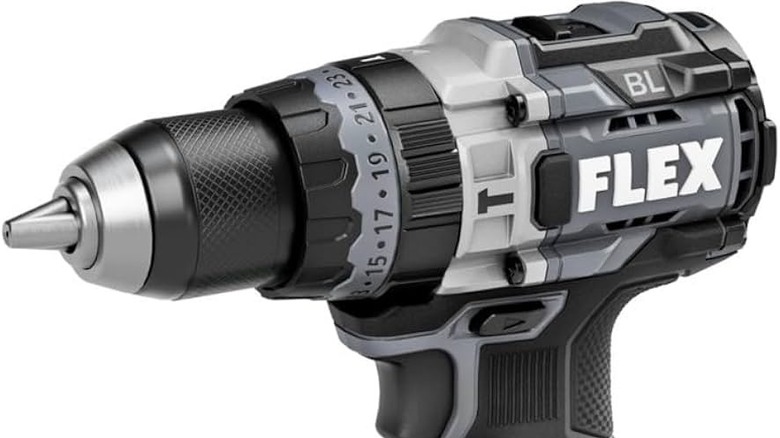
When we look at raw performance, the cordless hammer drill performance comparison often boils down to how quickly a tool can penetrate high-PSI concrete. The Flex FX1271T has recently disrupted the market by setting a new benchmark for speed. Utilizing its unique turbo mode performance, this drill reaches a staggering 2,500 RPM and delivers 40,000 impacts per minute. These specifications are not just for show; in controlled laboratory environments, the Flex FX1271 hammer drill produced 1,400 inch-pounds of maximum torque, which allowed it to complete a 3-inch deep concrete drilling test in 5.66 seconds.
DeWalt, on the other hand, approaches power through its established brushless motor technology. The DeWalt DCD999 and the newer DCD1007 are formidable contenders, though they operate on a slightly different philosophy. The DCD999 offers a top speed of 2,250 RPM and 38,250 beats per minute. While its raw RPM is lower than the Flex, it is engineered to deliver up to a 42% power boost when paired with FlexVolt batteries. This makes the DeWalt an adaptable beast, shifting its power ceiling based on the battery chemistry you slide into the handle.
| Specification | Flex FX1271T | DeWalt DCD1007 |
|---|---|---|
| Max Speed (RPM) | 2,500 RPM | 2,250 RPM |
| Max Impacts (BPM) | 40,000 BPM | 38,250 BPM |
| Peak Torque | 1,400 in-lbs | 1,530 UWO |
| 3" Concrete Drill Time | 5.66 Seconds | ~6.5 - 7.2 Seconds |
| Platform | 24V Lithium | 20V Max / FlexVolt |
For masonry drilling applications, the bit penetration rate of the Flex is objectively faster. However, speed is only one part of the equation. High-torque applications often lead to tool binding, where the drill bit catches on rebar or a hard aggregate, potentially wrenching the user's arm. This is where the technical philosophies of the two brands diverge. Flex focuses on the brute force of its 24V system to power through the snag, whereas DeWalt focuses on managing that energy to protect the operator.
Battery Technology: Stacked Lithium vs Flexvolt Advantage
The battle for hammer drill supremacy is fought in the battery cells. Flex utilizes a 24V platform that provides a higher voltage ceiling than the industry-standard 18V or 20V Max systems. The real innovation, however, is the stacked lithium battery technology. Unlike traditional cylindrical cells, stacked lithium cells offer a larger surface area, which reduces internal resistance and allows for much higher current draw without overheating. This is why Flex can maintain its turbo mode for extended periods without the tool thermal-throttling.
DeWalt counters this with its PowerStack and Flexvolt systems. While PowerStack also uses pouch-cell technology similar to Flex's stacked lithium, DeWalt's Flexvolt is the more established solution for heavy-duty work. Flexvolt batteries automatically change voltage when you move from 20V tools to 60V tools, providing massive capacity and discharge rates. In a Flex 24V vs DeWalt 20V Max scenario, Flex typically wins on pure discharge rate for a single-tool application, but DeWalt offers better flexibility across a wider range of high-draw equipment like table saws and large rotary hammers.
Thermal management is another critical factor. Flex uses its THERMA-Tech heat management systems, which involve phase-change materials that wrap the battery cells to absorb heat. This contributes to better battery runtime efficiency during intense use. DeWalt relies on its advanced electronics and ventilated battery casings to keep temperatures down. In a DeWalt vs Flex hammer drill battery life and charging speed comparison, Flex often comes out ahead in charging, with their 160W and 280W rapid chargers replenishing high-capacity batteries in nearly half the time it takes standard DeWalt chargers.
Pro Tip: To maximize the lifespan of your high-output batteries, avoid leaving them on the charger once they reach 100%. Even with modern heat management systems, chemical degradation occurs faster when cells are kept at maximum voltage in high-heat environments.
Design, Safety, and Job Site Ergonomics
Performance is irrelevant if the tool is uncomfortable or dangerous to use. This is where DeWalt shines. The brand has invested heavily in hammer drill anti-rotation safety features comparison points. Their E-Clutch system uses an internal gyroscope to detect sudden, violent movements. If the drill binds, the motor cuts power instantly, preventing the tool from spinning and potentially breaking the user's wrist. While Flex provides an excellent side handle stability system to help the user manually override high torque, it lacks the sophisticated electronic sensing found in the DeWalt XR and Atomic lines.
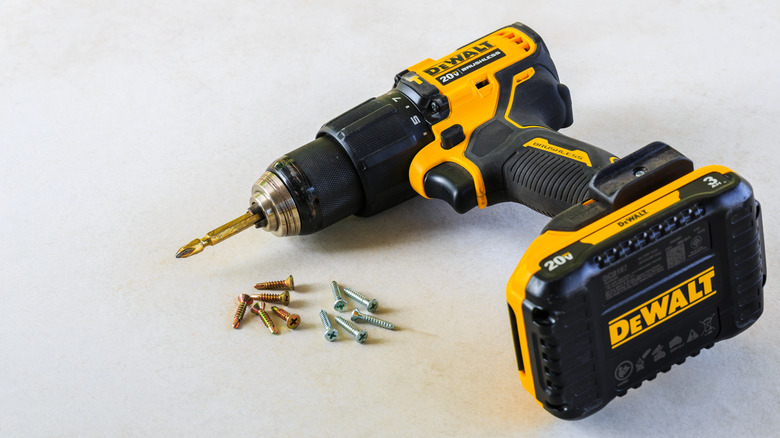
Regarding job site ergonomics, DeWalt has perfected the grip and balance of their drills over decades. The DCD1007, despite its power, feels remarkably balanced in the hand. For those working in tight spaces, the DeWalt Atomic series offers a compact footprint (some models as short as 6.49 inches) that Flex’s high-performance 24V models cannot currently match. The Flex drills are undeniably beefier, often weighing over 5 lbs with a battery, which can lead to fatigue during overhead work or long days of repetitive drilling.
However, the Flex side handle is worth a mention. It is longer and more robust than DeWalt's, providing the leverage needed to handle that 1,400 in-lbs of torque. For professional contractors who are frequently drilling large holes with hole saws or auger bits, the physical stability of the Flex might actually be preferred over DeWalt’s electronic intervention, as it allows the pro to stay in control without the tool constantly "tripping" its safety sensors.
Long-term Value: Warranty & Ecosystem
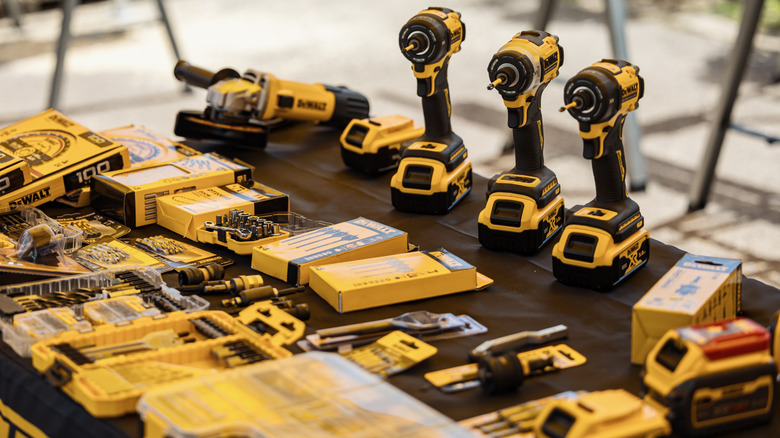
When you invest in a professional-grade tool, you are investing in a platform. This is arguably DeWalt’s greatest strength. The DeWalt power tool ecosystem is massive, with over 300 products that run on the same 20V Max battery. Whether you need a drywall screw gun, a grease gun, or a job site radio, DeWalt has a proven, reliable option. Flex is the new challenger on the block. While their lineup is growing rapidly and includes impressive saws and impact drivers, it is nowhere near the breadth of DeWalt.
However, Flex is winning the war on consumer confidence through its warranty. Flex provides a five-year limited warranty on its 24V tools and batteries upon registration within 30 days of purchase. Currently, they also offer a "Founder’s Lifetime Warranty" for those who register their tools, which is an unheard-of level of support in the power tool industry. This makes Flex the most durable hammer drill brand for the money 2026 for users who are worried about long-term electronic failures.
DeWalt offers a standard three-year limited warranty, one year of free service, and a 90-day money-back guarantee. While the warranty period is shorter, DeWalt has an extensive authorized service network and their ServiceNet infrastructure is top-tier. If a DeWalt drill breaks in a major city, you can likely find a local repair shop that stocks the parts. Flex, being newer, relies more on mail-in service, which can lead to longer downtimes for a Flex hammer drill vs DeWalt for professional contractors who cannot afford to be without their primary tool for a week.
The Verdict: Which Hammer Drill for Your Money?
Choosing between these two comes down to your specific needs on the job site. The Flex 24V vs DeWalt 20V Max hammer drill performance gap is narrowing, but for now, Flex holds the crown for the fastest bit penetration and highest raw torque.
Choose Flex if:
- You want the fastest possible drilling speeds in concrete and masonry.
- You value a long-term, potentially lifetime warranty.
- You are starting a tool collection from scratch and want the best performance-to-price ratio.
- You need the rapid charging capabilities of their 24V platform.
Choose DeWalt if:
- You are already invested in the 20V Max or Flexvolt battery platform.
- You prioritize safety features like the anti-rotation E-Clutch.
- You need a massive variety of specialized tools that share the same batteries.
- You prefer a tool with a lighter, more ergonomic design for all-day use.
Ultimately, Flex is the disruptor, offering high-end specifications that often outperform DeWalt’s flagship models in speed tests. However, DeWalt remains the "safe" bet for professionals who need an established ecosystem and superior safety tech. If your goal is to find the best hammer drill for concrete at the lowest possible price point without sacrificing professional power, the Flex FX1271T is the clear winner for 2026.
FAQ
Is Flex more powerful than DeWalt hammer drills?
In terms of raw torque and drilling speed, yes. The Flex flagship models currently produce up to 1,400 in-lbs of torque and reach 2,500 RPM, which allows them to outperform DeWalt’s top-tier hammer drills in high-density concrete drilling tests. However, DeWalt drills are often perceived as more "controllable" due to their electronic safety clutches.
Which brand has a better warranty, Flex or DeWalt?
Flex offers a superior warranty. While DeWalt provides a standard three-year limited warranty, Flex offers a five-year limited warranty that can be upgraded to a limited lifetime warranty if the tool is registered within 30 days of purchase. This is currently the most aggressive warranty in the professional power tool market.
Are Flex and DeWalt batteries interchangeable?
No, Flex and DeWalt batteries are not interchangeable. Flex operates on a 24V platform with a unique slide-on rail system, while DeWalt uses a 20V Max (18V nominal) platform. Even with third-party adapters, using cross-brand batteries is generally discouraged as it can bypass critical thermal and over-discharge safety communications between the tool and the battery.
Does DeWalt have a tool that competes with Flex stacked lithium?
Yes, DeWalt’s PowerStack batteries utilize pouch-cell technology, which is the same fundamental design as Flex’s stacked lithium. PowerStack batteries offer higher power density and better thermal management than traditional cylindrical cells, though Flex’s 24V architecture still gives it a slight edge in total power output for high-torque hammer drills.
Which hammer drill offers better value for the price?
Flex typically offers better value for the money if you are looking for the highest performance per dollar. A bare Flex hammer drill or a starter kit often costs less than a comparable DeWalt XR or Flexvolt Advantage kit while providing faster drilling speeds and a longer warranty. DeWalt’s value lies in its massive tool ecosystem and superior resale value.