Quick Facts
- The $2 Secret: Industry data reveals that the manufacturing cost for most premium protectors is less than $2, despite retail prices often exceeding $40.
- Disposable Armor: A screen protector is designed to be a sacrificial layer; its failure is a success if it prevents your $400 OLED panel from cracking.
- The 9H Myth: The 9H rating refers to pencil hardness, not the Mohs scale of mineral hardness, meaning most glass protectors offer identical scratch resistance regardless of price.
- The Value Sweet Spot: Testing indicates that mid-range protectors priced between $15 and $25 provide the best balance of impact protection and installation ease.
- Material Matters: While tempered glass feels premium, flexible TPU and hybrid glass often provide superior impact absorption for frequent droppers.
- Micro-Abrasion Defense: Even with advanced Gorilla Glass, a protector is essential for preventing the tiny scratches caused by sand and dust in your pocket.
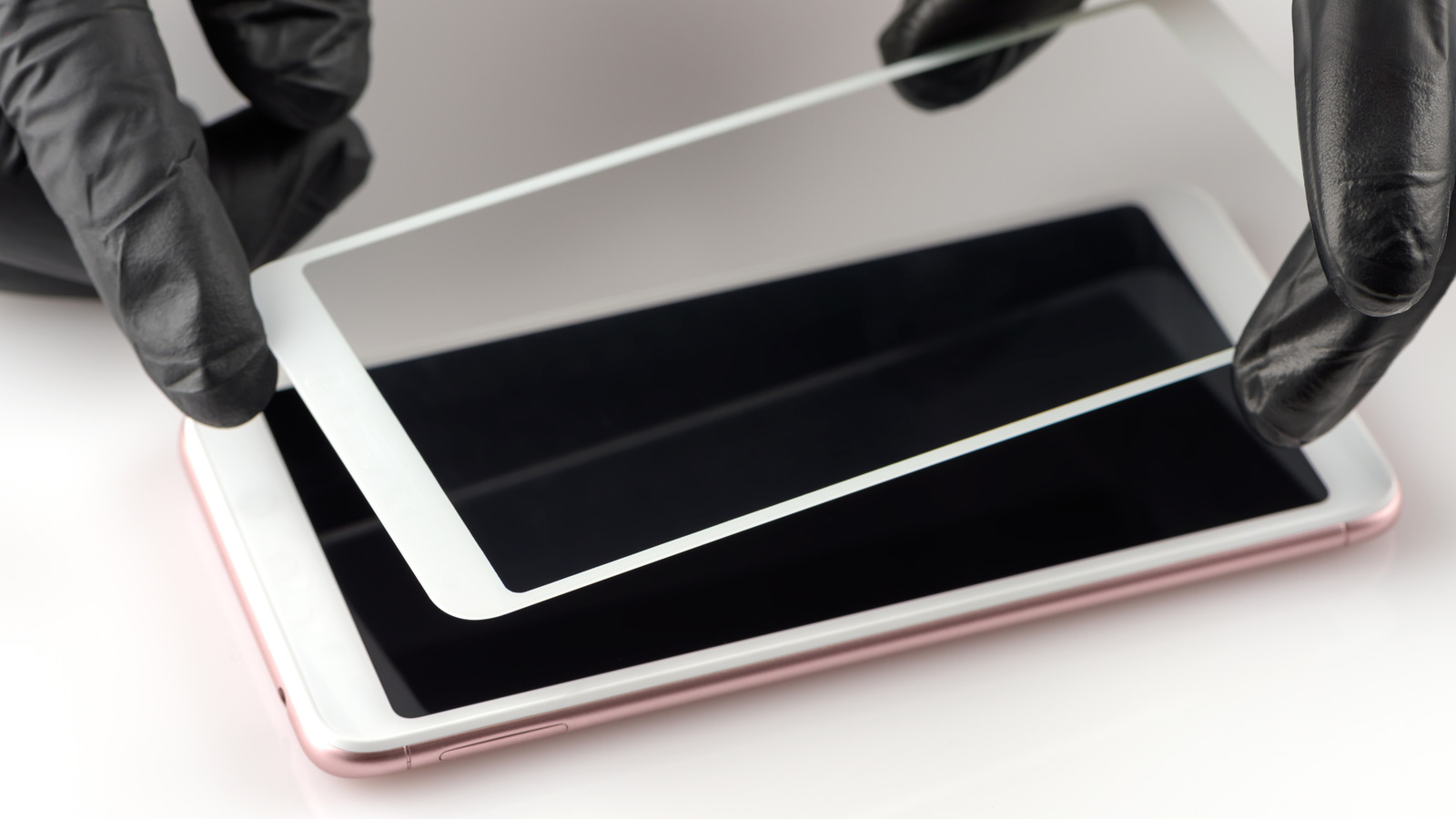
Expensive screen protectors often provide premium materials and additional features like anti-glare coatings, but budget-friendly alternatives frequently offer comparable scratch and impact resistance. Since screen protectors are designed as sacrificial layers that must be replaced once damaged, many users find that affordable tempered glass provides sufficient protection for a fraction of the cost of high-end brands.
The Truth About Premium Pricing
When you walk into a carrier store or a high-end electronics boutique, you are often met with a wall of accessories that seem to cost as much as a month’s worth of groceries. Among these, expensive screen protectors are frequently pushed as a mandatory insurance policy for your new device. However, as an editor who has handled hundreds of smartphones and their accompanying accessories, I have seen a massive disconnect between price and actual performance.
Recent industry analysis indicates that while premium tempered glass screen protectors are often retailed for $40 or more, the estimated manufacturing cost for these units is less than $2. This massive markup pays for the marketing, the elegant packaging, and the high-margin profits for the retailer, but it rarely translates into twenty times the protection of a budget alternative.
The core philosophy of these accessories is what I call disposable armor. You want the protector to take the hit so your phone doesn't. If you spend $50 on a single piece of glass, you might be tempted to keep it on the phone even after it chips or cracks to "get your money's worth." This is a mistake. A damaged protector has compromised structural integrity and won't protect your screen as effectively during the next drop. Choosing more affordable options allows you to treat them as the sacrificial components they are meant to be.
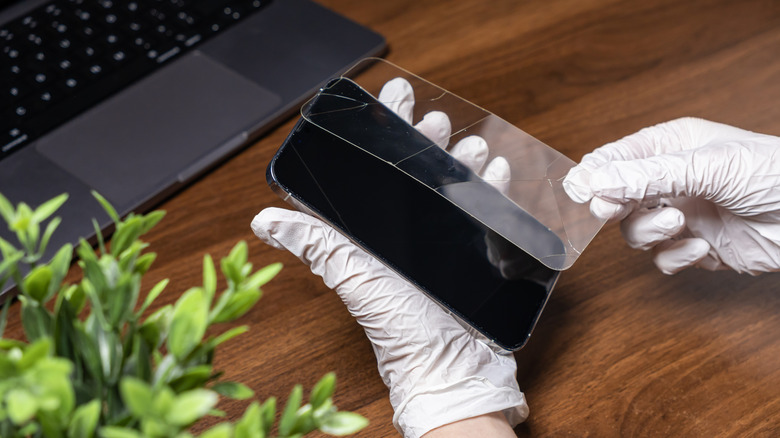
Furthermore, independent performance evaluations found that mid-range tempered glass protectors priced between $15 and $25 offer nearly identical protection levels to premium options costing over $40. When we look at why premium screen protectors are not always necessary, it often comes down to the law of diminishing returns. You are paying significantly more for minor gains in optical transparency or a slightly smoother oleophobic coating that will eventually wear off anyway.
Material Science: TPU vs. Glass vs. Hybrid
Choosing the right protection requires understanding the materials involved. Most people default to tempered glass because it mimics the feel of the original screen, but it isn't always the best choice for every lifestyle or device type.
The tempered glass vs plastic screen protector debate usually centers on feel versus flexibility. Tempered glass is rigid and provides excellent scratch resistance, but it is brittle. On the other hand, Thermoplastic Polyurethane (TPU) is a flexible, chemically enhanced plastic. Its "soft" nature allows it to absorb impacts that would shatter glass. Many modern TPU protectors even feature self-healing TPU technology, where small scratches in the plastic disappear over time as the material reforms.
For those who want the best of both worlds, hybrid glass is an emerging favorite. The benefits of hybrid glass screen protectors include a blend of glass particles and plastic polymers. This results in a protector that feels smoother than pure plastic but won't shatter like traditional glass. When considering the benefits of hybrid glass screen protectors for durability, they are particularly effective for curved displays where rigid glass often struggles to maintain a secure bond.
| Feature | Tempered Glass | TPU (Plastic) | Hybrid Glass |
|---|---|---|---|
| Feel | Most like original screen | Slightly rubbery | Smooth, glass-like |
| Scratch Resistance | High | Low (unless self-healing) | Moderate to High |
| Impact Absorption | Brittle; shatters on impact | High; absorbs energy | High; won't shatter |
| Durability | Prone to edge chipping | Very durable | Extremely durable |
| Best For | Flat screens, premium feel | Curved screens, heavy drops | Long-term use, curves |
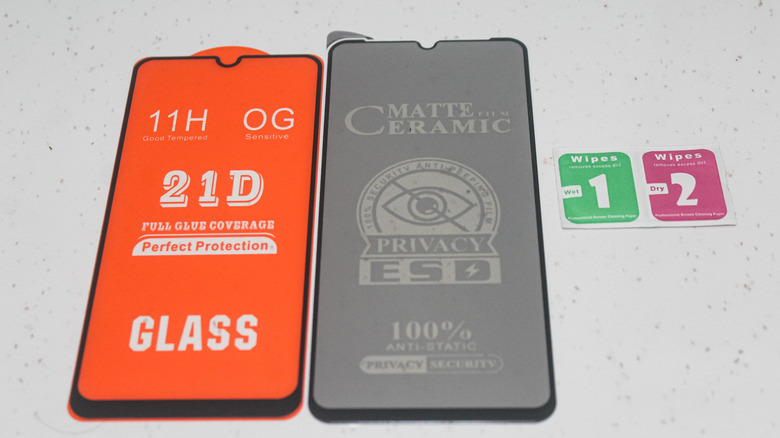
When choosing screen protectors for curved displays, TPU or hybrid options are often superior because they can wrap around the edges without creating the "halo effect" or lifting that rigid glass often suffers from. This edge-to-edge coverage is crucial because the edges of the display are often the most vulnerable points during a drop.
Debunking the 9H Marketing Trap
If you have shopped for a protector recently, you have undoubtedly seen the 9H hardness rating plastered across every box. This is one of the most misunderstood marketing terms in the mobile industry. Many consumers assume this refers to the Mohs scale of mineral hardness, where a diamond is a 10 and regular glass is a 5 or 6.
In reality, the 9H refers to the Pencil Hardness Test. This means the glass cannot be scratched by a 9H lead pencil—the hardest pencil available. Since even standard glass is harder than a pencil, almost every screen protector on the market, from the $5 bin to the $60 boutique shelf, can technically claim a 9H rating. This doesn't mean it is as hard as sapphire; it just means it passes a relatively easy test.
A common question I get is: do modern phones with gorilla glass need screen protectors at all? Modern displays use Ceramic Shield or Gorilla Glass Victus 2, which are incredibly tough against drops. However, there is a trade-off in glass science: the more shatter-resistant glass becomes, the softer it generally is, making it more prone to micro-abrasions. These tiny scratches come from everyday materials like sand, quartz, or even the dust in your pocket. Over time, these micro-abrasions weaken the glass and ruin the optical transparency of your beautiful display. A screen protector acts as a shield against these invisible enemies.
The Real ROI: 2026 Repair Costs
As we look toward 2026, smartphone displays are becoming more complex and expensive. We are seeing LTPO panels with variable refresh rates and ultra-high brightness levels. Repairing a broken screen on a flagship device now costs anywhere from $300 to $500. In this context, any screen protector is a good investment, but the expensive vs cheap tempered glass comparison shows that you don't need to overspend to get high-quality security.
One area where expensive models sometimes justify a slightly higher price is the inclusion of an installation frame. A perfectly aligned protector is more likely to stay attached and less likely to interfere with your phone case. However, you can now find mid-range multi-packs that include these same plastic alignment tools.
Expert Tip: When buying, look for "case-friendly" versions. These are slightly smaller than the actual glass dimensions to prevent edge-lifting when you put on a protective case. The best ROI comes from buying a three-pack of mid-range glass; this gives you room for an installation error and a spare for when the first one eventually does its job and breaks.
Testing of 29 different screen protectors revealed that higher price points do not consistently guarantee better performance in terms of impact protection or edge durability. Often, what you are paying for is the brand name and the convenience of having it installed for you at a mall kiosk. By doing it yourself with a mid-range kit, you save significant money without sacrificing the safety of your device.
FAQ
Are expensive screen protectors worth the money?
Generally, no. While high-end options may offer a slightly better oleophobic coating or a more sophisticated installation kit, they do not offer significantly better protection against drops or scratches compared to mid-range alternatives. Most of the cost goes toward branding and retail markups rather than material quality.
What is the difference between cheap and expensive screen protectors?
The primary differences are often found in the extras. Expensive protectors usually come with better alignment tools, more detailed instructions, and sometimes a warranty that covers screen repairs. However, the actual tempered glass or TPU material used is often virtually identical across different price points.
Does a higher price mean better screen protection?
Not necessarily. Research and testing have shown that protectors in the $15 to $25 range often perform just as well as those costing $40 or more. Because screen protectors are meant to break upon impact to save the phone's screen, spending a fortune on a single piece of glass can actually be less economical than buying a high-quality multi-pack.
Do expensive screen protectors scratch less than cheap ones?
Most glass screen protectors have the same basic hardness levels and will resist scratches from keys or coins equally well. While premium brands might have a longer-lasting coating to resist fingerprints, they will still succumb to scratches from sand or harder minerals at the same rate as more affordable glass.
Will an expensive screen protector prevent my screen from cracking?
No protector can guarantee 100% protection. An expensive protector uses the same physics as a cheaper one: it absorbs and distributes the energy of an impact. If a drop is severe enough, the energy will pass through any protector and crack the underlying screen. The goal is to reduce the probability of a crack, which mid-range protectors do just as effectively as premium ones.