Quick Facts
- Launch Date: Expected November 2026 alongside the PS5 Pro refresh.
- Primary Upgrade: Modular, swappable battery system to replace integrated units.
- Hardware Revision: Part of the new CFI-7121 hardware bundle.
- Battery Capacity: Transition from fixed 1,560 mAh (V2) to swappable power packs (V3).
- Missing Feature: Lacks Hall effect sensors; continues using traditional potentiometers.
- Energy Efficiency: Approximately 3% better power management through optimized internals.
- Compatibility: Fully backwards compatible with all existing PlayStation 5 console models.
The DualSense V3 introduces a swappable battery system, a significant departure from the integrated batteries found in the V2 model. While the V3 aims to improve hardware longevity and reduce electronic waste through replaceable power packs, it reportedly lacks Hall effect sensors to combat stick drift. Most core features, including haptic feedback and adaptive triggers, remain consistent with previous iterations.
For anyone who has spent the last few years tethered to a USB-C cable because their controller died mid-boss fight, the news of a DualSense V3 is likely a relief. As someone who has disassembled dozens of these controllers to fix everything from worn-out springs to clicking triggers, I can tell you that the internal battery has always been the ticking time bomb of the PlayStation ecosystem. But as we look toward the 2026 horizon, the decision of whether to wait for the new PS5 controller 2026 or buy a replacement today isn't as simple as it seems.
How to Identify Your Current Controller: V1 vs V2 vs V3
Before we dive into the future, we need to know what you are currently holding. Sony is notorious for "silent" hardware refreshes. The original V1 controller, which launched in 2020, was plagued by weaker trigger springs and faster battery degradation. The V2 revision, which became the standard around 2022, quietly improved the internal motherboard and reinforced the mechanical components of the adaptive triggers.
To identify which version you own, you need to look at the motherboard codes etched into the PCB or the serial numbers on the back. You can often tell by looking at the FCC ID on the rear of the unit. If the ID ends in the letter A, you likely have a V1 model. If it ends in B, you are holding a V2. Technically, enthusiasts track these through BDM codes. The V1 used BDM-010 and BDM-020, while the refined V2 models moved to BDM-030, BDM-040, and the current BDM-050.
The upcoming DualSense V3 is expected to debut with the CFI-7121 model number. While the ergonomic design remains largely unchanged, the internal layout has been overhauled to accommodate the new power management system. If you are looking to buy a controller today and want the best current reliability, always look for the BDM-040 or BDM-050 versions found in newer standalone boxes.
The Game Changer: PS5 Controller Removable Battery
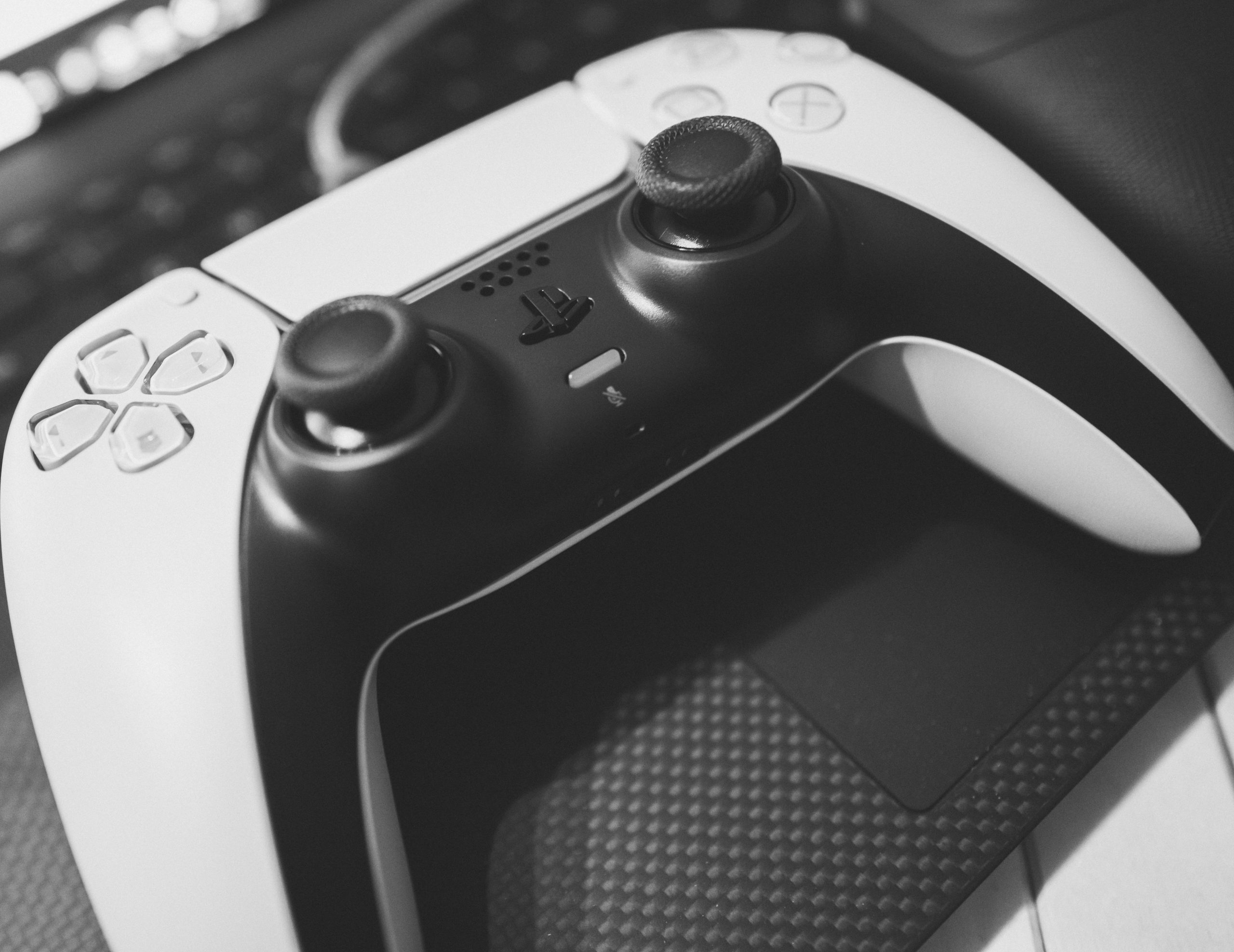
The shift toward a PS5 controller removable battery is the single biggest design change we have seen since the introduction of the touchpad on the PS4. Currently, the V2 model features a 1,560 mAh internal lithium-ion battery. While this was a step up from the V1’s launch capacity, it still suffers from natural chemical degradation. After a year or two of heavy use, that "six-hour" battery life often turns into three.
The DualSense V3 solves this by mimicking the Xbox approach but with a PlayStation twist. Rather than using AA batteries, Sony is reportedly moving toward proprietary modular power packs. This is a massive win for the right to repair movement. Instead of throwing away an entire $70 piece of hardware because the internal cells have died, you can simply pop out the battery pack and click in a fresh one.
Industry reports from late 2025 suggest that a rumored DualSense V3 iteration could introduce a removable battery feature, allowing users to swap power cells rather than relying on a built-in rechargeable unit. This is a direct response to consumer feedback regarding the high-end DualSense Edge, which, despite being the best-selling gaming accessory in the United States during the first half of 2023, was criticized for its shorter battery life compared to the standard model.
When comparing DualSense V3 removable battery vs V2 battery life, the V3 offers the "infinite" play session. If you own two battery packs, you are never more than 30 seconds away from a full charge. This effectively ends the era of the "wired-only" wireless controller.
Performance & Features: What’s New and What’s Missing?
While the modular battery is a headline feature, many hardcore gamers were hoping for a more technical upgrade: Hall effect sensors. Unfortunately, current leaks indicate that the DualSense V3 will not include these magnets-based sensors. Instead, it will continue to use traditional potentiometer-based sticks.
This means that the DualSense V3 stick drift and Hall effect sensors comparison remains a one-sided fight in favor of third-party controllers like those from Gamesir or Gulikit. Sony’s decision to stick with potentiometers is likely a cost-saving measure for the standard retail unit, though it remains a point of contention for those tired of analog stick drift appearing after just a few hundred hours of play.
However, the V3 isn't just about the battery. In terms of DualSense V3 vs V2 features, the new model is designed to work in tandem with the PS5 Pro refresh. It features a minor internal hardware revision that achieves a 3% gain in power efficiency. While 3% sounds negligible, it contributes to a cooler-running controller and slightly less strain on the lithium-ion technology over time.
The core experience remains world-class:
- Haptic feedback: The voice-coil actuators remain identical, providing the nuanced vibrations that define the PS5 experience.
- Adaptive triggers: The tension-based triggers are still the centerpiece, though the V3 uses the reinforced gear design perfected in the V2 BDM-030 revision.
- Input Latency: Minor firmware optimizations paired with the new power management chip are expected to offer slightly more stable Bluetooth polling rates.
Price and Release: DualSense V3 in November 2026
If you are planning an upgrading to DualSense V3 for PS5 Pro refresh, the wait is still considerable. The PS5 DualSense V3 release date Europe November 2026 is the current target, aligning with the mid-cycle launch of the upgraded console.
Pricing is expected to stay consistent with current trends, likely retailing for approximately 74.99 EUR as a standalone purchase, while being bundled with the rumored 799.99 EUR PS5 Pro. One major question for current owners is the DualSense V3 compatibility with original PS5 console units. The good news is that the Sony Interactive Entertainment ecosystem is remaining unified; the V3 will work perfectly with your 2020 launch console, and your old V2 controllers will work with the new Pro console.
The strategy here is clear: Sony wants the V3 to eventually replace the V2 in retail bundles and as a standalone purchase, slowly phasing out the integrated battery models in favor of a more sustainable, long-term solution.
| Feature | DualSense V2 | DualSense V3 (Expected) |
|---|---|---|
| Battery Type | 1,560 mAh Integrated | Swappable Modular Pack |
| Stick Sensors | Potentiometer | Potentiometer |
| Launch Date | 2022 | November 2026 |
| Efficiency | Standard | 3% Improved |
| Weight | ~280g | ~285g (approx. with pack) |
| Compatibility | All PS5 Models | All PS5 Models |
Final Verdict: Should You Wait for DualSense V3?
The answer to whether you should wait for DualSense V3 or buy PS5 controller now depends entirely on your current hardware's health.
If you are currently struggling with a controller that only lasts two hours on a charge, waiting until November 2026 is unrealistic. The current V2 model is a highly refined piece of tech that has addressed the mechanical failures of the launch version. For most casual gamers, the V2 is more than sufficient for the current console generation.
However, if you are a "battery-killer"—someone who plays 6+ hours a day and hates the idea of electronic waste—the V3 is the upgrade you have been waiting for. The benefits of removable battery in PS5 DualSense V3 cannot be overstated for long-term ownership. It turns a consumable product into a durable one.
Wait for the DualSense V3 if:
- You are planning to buy the PS5 Pro in 2026 anyway.
- You prioritize the "Right to Repair" and want a swappable battery system.
- You are tired of internal battery degradation and want a long-term solution.
Buy the DualSense V2 now if:
- Your current controller has terminal stick drift or broken triggers.
- You want a specific color or limited edition not guaranteed for the V3 launch.
- You are a casual gamer who rarely plays long enough to drain the current 1,560 mAh battery.
Ultimately, is DualSense V3 worth it for casual gamers? Only if you value the convenience of swapping packs. For those looking for a solution to stick drift, neither the V2 nor the V3 provides the Hall effect sensors we wanted, making the DualSense Edge or third-party alternatives the only real choice for that specific problem.
FAQ
When is the DualSense V3 release date?
The DualSense V3 is expected to launch in November 2026. This release is timed to coincide with the mid-generation refresh of the PlayStation 5, specifically the PS5 Pro. It will likely be the default controller bundled with new consoles from that point forward.
What are the new features of the DualSense V3?
The primary new feature is a swappable, modular battery system that allows users to replace the power cell without disassembling the controller. Other updates include a 3% improvement in power management efficiency and updated internal circuitry designed for better longevity.
Will the DualSense V3 have Hall effect joysticks?
Current industry reports indicate that the DualSense V3 will not feature Hall effect joysticks. It is expected to continue using standard potentiometer-based analog sticks, meaning it will still be susceptible to analog stick drift over time, similar to the V1 and V2 models.
Is the DualSense V3 compatible with the original PS5?
Yes, the DualSense V3 will be fully compatible with the original PlayStation 5 and the PS5 Slim. Sony maintains a consistent peripheral ecosystem, ensuring that the new controller works across all versions of the hardware, including the upcoming PS5 Pro.
What is the difference between DualSense V2 and V3?
The main difference is the battery housing. The V2 uses a fixed 1,560 mAh internal battery that is difficult for consumers to replace. The V3 introduces a user-accessible compartment for modular battery packs. Additionally, the V3 features a minor internal redesign for 3% better energy efficiency, whereas the V2 focused on mechanical trigger reinforcements over the V1.