Quick Facts
- Best for Audio Quality: Tidal and Apple Music (24-bit/192 kHz Hi-Res FLAC)
- Highest Artist Payout: Tidal ($0.013/stream) and Bandcamp (80-85% revenue share)
- Best Budget Choice: SoundCloud Go+ ($4.99/month)
- Spotify Audio Cap: 320 kbps Ogg Vorbis (Non-lossless)
- Price Trend: Spotify Premium costs have risen 30% since 2021
- Key Alternative: Apple Music (Includes Lossless at no extra cost)
As we move through 2026, many listeners are realizing Spotify alternatives might offer better value. While convenient, Spotify’s 320kbps cap and controversial royalty models are pushing audiophiles toward the best music streaming services that offer Hi-Res FLAC and better artist support.
In 2026, the best Spotify alternatives include Apple Music and Tidal for superior lossless audio quality and higher artist royalty rates. YouTube Music offers the most extensive music video integration, while platforms like Bandcamp and Qobuz are ideal for users who prefer owning digital downloads over monthly subscriptions. For budget-conscious listeners, SoundCloud Go+ and Pandora provide lower-cost tiers that can save significant money over several years.
1. The Audio Quality Ceiling: Lossless vs. Compressed
As an editor who spends his days testing high-end DACs and planar magnetic headphones, I find it increasingly difficult to recommend a service that still treats 320kbps Ogg Vorbis as its "Very High" quality setting. For the casual listener with basic earbuds, this might suffice. However, if you have invested in quality audio gear, you are essentially feeding a race car low-octane fuel.
While the rumors of a Hi-Fi tier or "Supremium" have circulated for years, competitors have already set the 24-bit/192 kHz standard. When performing a Spotify vs Apple Music vs Tidal comparison for 2026, the technical gap is staggering. Apple Music and Tidal offer Hi-Res FLAC and ALAC at no additional cost to their standard plans. In contrast, Spotify remains stuck in the lossy era, where audio bitrate is capped, stripping away the micro-details, soundstage depth, and instrumental separation that make high-fidelity listening so immersive.
For those seeking the best Spotify alternatives 2026 for high fidelity audio, the shift to lossless audio is the single most noticeable upgrade you can make. Services like Qobuz and Tidal prioritize bit-perfect delivery. This means the file you hear is exactly what the engineer mastered in the studio, without the digital artifacts introduced by heavy compression.
| Feature | Spotify | Apple Music | Tidal |
|---|---|---|---|
| Max Bitrate | 320 kbps | 24-bit / 192 kHz | 24-bit / 192 kHz |
| Format | Ogg Vorbis | ALAC (Lossless) | FLAC (Lossless) |
| Spatial Audio | No | Yes (Atmos) | Yes (Atmos/360) |
| Price | $11.99+ | $10.99 | $10.99 |
2. The Ethical Gap: Artist Compensation Rates
The second reason to look elsewhere is the growing concern over how your subscription dollars are distributed. There is a widening ethical gap in the industry. Currently, Spotify pays artists an average of $0.003 to $0.005 per stream, a figure that has remained stubbornly low even as subscription prices rise.
When you compare this to the estimated $0.01 per stream paid by Apple Music and the impressive $0.013 per stream paid by Tidal, the choice becomes a matter of supporting the creators you love. Furthermore, a controversial policy implemented in 2024 states that tracks must reach at least 1,000 streams over a 12-month period before they are eligible to earn any royalty payments. This effectively demonetizes millions of indie artists and niche music genres that rely on small, dedicated fanbases.
"The current streaming model often feels like a winner-take-all system. If you want your money to actually reach the artist, user-centric payout models found on platforms like Deezer are a much better bet." — Tom Anderson
If artist compensation is a priority, music streaming services with the highest artist royalty rates should be at the top of your list. Tidal remains a leader here, but Bandcamp takes it a step further by offering an 80-85% revenue share on digital sales, ensuring the majority of your money goes directly into the artist's pocket.
3. Algorithm Fatigue and the AI 'Slop' Invasion
We have all experienced it: you start a "Radio" station based on a favorite track, and within twenty minutes, the algorithm has steered you back to the same five songs you have heard a hundred times. This "algorithmic echo chamber" is a common complaint among power users. While Spotify’s discovery tools were once groundbreaking, many now find them repetitive and overly influenced by major label placements.
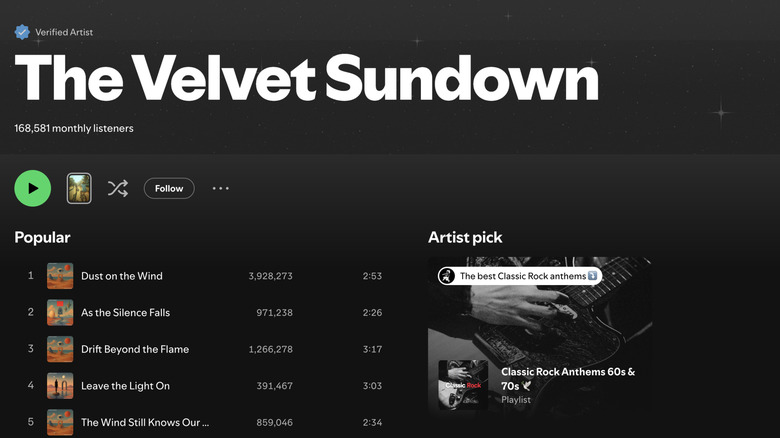
Worse yet is the rise of what industry insiders call "AI slop." With the barrier to entry lower than ever, the platform has seen an influx of tens of millions of AI-generated tracks designed to game the system and siphon off royalties. This dilutes the quality of discovery and makes finding genuine human talent more difficult.
In contrast, a music streaming app comparison reveals that some competitors are leaning harder into human curation. Apple Music, for instance, employs world-class DJs and editors to curate its stations and playlists, leading to a much more organic discovery experience. If you are looking for music streaming apps with better discovery than Spotify algorithms, you might find the Music Genome Project of Pandora more technically sophisticated, or the community-driven tags of Bandcamp more rewarding for finding underground gems.
4. Total Cost of Ownership: Rising Prices vs. Value
Since 2021, the cost of a premium subscription has climbed significantly, yet the core feature set for music lovers has remained largely stagnant. When we analyze the 5-year Total Cost of Ownership (TCO), the differences between services become clear.
- Spotify Individual: ~ $720 over 5 years (assuming current price trends and minor hikes).
- Apple Music (via Apple One): High value if you already use iCloud and Apple TV+.
- SoundCloud Go+: ~ $300 over 5 years.
- Amazon Music: Often bundled with Prime, offering massive savings for smart home ecosystems.
For budget-conscious listeners, the value proposition is shifting. If you are paying $11.99 a month solely for music, and you aren't getting lossless audio or spatial audio included, you are paying a premium for a subpar technical product. Platforms like Amazon Music excel with smart home integration, and for those who are deep in the iOS world, the subscription sharing features of Apple One make it a much more logical financial choice.
5. UI Bloat: The Podcast and Audiobook Problem
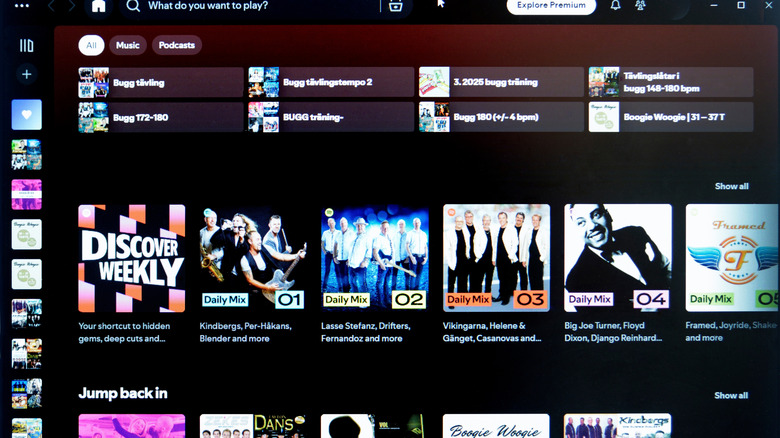
Perhaps the most frustrating trend for a "music-first" listener is the way the interface has become a cluttered billboard for podcasts and audiobooks. Spotify is no longer just a music app; it is a "global audio platform." While this diversification makes sense for their business model, it has resulted in a UI that feels bloated. Your music library management often takes a backseat to "Recommended Podcasts" or celebrity-led talk shows that you might have zero interest in.
This brings us to the concept of digital ownership. For many of my fellow audiophiles, the realization that we are merely "renting" our music has led us back to how to buy music digitally without a monthly subscription. Platforms like Qobuz and Bandcamp allow for permanent digital downloads in Hi-Res FLAC. When you buy an album there, it is yours forever. You don’t have to worry about licensing disputes between labels and streaming providers removing your favorite albums overnight, or cross-platform syncing issues when you change phones.
Switching to a service like Tidal or a dedicated player for your own digital library provides a much cleaner, music-centric experience. These platforms prioritize high-quality album art, comprehensive liner notes, and a music library management system that doesn't try to sell you a 10-hour true crime podcast every time you want to hear a jazz record.
FAQ
Which music streaming service has the best audio quality?
Tidal and Qobuz are widely considered the leaders in audio quality, offering Hi-Res FLAC streams up to 24-bit/192 kHz. Apple Music also offers excellent quality with its ALAC lossless format included in the standard subscription price.
What is the best music app for high-resolution audio?
Tidal is often the best choice for high-resolution audio due to its extensive library of Hi-Res FLAC tracks and its support for advanced formats like Dolby Atmos. Qobuz is a close second, particularly favored by those who also want to purchase and own high-resolution digital downloads.
How do I transfer my playlists from Spotify to another service?
You can use third-party tools like Soundiiz, TuneMyMusic, or FreeYourMusic. These services connect to both your old and new accounts and can automatically move thousands of songs and curated playlists in just a few minutes.
Is there a music app with a larger library than Spotify?
YouTube Music generally boasts a larger "total" library because it includes official tracks alongside millions of user-uploaded videos, live performances, and rare remixes that aren't available on traditional streaming platforms. Apple Music and Amazon Music also maintain libraries of over 100 million songs, which is comparable to or slightly larger than Spotify's official catalog.