Quick Facts
- Sony Announcement: Temporary suspension of orders for nearly all SD and CFexpress Type A cards effective March 27, 2026.
- Core Cause: Massive demand for High Bandwidth Memory (HBM) by AI hyperscalers is cannibalizing NAND flash production capacity.
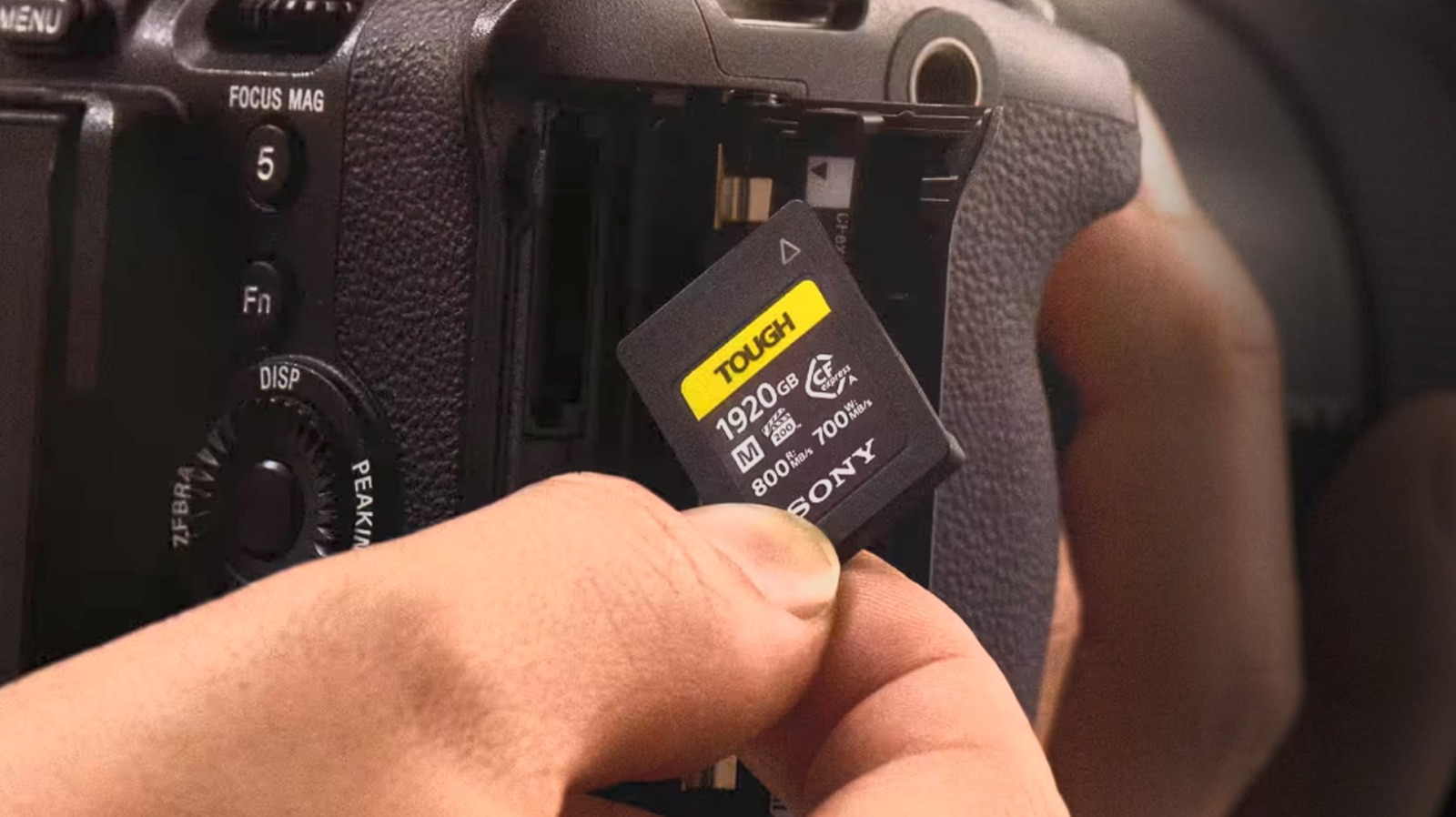
- Severely Affected: The popular SF-E series SD cards and the mid-range CEA-G480T CFexpress Type A modules.
- Still in Production: Only ultra-high-margin products like the CEB-G960T remain available, though inventory is extremely low.
- Price Outlook: Industry analysts project a 40-60% price increase for consumer storage through late 2026.
- Lead Times: Retail shipping windows have expanded from standard 10-day cycles to 20-26 weeks for backordered items.
- Recommended Pivot: Professionals should immediately secure inventory from Angelbird, ProGrade Digital, or Lexar to maintain mirrorless camera workflow continuity.
The global memory card shortage is primarily driven by the massive expansion of AI data centers and high-performance computing. Semiconductor manufacturers are prioritizing the production of High Bandwidth Memory (HBM) and enterprise-level NAND flash over consumer electronics. This shift in manufacturing capacity has led Sony to temporarily suspend new orders for many SD and CFexpress Type A cards as supply fails to meet global demand.
The AI Crisis: Why Sony Halted Production
For the past decade, we have viewed memory cards as a commodity—readily available, increasingly cheap, and rarely out of stock. That era ended abruptly on March 27, 2026, when Sony Japan shocked the imaging world by suspending orders for the vast majority of its storage catalog. As an editor who monitors the intersection of silicon and sensors, I can tell you this isn't a simple logistics hiccup; it is a fundamental restructuring of the global semiconductor fabrication landscape.
The primary culprit is the insatiable hunger of the AI infrastructure boom. Companies like Meta, Google, and Microsoft—the so-called Hyperscalers—are currently outbidding consumer electronics brands for every square millimeter of silicon wafer. To power the next generation of large language models, factories are retooling their lines to produce High Bandwidth Memory (HBM) instead of the NAND flash memory that populates our SD cards.
Furthermore, a secondary shortage in high-purity helium and specialized gases used in semiconductor fabrication has exacerbated the bottleneck. While Sony Corporation held a 2% share of the global secure digital card market in 2024, they are the dominant player in the high-speed CFexpress Type A niche used by millions of Alpha users. When the leader of a niche market stops taking orders, the ripples turn into waves. We are currently seeing memory card price trends 2026 reflect this scarcity, with some retail prices doubling overnight as inventory disappears from shelves.
Affected vs. Safe: The Sony SKU Survival List
If you are a Sony shooter, your bag likely contains at least one of the cards now facing an indefinite production pause. The suspension is not across the board, but it targets the "sweet spot" of the market—the cards that offer the best value for 4K video and high-speed bursts.
Sony has shifted its focus to a 'luxury-only' margin strategy. By keeping only the most expensive, high-capacity units in production, they maximize profit from their limited silicon allocation. If you are wondering where to buy Sony SF-E128A SD cards in stock 2026, the answer is increasingly "nowhere," as these mid-tier workhorses were the first to be cut.
Production Status by Model
| Sony Series | Affected SKUs | Status |
|---|---|---|
| SF-E Series (SD) | SF-E64, SF-E128A, SF-E256 | Orders Suspended |
| SF-M Series (Tough SD) | SF-M64T, SF-M128T | Limited Availability |
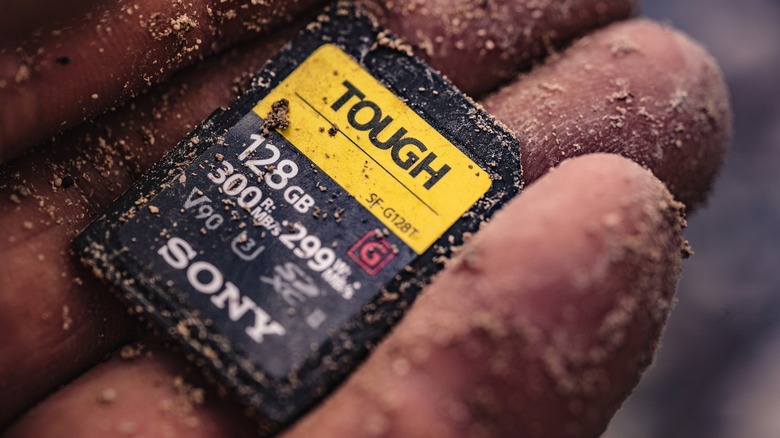
| SF-G Series (Tough V90) | SF-G64T, SF-G128T | Severely Restricted |
| CEA-G Series (Type A) | CEA-G80T, CEA-G160T, CEA-G320T, CEA-G480T | Orders Suspended |
| CEB-G Series (High End) | CEB-G960T | Still in Production (High Cost) |
Is it worth buying high priced Sony CEB-G960T cards right now? For most, the $1,000+ price tag is a bitter pill. Unless your project specifically requires the 960GB capacity for a long-form documentary shoot, your budget is likely better spent on third-party CFexpress Type A alternatives.
Top CFexpress Type A Alternatives for Sony Users
The good news is that while Sony’s fabs are silent, other players in the memory card shortage landscape have managed to maintain some level of supply. Brands like Angelbird and ProGrade Digital have become the primary lifelines for the mirrorless camera workflow.
Angelbird, in particular, has gained traction among Sony A1 and A7S III users. Their AV Pro CFexpress Type A cards are engineered for sustained write speed performance, which is critical for 8K or Raw video storage. Unlike some consumer cards that throttle speed as they heat up, these cards are built for the thermal demands of modern mirrorless bodies.
ProGrade Digital offers two tiers: Gold and Cobalt. For photographers who primarily shoot stills or standard 4K, the Gold series is a budget friendly memory cards for 4K video recording 2026 option. However, for those pushing high bitrates, the Cobalt series is a necessary upgrade.
Performance Comparison: Best CFexpress Type A Alternatives for Sony Cameras
| Brand/Model | Max Write Speed | V90 Equivalent? | Best Use Case |
|---|---|---|---|
| Angelbird AV Pro Type A | 850 MB/s | Yes | Professional 8K & Raw Video |
| ProGrade Cobalt | 700 MB/s | Yes | High-speed Action & Sports |
| Lexar Professional Gold | 800 MB/s | Yes | Commercial Photography |
| Sony CEA-G160T (Reference) | 700 MB/s | Yes | (Discontinued/Shortage) |
For those looking for recommended SD card brands for Sony Alpha users during shortage, the V90 speed rating remains the gold standard. If you cannot find Sony Tough cards, the SanDisk Extreme Pro V90 and the Lexar Professional 2000x series are the most reliable proxies. These brands have slightly more diversified supply chain logistics, though they are not entirely immune to the semiconductor fabrication issues.
Surviving the Shortage: Used Market & Lead Time Strategy
If retail shelves remain empty, photographers must look toward alternative procurement strategies. The resale market value of high-speed storage has skyrocketed, but it remains a viable path for those in a pinch. However, buying used memory cards during the 2026 semiconductor crisis requires a rigorous vetting process. Unlike a used lens, a used memory card has a finite lifespan based on write cycles. Always ask for a "media health report" if the brand's software supports it.
Strategic Planning for 2026-2027
With supply chain logistics stretched thin, industry analysts expect the memory card shortage to persist into 2027. If you have a major production scheduled for late 2026, do not wait until the month of the shoot to order storage. Current retail inventory lead times are fluctuating between 20 and 26 weeks.
If you are looking for durable alternatives to Sony Tough series memory cards, consider the Angelbird AV Pro SD series. They offer a physical build quality that rivals Sony’s resin-molded design and provides the same level of environmental protection.
Estimated Price Volatility 2024-2026
- 2024 (Baseline): $160 for 128GB V90
- 2025 (Initial Shortage): $210 for 128GB V90
- 2026 (Sony Production Halt): $280 - $350 for 128GB V90 (Projected)
Ultimately, the best strategy is redundancy. Diversify your card brands so that a single manufacturer's production halt doesn't paralyze your business. Keep your firmware updated, as some manufacturers are releasing patches to improve compatibility with newer, more available NAND flash controller types.
FAQ
Why is there a shortage of memory cards?
The shortage is a result of a massive manufacturing shift. Major semiconductor fabs are prioritizing high-margin High Bandwidth Memory (HBM) used in AI data centers over the NAND flash memory used in consumer SD and CFexpress cards. This has created a massive supply-demand gap in the imaging industry.
When will the SD card shortage end?
Industry experts and supply chain analysts do not expect a return to normal production levels until late 2026 or early 2027. The prioritization of enterprise-level AI infrastructure means that consumer-grade storage will remain a lower priority for the foreseeable future.
How does the chip shortage affect memory card prices?
The scarcity of raw components and the high cost of outbidding other sectors for factory time have forced manufacturers to raise prices. Readers should expect a 40-60% increase in retail costs for high-performance storage compared to 2024 levels.
Are professional-grade memory cards more affected by the shortage?
Yes, professional cards like V90 SD and CFexpress Type A are more severely affected because they use higher-quality NAND flash and more complex controllers, which are the exact components currently being diverted to AI and enterprise server production.
Will memory card availability improve this year?
It is unlikely that availability will improve significantly within the current calendar year. As Sony and other manufacturers work through backlogs and try to secure new silicon allocations, the market will likely see sporadic "drops" of inventory rather than consistent, reliable stock on retail shelves.