Quick Facts
- Discontinuation: The 2025 model year is officially confirmed as the final production year for this generation.
- Reliability Rank: The vehicle currently holds the lowest customer satisfaction rating in the luxury EV class according to Consumer Reports feedback.
- Common Faults: Documented issues include premature brake rotor wear at 10,000 miles and recurring A-pillar water leaks.
- Tech Limitation: The platform relies on outdated 400V architecture, capping the peak charging rate at a modest 170 kW.
- Real-World Range: Highway testing reveals an actual range of 210–240 miles, falling short of the 300-mile EPA estimate.
- Depreciation: Anticipated high resale value drops due to model retirement and the transition to next-gen EV architecture.
The Audi Q8 E-Tron has faced significant criticism for low reliability and owner satisfaction, with common issues including brake shuddering, sunroof leaks, and infotainment glitches. While it offers a luxurious interior, its aging architecture and 2025 discontinuation make it a risky investment compared to modern rivals.
The Luxury EV Paradox: Premium Build vs. Mechanical Fragility
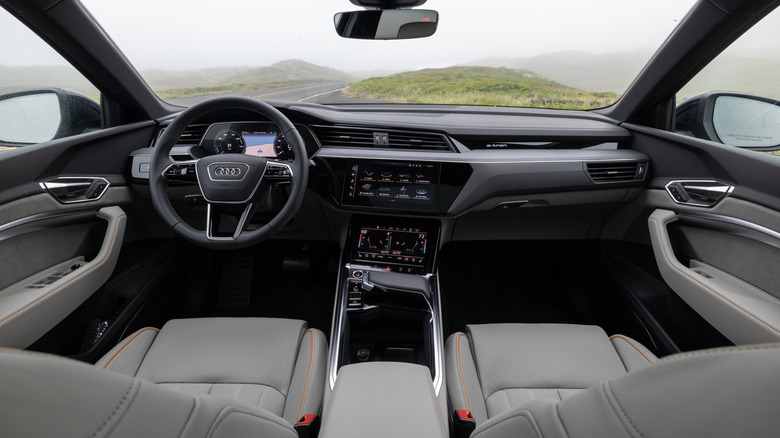
When you step inside the Audi Q8 E-Tron, the initial impression is one of absolute serenity. The materials are top-tier, the assembly is tight, and the insulation from road noise is world-class. However, for many owners, this premium facade masks a frustrating reality that has led to some of the most disappointing luxury electric SUV ratings 2025 has seen. Industry analysts often refer to this as the reliability paradox: a car that feels like a vault but performs like a prototype.
Consumer Reports feedback has been particularly pointed regarding this model. Despite its high initial quality scores, long-term dependability has plummeted. Buyers often find themselves enamored with the cabin during the test drive, only to face a series of Audi Q8 E-Tron reliability issues within the first year of ownership. This disconnect between perceived luxury and actual powertrain longevity has become a focal point for those questioning whether the Audi Q8 E-Tron reliability issues by year are improving or worsening as the model nears the end of its lifecycle.
The core of the issue lies in the fact that this vehicle was one of the early pioneers of the luxury crossover market in its electric form. While Audi has made iterative updates, the foundational bones of the car are starting to show their age. This creates a technical bottleneck where the mechanical components and the software management systems are struggling to keep up with the demands of modern EV users who expect seamless operation.
The Mechanical Red Flags: Brake Shudder and Leaks
One of the most frequent complaints cited by owners involves the braking system. Many have reported a significant vibration or pulsation through the steering wheel and brake pedal, a phenomenon known as brake shudder. This is not a high-mileage wear-and-tear issue; it often appears between 10,000 and 12,000 miles. When researching Audi Q8 E-Tron brake shudder and rotor replacement costs, owners are often shocked to find that the sophisticated recuperation system, which blends regenerative and friction braking, can lead to uneven pad deposits or premature warping of the rotors.
Beyond the mechanical drivetrain, the physical integrity of the cabin has been called into question due to water ingress. Specifically, there are numerous reports of an Audi Q8 E-Tron water leak repair through headliner becoming necessary after rainstorms or car washes. These leaks typically manifest around the A-pillars or the rearview mirror assembly, often traced back to sunroof drainage issues.
- Brake Vibration: Check for a consistent pulsing sensation when applying moderate pressure at highway speeds.
- A-Pillar Dampness: Inspect the fabric lining near the top of the windshield for staining or moisture.
- Maintenance Expenses: Be prepared for high out-of-warranty costs, as Audi service departments often recommend full rotor and pad replacements to resolve shuddering.
Technical Bottlenecks: 400V vs. The Competition
In the rapidly evolving world of electric vehicles, architecture is destiny. The Audi Q8 E-Tron utilizes a 400V electrical system, which was standard a few years ago but is now being eclipsed by the 800V systems found in newer competitors. This limitation directly impacts how long you spend tethered to a charger. While Audi claims a peak charging rate of 170 kW, it cannot sustain the ultra-fast speeds offered by newer rivals like the Genesis GV60 or the Porsche Taycan.
When conducting a BMW iX vs Audi Q8 E-Tron comparison, the performance gap becomes even more evident. The BMW iX manages its thermal loads more efficiently, allowing for better sustained power delivery and a more responsive infotainment software experience. In contrast, the Audi system has been noted for frequent glitches, including screens that go dark or navigation systems that lag during route calculation.
The range issue is perhaps the most significant hurdle for long-distance travelers. While the 2025 Audi Q8 e-tron has an EPA-estimated range of up to 300 miles for specific configurations, real-world highway driving at 70-75 mph typically results in a reduced range between 210 and 240 miles. For a vehicle in this price bracket, that discrepancy can lead to significant range anxiety on winter trips or high-speed commutes.
| Feature | Audi Q8 E-Tron | BMW iX | Genesis GV60 |
|---|---|---|---|
| Electrical Architecture | 400V | 400V (Optimized) | 800V |
| Peak Charging Rate | 170 kW | 195 kW | 235 kW |
| Real-World Range (Hwy) | 210–240 miles | 290–310 miles | 220–240 miles |
| 10-80% Charging Time | ~31 minutes | ~35 minutes | ~18 minutes |
This data highlights that while the Audi is competitive on paper, it often lags in the BMW iX vs Audi Q8 E-Tron range and performance metrics that matter most to daily drivers.
2025 Discontinuation and Depreciation Risks
Perhaps the most compelling reason to think twice about this purchase is the question: is the Audi Q8 E-Tron being discontinued after 2025? The answer is yes. Audi is moving toward a more advanced next-gen EV architecture, specifically the PPE (Premium Platform Electric) platform developed with Porsche. This transition effectively turns the current Q8 E-Tron into a legacy product.
History shows that when a luxury manufacturer retires a model to make way for a fundamentally different technical platform, the depreciation curves for the outgoing model can be brutal. Buyers of the 2025 model may find themselves owning a vehicle with "dead-end" technology just as more capable Audi models hit the showroom floors.
For those looking for longevity and value retention, the best alternatives to the Audi Q8 E-Tron in 2025 include the Lexus RZ or the BMW iX, both of which currently enjoy higher predicted reliability and consumer satisfaction scores. Choosing a model at the start or middle of its lifecycle is generally a safer financial bet than buying into a model retirement phase.
Pre-Purchase Inspection Checklist
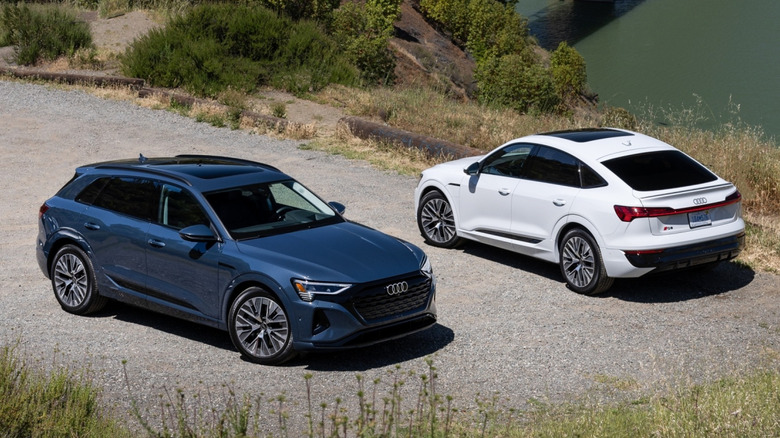
If you are still committed to the Audi Q8 E-Tron because of its undeniable comfort and classic Audi aesthetic, a rigorous inspection is mandatory. Whether you are looking at the standard SUV or the sleek Sportback body style, you should focus on the Audi Q8 E-Tron common mechanical problems to watch for before signing the papers.
- High-Speed Braking Test: Take the car on a highway and apply moderate, steady brake pressure from 70 mph down to 40 mph. Any shimmy in the steering wheel is a sign of rotor issues.
- The "Cloudburst" Check: If possible, take the car through a high-pressure touchless car wash. Immediately after, check the headliner and A-pillars for any signs of water intrusion or dampness.
- Software Stress Test: Cycle rapidly through the infotainment menus. Toggle the climate controls, the navigation map, and the 360-degree camera. If the system stutters or freezes, it may require a hardware module replacement.
- Suspension Noise: Listen for "clunking" or "creaking" when going over speed bumps, which can indicate premature wear on the heavy-duty air suspension components.
FAQ
What is the range of the Audi Q8 E-Tron?
The EPA-estimated range for the Audi Q8 E-Tron is up to 300 miles depending on the trim and wheel configuration. However, real-world highway driving typically sees this number drop to a range of 210 to 240 miles.
How much does the Audi Q8 E-Tron cost?
The 2025 Audi Q8 E-Tron typically starts around $74,000 for the base Premium trim, with fully loaded Prestige or Sportback models reaching well over $90,000 before taxes and incentives.
Is the Audi Q8 E-Tron fully electric?
Yes, the Audi Q8 E-Tron is a fully battery-electric vehicle (BEV). It does not have an internal combustion engine and relies entirely on its dual-motor setup and lithium-ion battery pack for propulsion.
What is the difference between the Audi e-tron and the Q8 e-tron?
The Q8 E-Tron is the successor to the original Audi e-tron SUV. Launched as a mid-cycle refresh, the Q8 version features a larger battery pack, improved aerodynamics, and updated styling to align it with Audi's flagship nomenclature.
Does the Audi Q8 E-Tron have a third row of seats?
No, the Audi Q8 E-Tron is a two-row luxury SUV that seats up to five passengers. Audi does not currently offer a three-row electric SUV in this specific model line.
How many miles can the Audi Q8 E-Tron go on a full charge?
While the maximum EPA estimate is 300 miles, the actual distance depends heavily on driving conditions, temperature, and speed. Most owners find that 230 miles is a more realistic expectation for mixed daily use.